Search results for tag #literature
![[?]](https://files.mastodon.social/accounts/avatars/115/090/106/266/289/375/original/8242bbceb53d91ce.jpg)
"Quaia: Cap 30": Edna lo perdió todo en ese sótano: fe, dignidad y ganas de vivir. Pero cuando la bestia prehistórica atacó a Jensen y el fuego creció, Justino regresó... y luchó por sacarla del infierno.
https://fictograma.com/d/3118-la-liebre
"El mago - Parte 3, Cap. 4": De una página del diario del Alto Sabio Aldous, el Errante.Trece Lunar, ocho amanecer. Puerto de Alfer. El mar de Gor es tan inmenso que me pregunto si podría dominarlo con liqua.
https://fictograma.com/d/3119-el-mago-tercera-parte-iv
![[?]](https://files.mastodon.social/accounts/avatars/115/961/306/514/488/543/original/316b5ad0c51a0c78.jpg)
"There has never been any custom, however useless it may become with changing conditions, that isn't clung to desperately simply because it is something old and familiar."
"El mago - Parte 3, Cap. 5": Cinco noches atrapados en la Galería bajo la tormenta. Zev se recupera lento, Ma prepara brebajes y recibe regalos para su “guapo nieto”. En el templo de Aheb ofrecí una reliquia…
https://fictograma.com/d/3120-el-mago-tercera-parte-v
Capítulo 6. Encuentro
Volvió a buscar el barco que lo vio crecer. Entre maderas talladas junto a su padre y recuerdos de una madre que solo aparecía en sueños, encontró un casco abandonado... ⚓🌊
https://fictograma.com/d/3121-el-templo-la-semilla-ii
Las luces se apagaron. Las conversaciones volvieron. Sin cobertura, sin datáfonos y sin certezas, un barrio de Sevilla redescubrió el café compartido, las radios antiguas y la compañía de los vecinos.
https://fictograma.com/d/3122-la-vida-en-un-ratito-relato-no9-el-apagon
Vinieron del cielo para estudiar la vida. Creyeron que el Amazonas era un laboratorio. Descubrieron demasiado tarde que era un organismo. Y que toda criatura extraña acaba convertida en abono para sus flores.
https://fictograma.com/d/3123-el-bosque-humano-cap-9-madre-naturaleza
![[?]](https://cdn.masto.host/zirkus/accounts/avatars/111/192/373/629/540/829/original/9ff4f5b9781a0e3a.jpg)
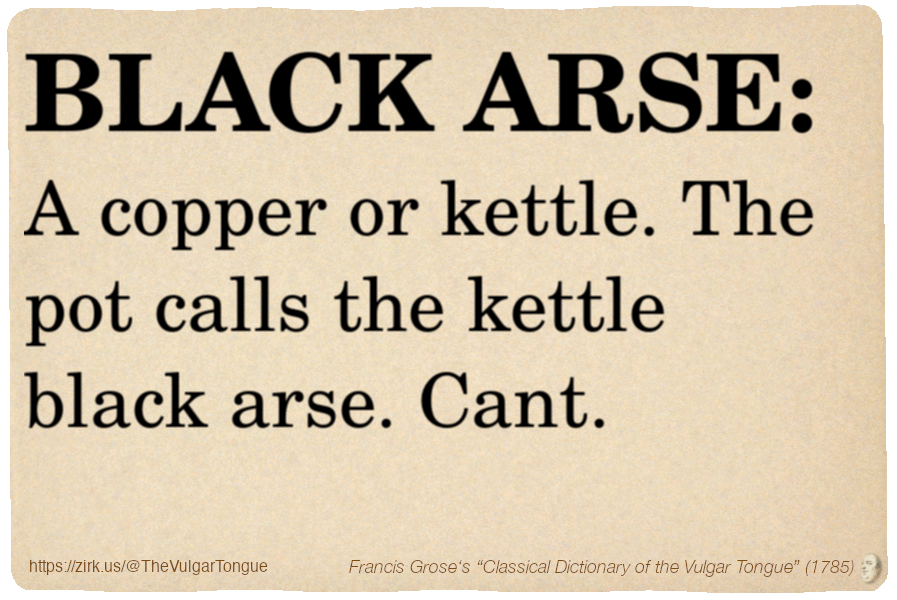
BLACK ARSE. A copper or kettle. The pot calls the kettle black arse. Cant.
A selection from Francis Grose’s “Dictionary Of The Vulgar Tongue” (1785)
--
#books #literature #dictionaries #history #society #language #slang @histodons
Alt...
Image imitating a page from an old document, text (as in main toot):
BLACK ARSE. A copper or kettle. The pot calls the kettle black arse. Cant.
A selection from Francis Grose’s “Dictionary Of The Vulgar Tongue” (1785)
Un temblor inaudito en Noveris despierta el legado oculto de Abraham. Tras hallar un relicario de tierra vinculado a su desaparecido padre, Cortázar, y una brújula elemental, emprende un viaje...
https://fictograma.com/d/3124-los-hechiceros-y-la-piedra-de-los-elementos-1-una-nota-en-la-sombra
«¿Cómo podría yo atreverme siquiera a mirarlo?». Bianca dobla su ropa sintiendo su perfume, atrapada entre el deber de la mansión y un amor tan inalcanzable como los versos de Valentín. Una esperanza pequeña que duele...🍂✨
https://fictograma.com/d/3125-1-como-podria-mirarlo
![[?]](https://sbonline.nyc3.digitaloceanspaces.com/accounts/avatars/113/495/849/866/199/320/original/4f5084d408b1c280.jpg)
Vibrator Nation: How Feminist Sex-Toy Stores Changed the Business of Pleasure by Lynn Comella #books #literature #dedication

Alt...
To all the sex-positive pioneers.
You make the world a better place.
![[?]](https://files.mastodon.social/accounts/avatars/001/287/672/original/7377c2bd0ab16b03.jpg)
"Quaia: Cap 30": Edna lo perdió todo en ese sótano: fe, dignidad y ganas de vivir. Pero cuando la bestia prehistórica atacó a Jensen y el fuego creció, Justino regresó... y luchó por sacarla del infierno.
https://fictograma.com/d/3118-la-liebre
"El mago - Parte 3, Cap. 4": De una página del diario del Alto Sabio Aldous, el Errante.Trece Lunar, ocho amanecer. Puerto de Alfer. El mar de Gor es tan inmenso que me pregunto si podría...
https://fictograma.com/d/3119-el-mago-tercera-parte-iv
"El mago - Parte 3, Cap. 5": Cinco noches atrapados en la Galería bajo la tormenta. Zev se recupera lento, Ma prepara brebajes y recibe regalos para su “guapo nieto”. En el templo de Aheb ofrecí…
https://fictograma.com/d/3120-el-mago-tercera-parte-v
Capítulo 6. Encuentro
Volvió a buscar el barco que lo vio crecer. Entre maderas talladas junto a su padre y recuerdos de una madre que solo aparecía en sueños, encontró un casco abandonado... ⚓🌊
https://fictograma.com/d/3121-el-templo-la-semilla-ii
Las luces se apagaron. Las conversaciones volvieron. Sin cobertura, sin datáfonos y sin certezas, un barrio de Sevilla redescubrió el café compartido, las radios antiguas y la...
https://fictograma.com/d/3122-la-vida-en-un-ratito-relato-no9-el-apagon
Vinieron del cielo para estudiar la vida. Creyeron que el Amazonas era un laboratorio. Descubrieron demasiado tarde que era un organismo. Y que toda criatura extraña acaba...
https://fictograma.com/d/3123-el-bosque-humano-cap-9-madre-naturaleza
![[?]](https://professionalmoron.com/wp-content/uploads/2026/01/cropped-cropped-yellow-circle.jpg)
Book of the Month: No Ordinary Deaths by Molly Conisbee
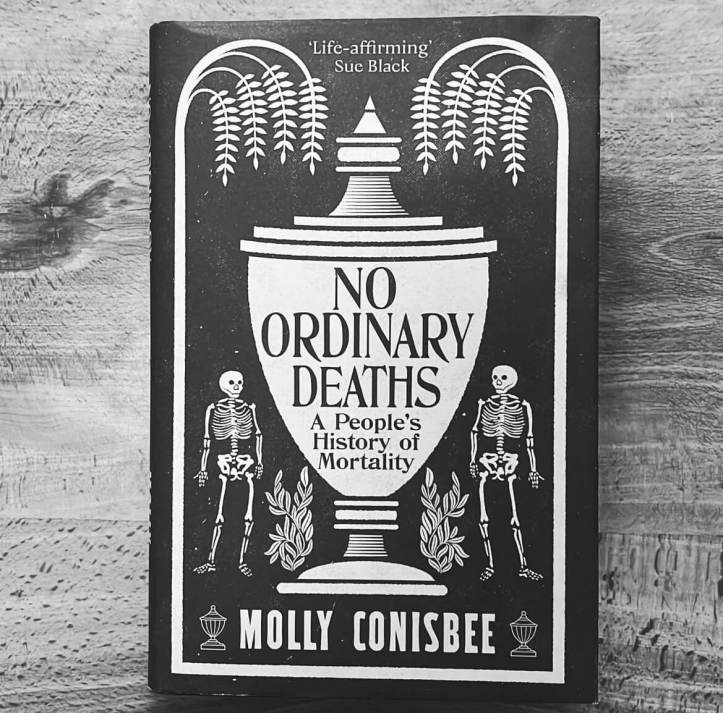
First published in May 2025, this intriguing work is by the social historian Molly Conisbee. No Ordinary Deaths: A People’s History of Mortality examines historical records of ordinary people who died across the last 500+ years, using all available records to piece together a sense of their existence.
Across human history, it’s the big names who dominate the nature of death. From King Henry VIII to Cleopatra or Tutankhamen, they’re the kings, queens, or famous folks whose status got them nailed into posterity.
But what of the everyday people? The billions who have lived, died, and have fallen into obscurity? That’s where this book enters the fray, allowing us a glimpse into the lost lives of the distant past.
No Ordinary Deaths: A People’s History of Mortality
“The people in this book did not live and die as statistics. They lived and loved, had and lost children, worked and struggled, and, as most of us will, died in obscurity. In the following pages we reanimate them, to explore how they, and their families, friends, and communities, responded to death.”
On 11th July 1184, in the German city of Erfurt, the floor of a building collapsed. It plunged 60 local nobles through the ground floor and into the cesspit below it, where some of them drowned in effluence.
This darkly absurd fate is called the Erfurt Latrine Disaster. We know this as the Chronicle of Saint Peter’s in Erfurt, which ran from 1072 to 1335, recorded the incident and listed some of the dead:
- Count Friedrich I of Abenberg
- Count Heinrich I of Schwarzburg
- Count Gozmar III of Ziegenhain
- Gozmar’s brother-in-law Burgrave Friedrich I of Kirchberg
- Count Burchard of Wartburg, Behringer von Wellingen
There you have five men who were born, grew up, had families, different personalities, and were probably having a decent time of it until that flooring gave way on them. Yet we know nothing about them. They’re just names lost to time.
Their stories aren’t included in Molly Conisbee’s book, but we feel its inclusion conveys what Conisbee has done with this excellent book. Conisbee’s focus is on the history of details. With meticulous research, she uncovers real people, digs deep into available records, a provides a sense of who these men and women likely were.
A lot of people over the ages have met an unfortunate end, whether through infection that’d now be easily averted, during childbirth, or drowning in excrement. Most are lost to time.
But available historical records in the UK show there was some attempt at maintaining evidence of lived lives In the Medieval era, for example, churches and local parishes kept written records of local citizens. Many of these records have been lost to time, but the ones that remain have allowed Conisbee to discover what people made of it all back then.
“Although we will all die, the ways in which we do so are historically, socially, and culturally located. As medical certification of death did not become a legal requirement until 1837, and even then, was sometimes rather vague I have seen death certificates that say things like ‘decline’, ‘apoplexy’, ‘Act of God’, all which could cover a host of conditions – much of our information about historical causes of death has come from burial excavations, forensic archaeology, contemporary medical accounts, and epidemiological studies.”
If you’re wondering why we picked this booked up, we picked up a copy at London’s excellent Wellcome Museum (see No Ordinary Deaths). The museum interviewed Conisbee on-site in the reading room we recognise near the top of the building.
As it’s a medical museum dedicated to curiosities, we’ve picked up some excellent anatomical books there. Not least in Roy Porter’s brilliant Blood and Guts: A Short History of Medicine (2002). As, you know, it’s important to aware and open about this sort of stuff.
Conisbee’s work is far from a miserable time of it, by the way, it’s a life-affirming tale of lives lived and the minor triumphs through the ages. There are 11 chapters, ranging across:
- Body and Soul
- Disembodied
- Cwylnos/Wake
- Funeral
- Memorial
- Afterlife
But what interested us most about No Ordinary Deaths is the examination of distant people from the past.
It’s only in the last 150 years or so that photography and audio/film recording devices have come to be. In the present day, we can look back to around 1938 and see the very first photographs. One of the first portrait pictures dates to 1839 and is of American photographer Robert Cornelius.
Yet for the first time, future generations will be able to look back at our era and get a thorough understanding of how many of us got by. This blog we’ve run since 2012, for example, if it’s still around online in 100 years. Well, people can read it, study it, hand us a belated Nobel Prize, and also deem the site to be run by professional morons.
But not so for 300, 500, 700, or 1,000 years ago.
It’s frustrating that so much of human history has no written records, or those that were available were destroyed or lost, and yet here we have Conisbee digging deep to piece together various lives from the past. And this is a big part of the appeal of the book for us, seeing her research process in action and the subsequent results.
Luce Scely: Devon’s Records in 1558
“As with many other Devon records, the manorial pre-1558 parish registers for Morebath were destroyed during the bombing of Exeter in 1942. A further complication when trying to unpick the genealogical bramble patch of even a small village like Morebath in the sixteenth century are inconsistencies in spellings of names, multiple people with the same name, and a flexible use of surnames and descriptors. A person might be referred to by their job (John the carpenter), by their location or property (Mary at Bartonhill), and women were sometimes identified by their father’s or husband’s first or second names. Sometimes several family members had the same name – try reading the famous Norfolk Paston family letters written between 1422 and 1509 and keeping track of which ‘John’ is being referred to. The nomenclature doubtless all made perfect sense if you were part of said community, but several hundred years later some nifty historical detective work is needed to work out who was who.”
The vicar in Morebath, Sir Christopher Trychay, kept very detailed records about life in the village. His tenure ran from 1520 to 1574, including one woman called Luce Scely/Luce at Myll. Likely born around December 1500, she lived in Morebath as a peasant woman and knew Trychay.
Her husband was the village miller and was called William. She worked as a churchwarden, organiser, and fundraiser.
Trychay’s story was documented in the 2001 history book The Voices of Morebath: Reformation and Rebellion in an English Village by Eamon Duffy. To note, Sir Christopher Trychay was a notable priest (he died in 1574) and now has a Wikipedia page dedicated to him.
His churchwarden accounts are a vital historic record, detailing England’s shift from medieval Catholic congregations into the Church of England. This caused major religious and political upheaval.
In 1549, there was an uprising against religious reforms. Called the Prayer Book Rebellion, Trychay actually took sides with locals over the government (as seen in his preserved written account below). He sent five young men from the village to be a part of the rebellion: William Hurley, Thomas Borrage, John Timewell, Christopher Morsse, and Robert Zaer.
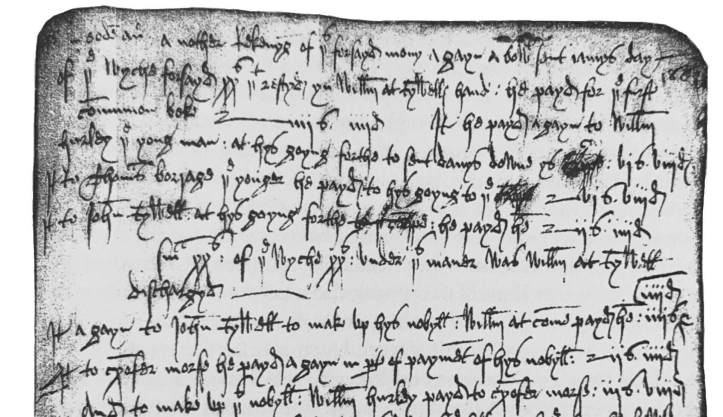
In August of 1549, the rebellion was crushed violently by the British government and in mid-August of 1549 the bodies of peasants lined up across highways all the way up to Bath. Such was the hideous way of things in the Tudor times.
But it’s interesting, then, that a man of his status, a man of the cloth, could criticise the government and not face ramifications.
As for Luce, after her husband died she infuriated Trychay by selling off church goods to cover familial costs. The date of her death is unclear, but Conisbee notes:
“Almost everything about her life would seem alien to most of us today: the limitations of her diet and dress, her lack of formal education, the sheer effort it took for her to keep clean, warm and dry, the extent to which her day-to-day was determined by the needs and expectations of the church and an inextricably intertwined community utterly dependent on one another for survival.”
This example is early on in the book. There are few details of Luce beyond her general work and marriage status. Her age at the time of her death is lost to history. But this is why she’s ideal for No Ordinary Deaths.
Barely a statistic lost to in time, uncovered 500+ years later by chance in this book. So, for a brief moment, reading Luce’s story brought her back to life. Intriguing, non?
As for this book, if it sounds bleak and macabre then that’s the wrong take. It’s a celebration of life and well worth your reading time.
#Books #ChristopherTrychay #death #History #Life #Lifestyle #Literature #LuceScely #MollyConisbee #NoOrdinaryDeaths #NoOrdinaryDeathsAPeopleSHistoryOfMortality #Reading #ReligionWe Are Not Numbers: The Voices of Gaza's Youth, edited by Ahmed Alnaouq and Pam Bailey #books #literature #dedication

Alt...
This anthology is dedicated to Refaat Alareer, the teacher, author, mentor and friend who guided so many of Gaza's students and future leaders (including most of our writers). His body was killed on 6 December 2023 by an Israeli air strike, but his spirit lives on.
We equally want to honour our writers who were killed in the Israeli genocide up to 9 November 2024, when this book was being edited:
Yousef Dawas, killed 14 October 2023
Mahmoud Alnaouq, killed 22 October 2023
Huda Alsoso, killed 23 October 2023
Mohammed Hamo, killed 24 November 2023
"Probably, the most-often-repeated lesson in history is that foreigners who are called in to help one side in a civil war take over for themselves. It is a lesson that seems never to be learned despite endless repetition."
![[?]](https://files.mastodon.social/accounts/avatars/110/220/259/645/675/394/original/f2f82ea2f865134f.jpeg)
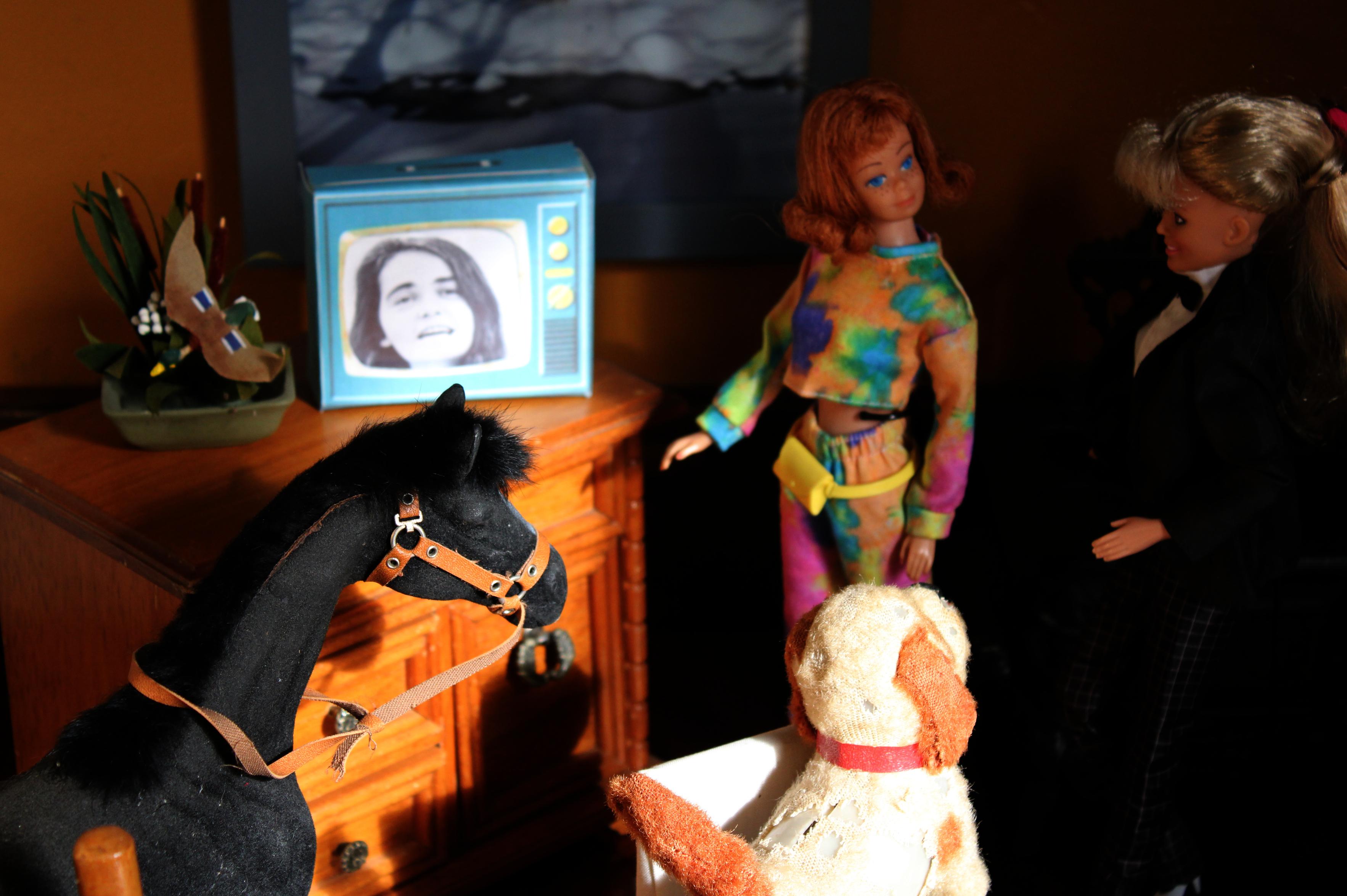
Winnie Houyhnhnm, Winslow, Midge, and Vanna enjoy a documentary about feminist lesbian icon, Kate Millet, in the Valley of the Dolls. #doll #dolls #barbie #barbies #midge #midges #vannawhite #wheeloffortune #celebrity #celebritydoll #celebritydolls #houyhnhnm #houyhnhnms #gulliverstravels #swift #jonathanswift #satirist #famoussatirist #satirists #literature #famousliterature #talkinghorses #katemillet #feminist #feminism #lesbian #lgbtqpride #lgbtqcommunity #documentary #documentaries #tv
A-List Angels: How a Band of Actors, Artists, and Athletes Hacked Silicon Valley by Zack O'Malley Greenburg #books #literature #dedication

Alt...
For Danielle, who's number one on my A-list
![[?]](https://media.mastodon.scot/accounts/avatars/109/285/896/512/482/891/original/68bc6eea8b007487.png)
We’re the D-Day Dodgers out in Italy,
Always on the vino, always on the spree…
—“The Ballad of the D-Day Dodgers”, a #WW2 soldiers’ song, to the tune of “Lili Marlene”, & collected by Hamish Henderson (1919–2002). The term was an insulting reference to Allied troops fighting in Italy in 1944 (none of whom, of course, were able to choose where & when to fight). Henderson fought in North Africa & Italy in WW2.
#Scottish #literature #song #poem #WW2 #DDay

Alt...
Text too long for ALT text. The text can be found online at https://en.wikipedia.org/wiki/D-Day_Dodgers
The term “D-Day Dodger” was widely attributed to Viscountess Astor, a Conservative MP, hence the reference to her in the song 👆 – although she denied saying it & there is no record of her using this phrase.
Listen to “The Ballad of the D-Day Dodgers” sung here by Rod Paterson
https://www.youtube.com/watch?v=VDXoXx7RRWs&list=OLAK5uy_lyHb3w_CdLiyDsHl84M6obGIoyIc2Ydl4&index=2
"It is an odd fact that anyone who wishes to start a war must always make it appear that he is fighting in a just cause even if the real motive is naked aggression. Fortunately for the would-be aggressor, a "just cause" is very easy to find."
Ye think thon wes the end?
Yon meetin in the wuids
When Thracian Orpheus heard the drum, the cries,
The whud o the bacchantes’ thrangan feet…
—“Orpheus”, by Tom Scott (1918–1995): born #OTD, 6 June
Published in A KIST O SKINKLAN THINGS
1/3
https://asls.org.uk/publications/books/volumes/a-kist-o-skinlan-things/
#Scottish #literature #poem #poetry #20thcentury #Scots #Scotslanguage

Alt...
Tom Scott
Orpheus
Ye think thon wes the end?
Yon meetin in the wuids
When Thracian Orpheus heard the drum, the cries,
The whud o the bacchantes’ thrangan feet
And, seik in saul,
Mad to be jyned for aye to his Eurydikee,
Strung his harp
And gaed to meet them wi a sang.
Ye think thon wes the end?
Na. Eftir the thrang breeled on, red
Fingert, bluidie-mawed, the riven limbs
Quiveran aye amang the mairtyred gress,
There wes a lull
And throu it syne a roun
And syne as muckle’s a moan
And syne a voice,
Yon voice o his
That quietit the forest and its fowk,
That reconcilit lion and lamb,
Ordert the rain,
Spoke frae the grund
And threept in the greitan tree
‘Euridikee! Euridikee!’
And at the name
A ferlie thing wes duin.
Thir broken bits o bodie, bits o bane,
Brisket, gash, airm and droukit hair
Cam thegither as gin some will
Mair nor the merely real
Had wrocht on them.
And on yon slauchtert grund was formed
Orpheus anew,
Orpheus the singer, Orpheus the makar,
Orpheus cleansed o the auld despair.
And by the halie tree
In the leaman licht o the wuid,
Squired by a houlet, a hawk and a doo,
Wes his Euridikee.
They say he made a new sang,
A nobler nor the auld,
And sings it aye in the great haa o the warld.
They say it will nevir end.
Remember this ae thing, whaeer ye are:
There’s ae place in this toun ye daurna be,
For scholars maunna drink at Paddy’s Bar.
—Tom Scott, “On Hearing a Certain Pub is Not Proper for Academics”
Published in POETRY magazine, Oct 1961
2/3
https://www.poetryfoundation.org/poetrymagazine/browse?contentId=28825
#Scottish #literature #poem #poetry #20thcentury #Scots #Scotslanguage #Edinburgh

Alt...
Brither bards wha eftir us maun dree
The contumely o hypocrite and fuil,
The middle-clarss’s fake moralitie,
Whether in office, varsity, or schuil,
Tak warnin frae the weird hes owretaen me,
And leaves me broken-hertit wi sic dule:
Wheneer ye toast your Muse in yill or bree,
Remember this ae thing, whacer ye are:
There’s ae place in this toun ye daurna be,
For scholars maunna drink at Paddy’s Bar.
I dinna ken whaur we’re alloued to pree,
Nor whitna howff Us Yins suld lippen til;
I jalouse there maun be ane that bears the gree,
Wi maikless maut and brandy, rum and yill,
Peerless vintage, blend, and densitie:
(Or suld Us Yins hae our ain vat, brew, or still?)
But deil the door (in dern) they’ve lat me see,
Sae I can nocht direct ye, neah or fah:
I juist set doun, til aa eternitie,
It isn’t U to snoht at Peddeh’s Bah.
I have heard tell tho, o an edifie
Whaur gentlemen and scholars drink their fill,
A kin o club, they caa’t, for Vahsteh employee,
That hes its ain bit bar, for guid or ill,
Whaur U can gang, gif you’re o their degree,
And drink lang eftir Paddy’s closed his till—
It cost a quarter million £.S.D.
But thet, of cawss, is neitheh heah nor thah.
I gie this dictum immortalitie:
Messieurs—défense de boire à Peddeh’s Bah!
Sirs, look back frae your futuritie,
And gin ye find us wantin, dinnae rail:
Consider nou—could you hae gane as far
Gin you were gien sic stanes til eat as we?
For Us Yins maunna drink at Paddy’s Bar.
The Muse hersel sent her dochter til us
To set this lamp in the jungle, “to lighten the gentiles
And to be the glory of thy people”, Poetry.
—Tom Scott, “In Handsel o Poetry’s Fifty Light Years”
published in POETRY magazine’s 50th Anniversary issue, October 1962
3/3
https://www.poetryfoundation.org/poetrymagazine/browse?contentId=29232
#Scottish #literature #poem #poetry #20thcentury #Scots #Scotslanguage

Alt...
Tom Scott
In Handsel o Poetry’s Fifty Light Years
The Muse hersel sent her dochter til us
To set this lamp in the jungle, “to lighten the gentiles
And to be the glory of thy people”, Poetry.
Fifty light years we celebrate the-day
Richt doun frae the great original star
Til siccan planetary lichts as I,
Passan on merely reflectit glory.
You yoursel, Poetry, whase jubilee
Prompts this tribute frae my ain minor
Contributory licht, shine for us
Brichter nor ony star in the spangled banner,
Transmittan til the warld the finest rays
Generous (in fauts as weill as virtues) America generates,
A welcome beacon abuin the gaitheran mirk.
Sae I frae here in Scotland whaur the-day
We fret under the accursed Polaris yoke
That’s made our Holy Loch the unholiest of waters,
Send, throu you, America a message—
“Tak hame your Polaris, send us your Poetry!”
And til Poetry yoursel in this your aureate year
I send my love, my poems, and my thanks for being.
Footnote: “Handsel” is a good-luck gift on some commemorative or other important occasion.
![[?]](https://bookstodon-files.web.thunderhost.net/accounts/avatars/113/948/505/269/996/580/original/9b500ff2b11d8e9c.png)
Died this day: 06/06/2003 (b. 02/27/1944)
Kenneth Milton Grimwood (February 27, 1944 – June 6, 2003) was an American author, who also published work under the name of Alan Cochran. Replay (1988) was nominated for the Arthur C. Clarke Award.
https://en.wikipedia.org/wiki/Ken_Grimwood
#Literature #SciFi #ScienceFiction #books #bookstodon #coverart #bookart #bookcovers
#KenGrimwood @books @scifi @Scifiart @sciencefiction
Cover art by Larry Ratzkin

Alt...
The book cover for the novel Replay by Ken Grimwood, with cover art by Larry Ratzkin.
The title, "REPLAY," is the central focus, rendered in a massive, stylized, sans-serif font that spans the middle of the cover. The word is repeated in a cascading, staggered pattern across three horizontal lines, creating a sense of motion or repetition. The letters are large and blocky. The top line of the title is a vibrant, warm orange. The middle line features the word in a muted, dark grey on the left and a bright cyan blue on the right. The bottom line continues this pattern, with the left side in the same bright cyan blue and the right side in a deep, saturated royal blue.
The author's name, "KEN GRIMWOOD," is positioned at the bottom of the cover in a large, bold, light grey, sans-serif font. Just above the name, the smaller text "A NOVEL BY" is centered in the same light grey color.
At the very top of the cover, a tagline is centered in a smaller, white, serif font, reading: "If you could live your life over again..."
The background is a solid, matte black, which provides a stark, high-contrast backdrop for the brightly colored, oversized typography. The overall lighting is even, with no discernible shadows or gradients, emphasizing the graphic, poster-like quality of the design. The texture of the background appears slightly grainy, similar to fine-grit paper. The arrangement of the repeated title creates a rhythmic, visual echo that complements the theme of the tagline.
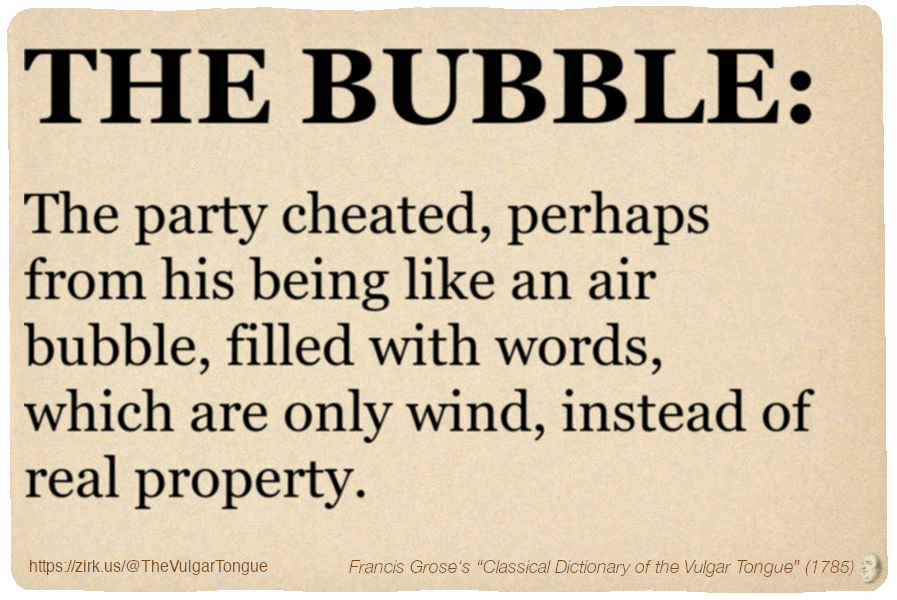
THE BUBBLE. The party cheated, perhaps from his being like an air bubble, filled with words, which are only wind, instead of real property.
A selection from Francis Grose’s “Dictionary Of The Vulgar Tongue” (1785)
--
#books #literature #dictionaries #history #society #language #slang @histodons
Alt...
Image imitating a page from an old document, text (as in main toot):
THE BUBBLE. The party cheated, perhaps from his being like an air bubble, filled with words, which are only wind, instead of real property.
A selection from Francis Grose’s “Dictionary Of The Vulgar Tongue” (1785)
Here at The New Yorker by Brendan Gill #books #literature #dedication

Alt...
For William Shawn, and no wonder