Search results for tag #literature
![[?]](https://bookstodon-files.web.thunderhost.net/accounts/avatars/113/948/505/269/996/580/original/9b500ff2b11d8e9c.png)
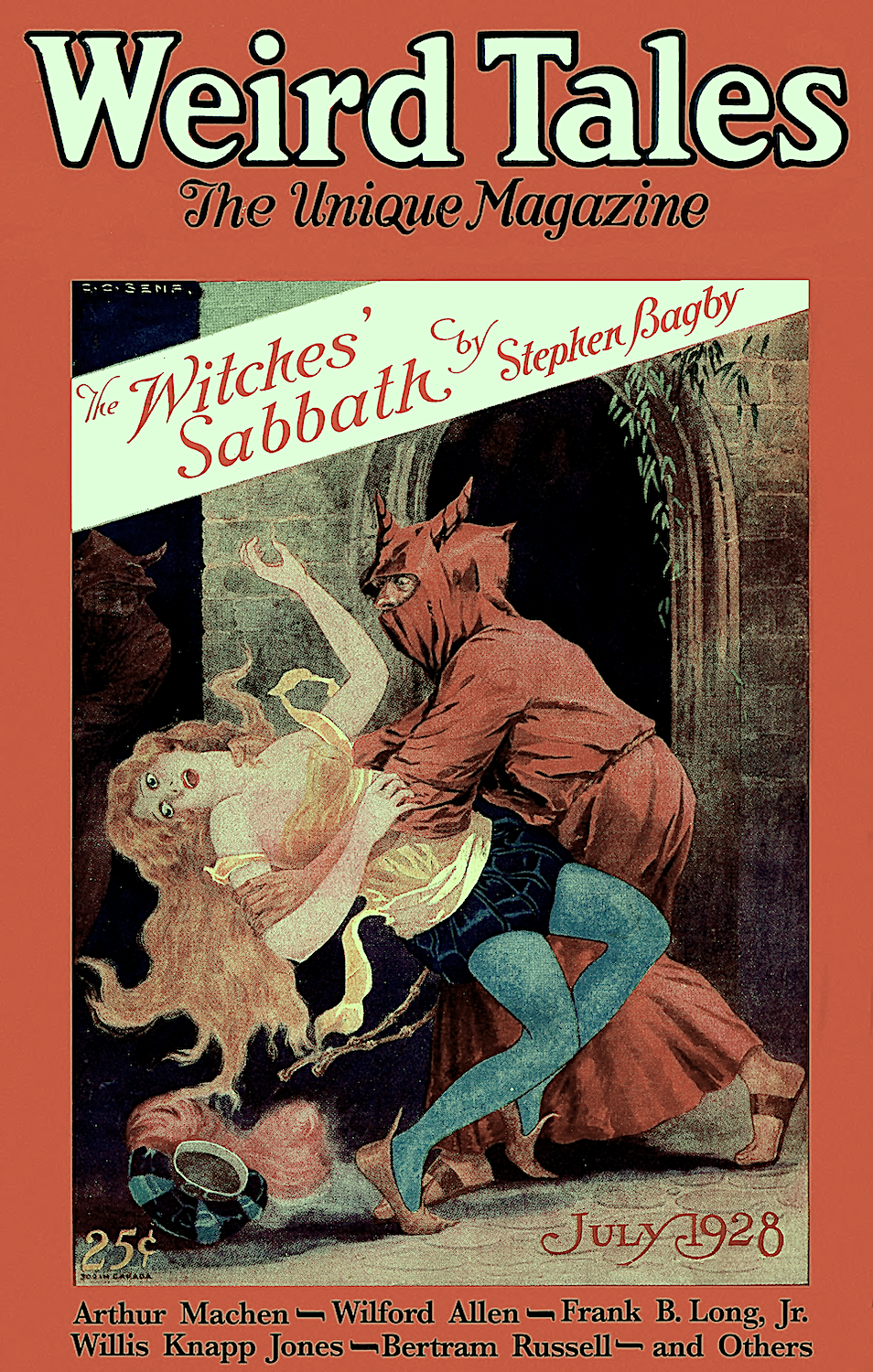
Weird Tales vol 12 number 01 (July 1928) - featured story: The Witches' Sabbath by Stephen Bagby.
#Literature #SciFi #ScienceFiction #books #bookstodon #coverart #bookart #bookcovers
#StephenBagby
@books @scifi @Scifiart @sciencefiction
Cover art by C. C. Senf.
Alt...
Weird Tales vol 12 number 01 (July 1928) - featured story: The Witches' Sabbath by Stephen Bagby. Cover art by C. C. Senf.
A humanoid figure and a wearing a coarse, textured brown hooded garment leans heavily over a pale-skinned woman. The woman is tilted backward in a limp posture, her head hanging down toward the bottom of the frame, displaying long, wavy light brown hair that cascades downward in thick, uneven strands. Her arms are raised and slightly bent at the elbows with fingers spread, and she wears a white, translucent fabric draped loosely over her torso and a dark blue skirt that falls in heavy, opaque folds around her legs. The hooded figure grips the woman's waist firmly with one hand, showing thick fingers, while the other hand, with visible white knuckles and darkened fingernails, is positioned near her upper body. The figure wears dark brown boots that reach mid-calf, featuring thick soles and rugged textures. The scene is set within a heavy stone archway constructed of irregular, grey blocks with visible cracks and rough, pitted surfaces, with dark, shadowy interiors visible behind the figures through the opening. Thick, green vines with small, pointed leaves and tangled, woody stems hang from the top of the stone structure, partially obscuring the upper edge of the masonry.
![[?]](https://files.mastodon.social/accounts/avatars/111/573/783/058/273/934/original/ff5639fc3a49047b.png)
Like, follow, and share if you love libraries, literacy, and books!
#library #libraries #read #reading #book #books #librarylove #author #publiclibrary #literature #lit

![[?]](https://files.mastodon.social/accounts/avatars/110/441/535/131/897/219/original/0ddf9d4dd12a5dee.png)
Libraries Not Doing Pride Displays Say They ‘Shouldn’t Be Judged’
Public records show dozens of libraries have self-censored to avoid attracting negative attention.
by Claire Woodcock
![[?]](https://files.mastodon.social/accounts/avatars/116/040/721/568/277/917/original/d1a7e4270e54e551.png)
📖 "All human wisdom is contained in these two words: Wait and Hope."
— Alexandre Dumas, The Count of Monte Cristo
Read for free in BookShelves:
https://lk0.eu/bks35m
#Bookstodon #FediReads #FreeBooks #Classics #BookShelves #Literature
![[?]](https://media.hachyderm.io/accounts/avatars/109/369/076/558/343/142/original/0f857bd35ebfd7a3.png)
'She was also considered an expert of another thinker, Ludwig Wittengenstein, whose philosophy suggested that there are things that cannot be logically described, and that we should rather remain silent about them. Disproving Wittengenstein's conclusion became one of Bachmann's lifelong goals; through her writing, she strived to express "the unsayable, the mystical, the limit."'
https://www.dw.com/en/why-austrian-author-ingeborg-bachmann-remains-a-literary-icon/a-77609802
![[?]](https://sbonline.nyc3.digitaloceanspaces.com/accounts/avatars/113/495/849/866/199/320/original/4f5084d408b1c280.jpg)
Blue on a Blue Palette by Lynne Thompson #books #literature #dedication

Alt...
for my father, always & all ways
![[?]](https://files.mastodon.social/accounts/avatars/115/961/306/514/488/543/original/316b5ad0c51a0c78.jpg)
"[Writing] is an addiction more powerful than alcohol, than nicotine, than crack. I could not conceive of not writing."
![[?]](https://media.mastodon.scot/accounts/avatars/109/285/896/512/482/891/original/68bc6eea8b007487.png)
Stillness grips the house, just me
and the old dog as I re-read Longley
in the living room. No need of lamp
or candle, just silver kettle of sky
as it pours a deluge of light
across firth, field and hamlet…
—Lynn Valentine, “Midnight, Midsummer, Croft na Creich”
published in DON’T.EVEN.ASK.TOO.HOT: New Writing Scotland 42 (ASL, 2024)
https://asls.org.uk/publications/books/newwriting/nws42/
#Scottish #literature #poem #poetry #midsummer #highlands

Alt...
Lynn Valentine
MIDNIGHT, MIDSUMMER, CROFT NA CREICH
Stillness grips the house, just me
and the old dog as I re-read Longley
in the living room. No need of lamp
or candle, just silver kettle of sky
as it pours a deluge of light
across firth, field and hamlet.
Swifts still busy on the wing
gathering scattered mists of insects.
Moon and stars are shy as morning,
wide lustre of sky firing the land.
Every tree is molten lava, every puddle
burnished, every blade of grass a spark.
Too soon this place will be drenched in darkness,
winter curtains shut late afternoon, but for now
there is a galleon of pewter and pearls.
The old dog and I sail across the world.
![[?]](https://files.mastodon.social/accounts/avatars/114/456/143/575/897/492/original/c92d5689cb2b6023.jpg)
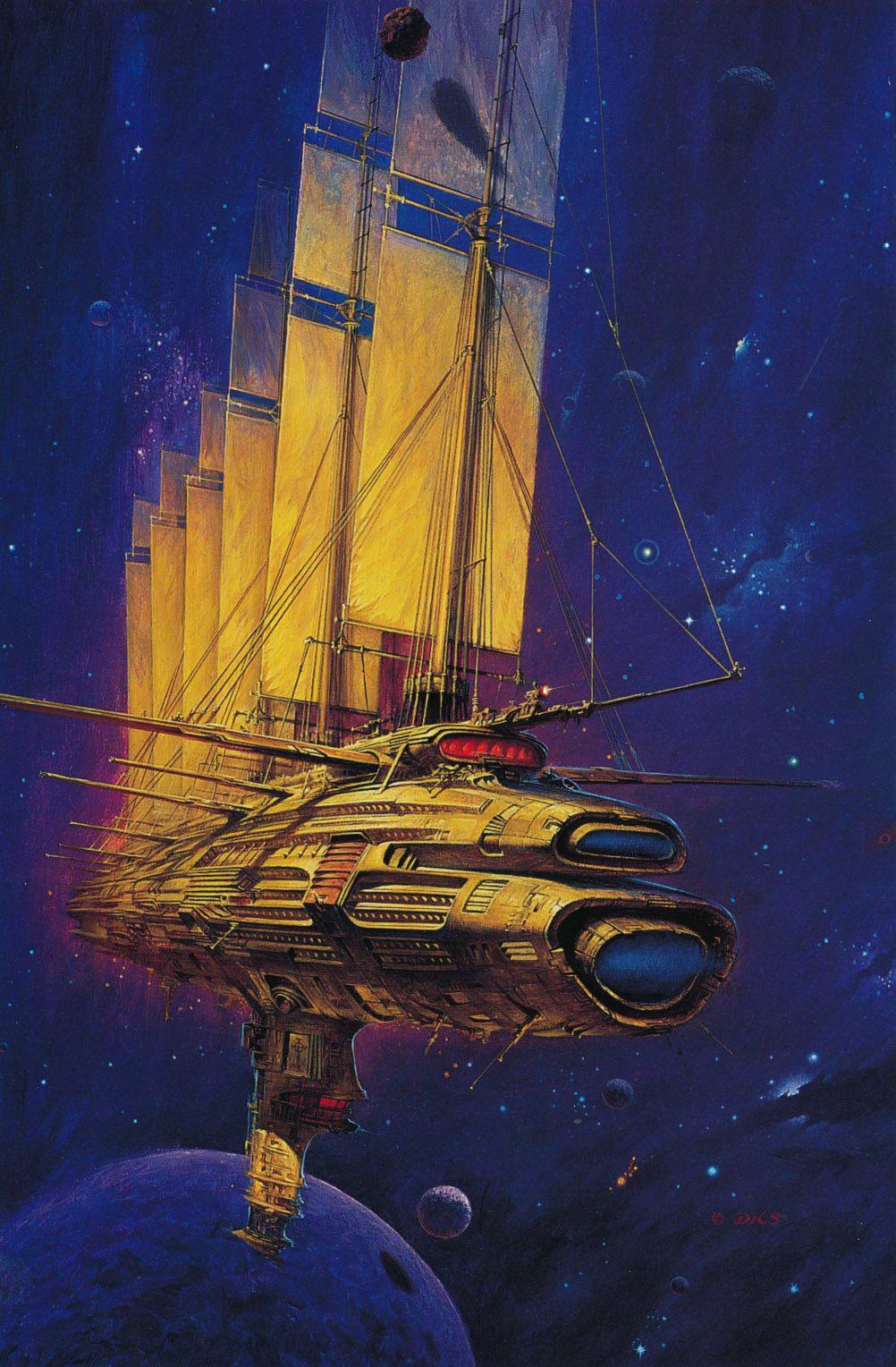
Painting by illustrator Darrell K. Sweet - Cover Art
https://imgur.com/gallery/painting-by-illustrator-darrell-k-sweet-cover-art-ZcHgUve
#painting #paint #illustration #drawing #draw #sciencefiction #scifi #space #illustrator #retro #vintage #cover #art #culture #history #book #literature #graphicart #darrellksweet
Alt...
Painting by illustrator Darrell K. Sweet - Cover Art
#OTD, 24 June, in 1314, the Scottish army under King Robert I destroyed a much larger English invasion force at Bannockburn, in one of the most decisive battles in medieval history. In 1793 Robert Burns composed “Scots Wha Hae”, originally entitled “Robert Bruce’s March To Bannockburn”
⚔️🧵
1/5
#Scottish #literature #Bannockburn #BattleofBannockburn #14thcentury #medieval #history #18thcentury #RobertBurns #poem #poetry #song

Alt...
Poem: "Scots Wha Hae", by Robert Burns
(tune: Hey, Tutti Tatie)
Scots, wha hae wi’ Wallace bled,
Scots, wham Bruce has aften led,
Welcome to your gory bed
Or to victorie!
Now’s the day, and now’s the hour:
See the front o’ battle lour,
See approach proud Edward’s power—
Chains and slaverie!
Wha will be a traitor knave?
Wha can fill a coward’s grave?
Wha sae base as be a slave?—
Let him turn, and flee!
Wha for Scotland’s king and law
Freedom’s sword will strongly draw,
Freeman stand or freeman fa’,
Let him follow me!
By Oppression’s woes and pains,
By your sons in servile chains,
We will drain our dearest veins
But they shall be free!
Lay the proud usurpers low!
Tyrants fall in every foe!
Liberty’s in every blow!—
Let us do or die!
Burns wrote that he was inspired by Bruce’s “glorious struggle for Freedom, associated with the glowing ideas of some other struggles of the same nature, not quite so ancient” – probably a reference to the Radical movement, & to Thomas Muir of Huntershill
2/5
https://quod.lib.umich.edu/cgi/t/text/text-idx?c=evans;idno=N21038.0001.001
#Scottish #literature #Bannockburn #BattleofBannockburn #history #18thcentury #RobertBurns #poem #poetry #song #radicalism

Alt...
A bronze bust, green with verdigris, of Thomas Muir of Huntershill, depicting him after he had suffered a serious injury to his face. A young man, he wears an eighteenth-century coat with a high collar and a ruffled cravat. His hair is swept back, and a cloth is draped over the left side of his face, tied in place with a band around his forehead.
The song quickly became popular, & the tune was adapted as “Marche des soldats de Robert Bruce” for the French army. It also features in the concert overture “Rob Roy” by Berlioz & the 4th movement of the “Scottish Fantasy” by Max Bruch 🏴🇫🇷
3/5
https://www.youtube.com/watch?v=zE4eE20Dk5I
#Scottish #literature #Bannockburn #BattleofBannockburn #history #18thcentury #RobertBurns #poem #poetry #music #classicalmusic #19thcentury #ArmeeFrancaise
![[?]](https://media.mstdn.social/accounts/avatars/113/811/349/210/860/580/original/e87f8783099be63f.webp)
#history #fashion #literature #books
Lauren Good is investigating the fashion of writer Charlotte Bronte. Known for living a life in isolation, Eleanor states that her clothes were far more 'worldly and colourful' than previously thought. She reveals all in this interesting podcast. https://www.historyextra.com/membership/charlotte-brontes-life-through-clothes-podcast/
"I made up my mind long ago to follow one cardinal rule in all my writing — to be clear. I have given up all thought of writing poetically or symbolically or experimentally, or in any of the other modes that might (if I were good enough) get me a Pulitzer prize. I would write merely clearly and in this way establish a warm relationship between myself and my readers, and the professional critics — Well, they can do whatever they wish."
![[?]](https://secure.gravatar.com/avatar/f39a962b723cf7467132d157367556e0631730d361d94a0ae45a776dc7e4f80f?s=120&d=identicon&r=g)
“The clearest way to see through a culture is to attend to its tools for conversation”*…
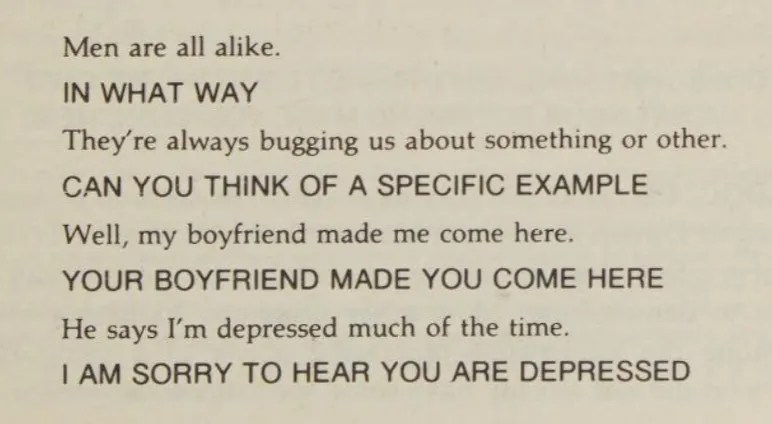
An example of dialogue with an early chatbot, excerpted from from its creator Joseph Weizenbaum’s 1976 book “Computer Power and Human Reason: From Judgment to Calculation.”
Matt Pearce revisits Neil Postman‘s 1992 Technopoly: The Surrender of Culture to Technology…
In the 1960s, a German-American computer scientist named Joseph Weizenbaum coded an early version of today’s AI chatbots. Weizenbaum called his program ELIZA, after the “My Fair Lady” character Eliza Doolittle who takes speech lessons (and gets better).
How people reacted to Weizenbaum’s crude creation tells us almost everything we need to know about AI hype more than half a century later.
ELIZA could hold basic “conversations,” including playing the role of a psychotherapist with real human users. [In the example above, ELIZA’s responses to one woman are shown in capital letters.]
Anybody with a cursory awareness of recent headlines about AI romances and AI psychosis already knows where this is going. ELIZA’s human interlocuters in the 1960s, despite talking to a clunky machine they knew had been programmed by Weizenbaum, refused to believe that they were talking to a mere machine. His secretary, having watched him build the contraption over several months, after just a few exchanges with ELIZA, asked Weizenbaum to leave the room so she could have some privacy.
Weizenbaum, exhibiting a bit of Freudian sangfroid about all this, was not surprised to see people form emotional attachments with inanimate objects. He’d already seen people get attached to their cars or guitars or computers. But “what I had not realized is that extremely short exposures to a relatively simple computer program could induce powerful delusional thinking in quite normal people,” Weizenbaum wrote in his 1976 book “Computer Power and Human Reason: From Judgment to Calculation.”…
… I learned about Weizenbaum’s ELIZA experiment from Neil Postman’s 1992 book “Technopoly: The Surrender of Culture to Technology,” a work of technoconservatism that, like Weizenbaum’s writings, was imbued with foresight about our struggles with today’s vastly more powerful technologies.
Consider this passage from Postman’s “Technopoly”:
In a technocracy, tools play a central role in the thought-world of the culture. Everything must give way, in some degree, to their development. The social and symbolic worlds become increasingly subject to the requirements of that development. Tools are not integrated into the culture; they attack the culture. They bid to become the culture. As a consequence, tradition, social mores, myth, politics, ritual, and religion have to fight for their lives.
Technology, attacking and taking over the culture? Bending society to its own imperative for advancement? In my United States of America? Postman (most famous for writing “Amusing Ourselves to Death”) thought the U.S. was the world’s first “Technopoly,” a society marked by “the submission of all forms of cultural life to the sovereignty of technique and technology,” where information itself has become a form of pollution.
To Postman, “the milieu in which Technopoly flourishes is one in which the tie between information and human purpose has been severed, i.e., information appears indiscriminately, directed at no one in particular, in enormous volume and at high speeds, and disconnected from theory, meaning or purpose.”
Neil Postman wrote “Technopoly” before the introduction of ChatGPT and Sora; TikTok and YouTube; Twitter and Facebook; Google Search and the Netscape browser. Postman wrote the book before Windows 95 existed. A philosophy of technology that mostly holds up through successive eras of technical revolution has already passed time’s first test, which is for the philosophy to outlive the philosopher. And Postman’s philosophy is ultimately conservative, motivated by the desire to preserve the traditions of humanism, social cohesion and a shareable sense of collective history.
Technoconservatism was old before it was new. Postman quotes Plato’s “Phaedrus,” where Thamus warns that whoever learns writing (one of our first dangerous technologies) “will cease to exercise their memory and become forgetful” and “will receive a quantity of information without proper instruction, and in consequence be thought very knowledgeable when they are for the most part quite ignorant.” And Postman, to his credit, is like — well, yeah! Writing really did that. A new technology is neither good nor bad, but ecological: it “does not add or subtract something. It changes everything. In the year 1500, fifty years after the printing press was invented, we did not have old Europe plus the printing press. We had a different Europe.”
In previous generations, societies dealt with information revolutions (which always produced information gluts) by creating institutions that prioritize “good” information and deprioritize the bad; think about schools with their organized curricula, courts with their standards of evidence, newspapers with their party lines or codes of journalistic ethics. But Postman notes that we got lucky after the Gutenberg revolution, when information technology’s development slowed down long enough for societies to catch up and be excellent:
From the early seventeenth century, when Western culture undertook to reorganize itself to accommodate the printing press, until the mid-nineteenth century [with the invention of the telegraph], no significant technologies were introduced that altered the form, volume, or speed of information. As a consequence, Western culture had more than two hundred years to accustom itself to the new information conditions created by the press. It developed new institutions, such as the school and representative government. It developed new conceptions of knowledge and intelligence, and a heightened respect for reason and privacy. It developed new forms of economic activity, such as mechanized production and corporate capitalism, and even gave articulate expression to the possibilities of a humane socialism. New forms of public discourse came into being through newspapers, pamphlets, broadsides, and books. It is no wonder that the eighteenth century gave us in the work of Goethe, Voltaire, Diderot, Kant, Hume, Adam Smith, Edmund Burke, Vico, Edward Gibbon, and, of course, Jefferson, Madison, Franklin, Adams, Hamilton, and Thomas Paine. I weight the list with America’s “Founding Fathers” because technocratic-typographic America was the first nation ever to be argued into existence in print.
Contrast the luxuriously slow social pace of the Gutenberg era with today’s information development timelines. Over the course of three decades, we’ve seen the rise and now-decline of the open web; the rise and now-decline of social media; the rise of short-form video and the rise of chatbots and synthetic information. All created enormous economic and philosophical disruptions whose fundamental impacts you can’t get a group of people in a room together to describe accurately. Among the disruptions: These increasingly efficient forms of sharing information keep encountering falling test scores; universities are trying to implement AI as their own students use it for cheating or boo the tech at their graduations; people are falling in love with their chatbots, which sometimes tell their users to kill themselves. A society that wants to understand itself probably wouldn’t act like this…
Read on for how we might — dare one suggest, should— act: “A society that wants to understand itself probably wouldn’t act like this,” from @mattdpearce.com.
Compare to/contrast with with Yuval Avnar‘s riff on Pascal’s musing on the implications of his invention, the “arithmetic machine” (an early, if not the first, modern mechanical calculator): “The Inventor of the Thinking Machine Didn’t Worry. Neither Should You.“
* Neil Postman, Amusing Ourselves to Death: Public Discourse in the Age of Show Business
###
As we introspect, we might send pointed birthday greetings to Ambrose Bierce; he was born on this date in 1842. His satirical lexicon The Devil’s Dictionary was named as one of “The 100 Greatest Masterpieces of American Literature” by the American Revolution Bicentennial Administration. His story “An Occurrence at Owl Creek Bridge” has been described as “one of the most famous and frequently anthologized stories in American literature”; and his book Tales of Soldiers and Civilians (also published as In the Midst of Life) was named by the Grolier Club as one of the 100 most influential American books printed before 1900.
A prolific and versatile writer, Bierce was regarded as one of the most influential journalists in the United States, and as a pioneering writer of realist fiction. For his horror writing, Michael Dirda ranked him alongside Edgar Allan Poe and H. P. Lovecraft. S. T. Joshi argues that he may well be the greatest satirist America has ever produced, and can take his place with such figures as Juvenal, Swift, and Voltaire. His war stories influenced Stephen Crane, Ernest Hemingway, and others; and he was an influential and feared literary critic. In recent decades Bierce has gained even wider regard as a fabulist and for his poetry.
In 1913, Bierce told reporters that he was travelling to Mexico to gain first-hand experience of the Mexican Revolution. He disappeared over the border and was never seen again.
Apropos the piece featured above:
TELEPHONE, n. An invention of the devil which abrogates some of the advantages of making a disagreeable person keep his distance.
– The Devil’s Dictionary


Ask Not: The Kennedys and the Women They Destroyed by Maureen Callahan #books #literature #dedication
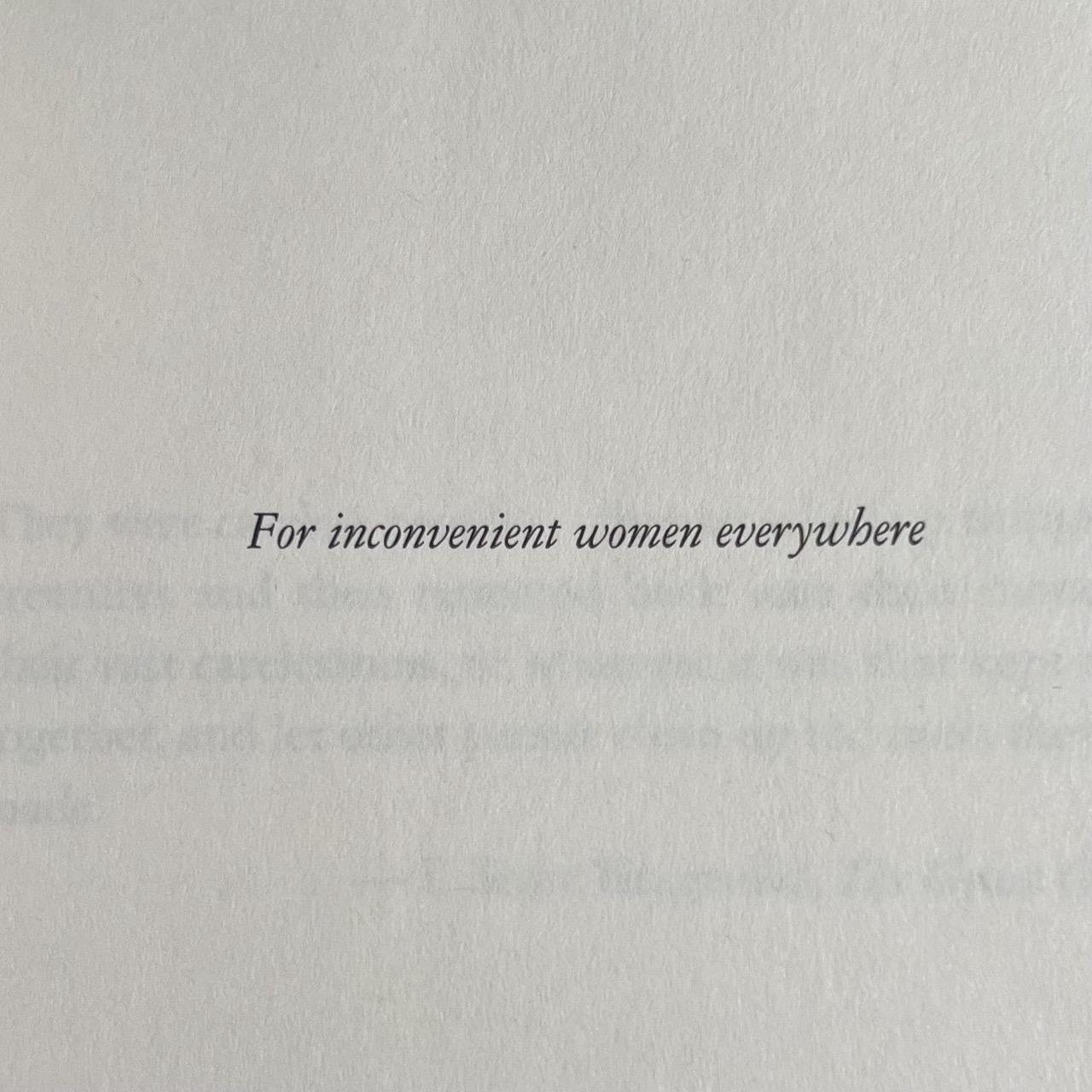
Alt...
For inconvenient women everywhere
![[?]](https://files.mastodon.social/accounts/avatars/115/090/106/266/289/375/original/8242bbceb53d91ce.jpg)
📖 El Cuerno del Toro – Capítulo 8: Rocket Brothers
Venganza, dolor y violencia desatada. Greg y Mérida cruzan una línea de la que quizá no puedan volver.
https://fictograma.com/d/3311-el-cuerno-del-toro-capitulo-8
La creatividad no nace de la nada: es el eco de miles de experiencias conectándose entre sí. Mi ensayo explora cómo pasó de ser una capacidad humana a una identidad, un producto y...
https://fictograma.com/d/3312-ingenieria-del-autor-creatividad
"Mi estómago gruñó como tubería vieja con cemento. —Ignóralo, Milo. El hambre es una construcción social.Mi asistente ni parpadeó. Cuatro hermanas mayores lo habían entrenado mejor que cualquier anomalía mágica...
https://fictograma.com/d/3313-seguros-contra-lo-inexplicable-cap-002
![[?]](https://cdn.masto.host/zirkus/accounts/avatars/111/192/373/629/540/829/original/9ff4f5b9781a0e3a.jpg)
SPARROW-MOUTHED. Wide-mouthed, like the mouth of a sparrow: it is said of such persons, that they do not hold their mouths by lease, but have it from year to year; i.e. from ear to ear. One whose mouth cannot be enlarged without removing their ears.
A selection from Francis Grose’s “Dictionary Of The Vulgar Tongue” (1785)
--
#books #literature #dictionaries #history #society #language #slang @histodons
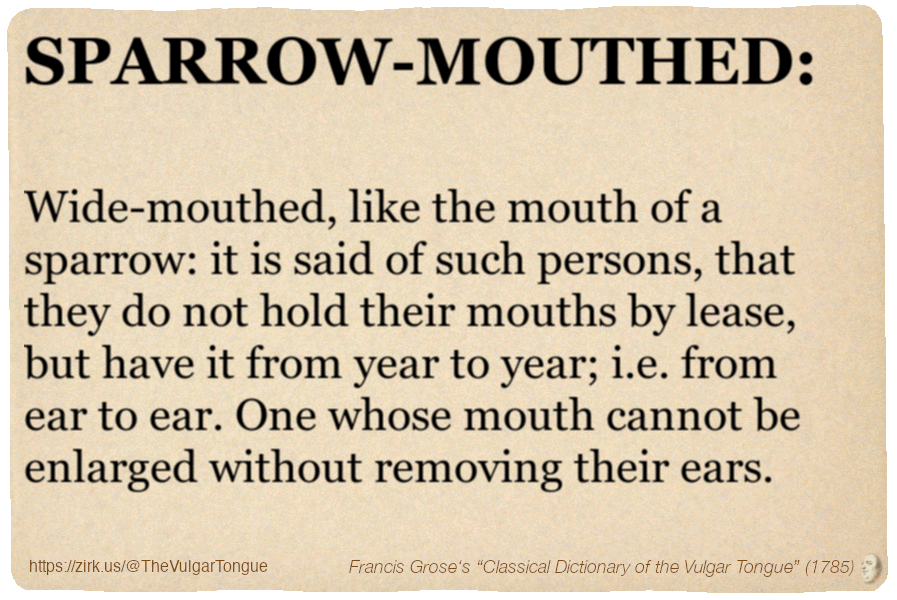
Alt...
Image imitating a page from an old document, text (as in main toot):
SPARROW-MOUTHED. Wide-mouthed, like the mouth of a sparrow: it is said of such persons, that they do not hold their mouths by lease, but have it from year to year; i.e. from ear to ear. One whose mouth cannot be enlarged without removing their ears.
A selection from Francis Grose’s “Dictionary Of The Vulgar Tongue” (1785)
![[?]](https://files.mastodon.social/accounts/avatars/115/799/874/970/791/651/original/bc92733c279a8f7c.jpg)
Transmigrations. Poem by Rolando Enrique Rosales Murga. His poems in his own voice. #bookstagram #bookstagrammer #bookstagramespañol #reseñaliteraria #Libros #gothic #Kindle #kindle #explorepage #amazonkdp #amazonkindle #gothicstyle #poetry #poemas #verso #lirica #gothicfashion #literature #poetry #viral #viralvideo #viralvideos #ViralPost
Transmigraciones. Poema de Rolando Enrique Rosales Murga. Sus poemas en su voz. #bookstagram #bookstagrammer #bookstagramespañol #reseñaliteraria #Libros #gothic #Kindle #kindle #explorepage #amazonkdp #amazonkindle #gothicstyle #poetry #poemas #verso #lirica #gothicfashion #literature #poetry #viral #viralvideo #viralvideos #ViralPost
The Afternoon. Poem by Rolando Enrique Rosales Murga. His poems in his own voice. #bookstagram #bookstagrammer #bookstagramespañol #reseñaliteraria #Libros #gothic #Kindle #kindle #explorepage #amazonkdp #amazonkindle #gothicstyle #poetry #poemas #verso #lirica #gothicfashion #literature #poetry #viral #viralvideo #viralvideos #ViralPost
La tarde. Poema de Rolando Enrique Rosales Murga. Sus poemas en su voz. #bookstagram #bookstagrammer #bookstagramespañol #reseñaliteraria #Libros #gothic #Kindle #kindle #explorepage #amazonkdp #amazonkindle #gothicstyle #poetry #poemas #verso #lirica #gothicfashion #literature #poetry #viral #viralvideo #viralvideos #ViralPost
Red Horse. Poem by Rolando Enrique Rosales Murga. His poems in his own voice. #bookstagram #bookstagrammer #bookstagramespañol #reseñaliteraria #Libros #gothic #Kindle #kindle #explorepage #amazonkdp #amazonkindle #gothicstyle #poetry #poemas #verso #lirica #gothicfashion #literature #poetry #viral #viralvideo #viralvideos #ViralPost
Caballo bermejo. Poema de Rolando Enrique Rosales Murga. Sus poemas en su voz. #bookstagram #bookstagrammer #bookstagramespañol #reseñaliteraria #Libros #gothic #Kindle #kindle #explorepage #amazonkdp #amazonkindle #gothicstyle #poetry #poemas #verso #lirica #gothicfashion #literature #poetry #viral #viralvideo #viralvideos #ViralPost
Fly Girls: How Five Daring Women Defied All Odds and Made Aviation History by Keith O'Brien #books #literature #dedication

Alt...
For Mom, Dad,
and that great solo flier
Grandma
![[?]](https://files.mastodon.social/accounts/avatars/110/088/287/007/315/114/original/c01d5c48adb3014a.jpg)
Dickens the Enchanter by Peter Conrad, 2025
A kaleidoscopic investigation of Dickens's imagination and the world he created.
See Dickens as never before in this creative biography, which delves into his novels, journalistic essays and letters to reveal his strange, hilarious but obsessive personal character and the audacity of a mind that set out, as he said, to rearrange the universe.
#books
#nonfiction
#biography
#literature
#writers
#Dickens
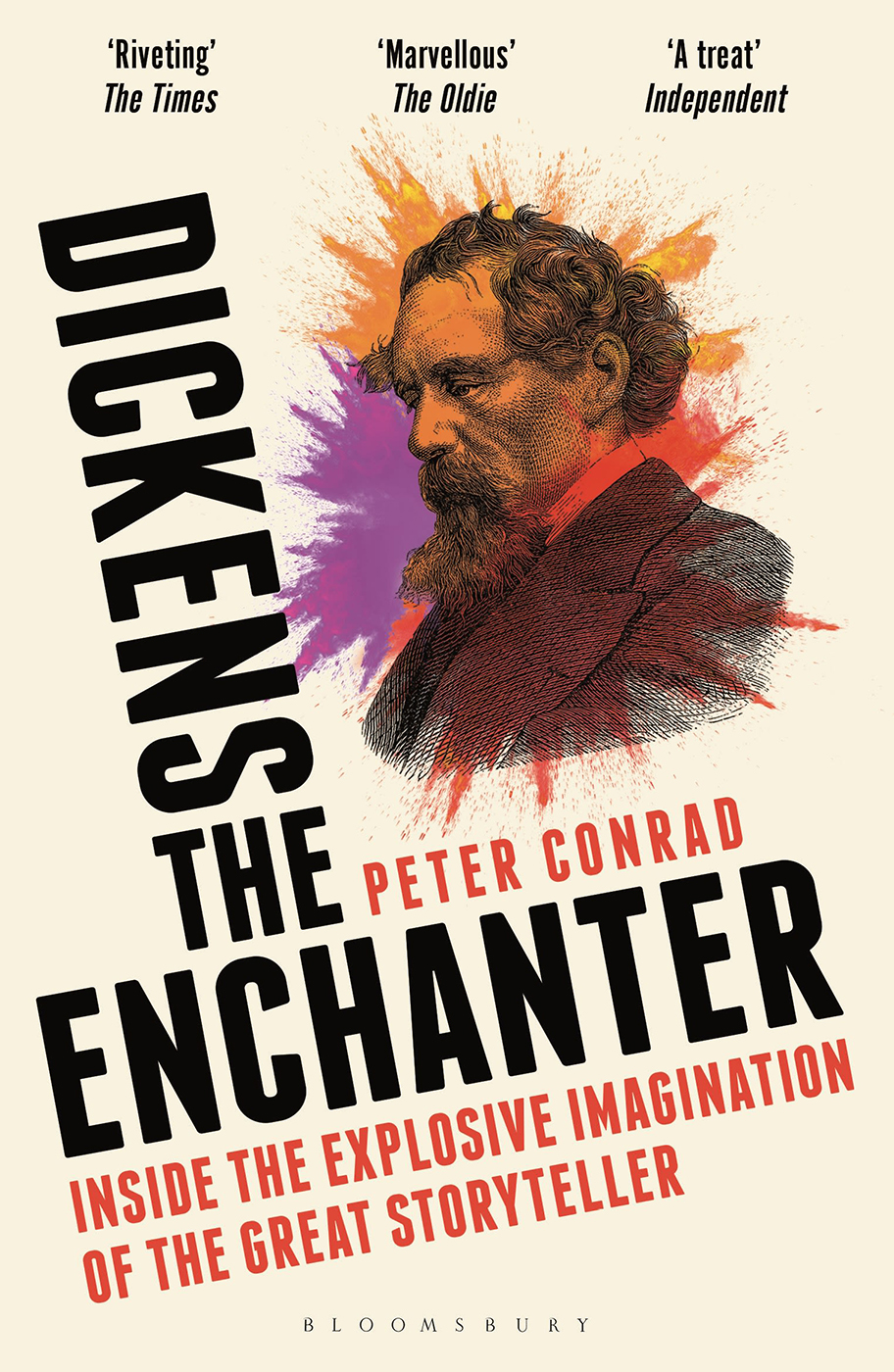
Alt...
As well as re-examining the great novels, Conrad's book probes the journalism in which Dickens reports on his risky ventures into the urban underworld. It also describes the celebrated but dangerously over-intense public readings in which, as at a seance, he allowed his most terrifying characters to take possession of him. Ultimately it reveals how the forces of creation and destruction come together in Dickens, who despite his reputation for jollity and effusive sentiment found it increasingly hard to control the madness and violence of his own self-destructive genius. Dickens the Enchanter takes us deep into an imagination whose power and originality struck some contemporaries as godlike while others thought it demonic. If you already love Dickens, it will renew your understanding of him; if you have yet to read him, it will lure you into his astonishing, alarming, enchanted world."
![[?]](https://files.mastodon.social/accounts/avatars/001/287/672/original/7377c2bd0ab16b03.jpg)
Mirá, papá… ahí estás.
15 años después sigo cargando tu falange al pecho como recordatorio:
Si no hubieras muerto, yo no sería Estefano. Entre rosas y resaca, te sigo debiendo la vida...
https://fictograma.com/d/3308-dia-del-padre
¡Abraham desató su magia por primera vez! Con “Terravere” abrió las ruinas… pero el precio fue brutal. Ahora, en el corazón del templo inundado... https://fictograma.com/d/3309-los-hechiceros-y-la-piedra-de-los-elementos-5-la-prision-de-piedra
Ya no tengo voz,
hace mucho que ya no tengo voz,
pero tengo pasiones y emociones que hablan por mí.
Y eso me hace humano
https://fictograma.com/d/3310-los-senderos-que-permanecieron-ocultos-24
📖 El Cuerno del Toro – Capítulo 8: Rocket Brothers
Venganza, dolor y violencia desatada. Greg y Mérida cruzan una línea de la que quizá no puedan volver.
https://fictograma.com/d/3311-el-cuerno-del-toro-capitulo-8
La creatividad no nace de la nada: es el eco de miles de experiencias conectándose entre sí. Mi ensayo explora cómo pasó de ser una capacidad humana a una identidad, un producto y...
https://fictograma.com/d/3312-ingenieria-del-autor-creatividad
"Mi estómago gruñó como tubería vieja con cemento. —Ignóralo, Milo. El hambre es una construcción social.Mi asistente ni parpadeó. Cuatro hermanas mayores lo habían entrenado mejor..
https://fictograma.com/d/3313-seguros-contra-lo-inexplicable-cap-002
"The saddest aspect of life right now is that science gathers knowledge faster than society gathers wisdom."
Imperial Benevolence: U.S. Foreign Policy and American Popular Culture since 9/11, edited by Scott Laderman and Tim Gruenewald #books #literature #dedication

Alt...
For Marilyn B. Young, who taught us that culture matters in America's war without end.
Mirá, papá… ahí estás.
15 años después sigo cargando tu falange al pecho como recordatorio:
Si no hubieras muerto, yo no sería Estefano. Entre rosas y resaca, te sigo debiendo la vida...
https://fictograma.com/d/3308-dia-del-padre
¡Abraham desató su magia por primera vez! Con “Terravere” abrió las ruinas… pero el precio fue brutal. Ahora, en el corazón del templo inundado, libera a un hechicero de agua atrapado... https://fictograma.com/d/3309-los-hechiceros-y-la-piedra-de-los-elementos-5-la-prision-de-piedra
Ya no tengo voz,
hace mucho que ya no tengo voz,
pero tengo pasiones y emociones que hablan por mí.
Y eso me hace humano
https://fictograma.com/d/3310-los-senderos-que-permanecieron-ocultos-24
"The Law of conservation of energy tells us we can't get something for nothing, but we refuse to believe it."
PictCon 2
17 October 2026, Perth, Scotland: £6–£30
A Science Fiction & Fantasy Convention for everyone who reads, writes and watches
https://www.eventbrite.co.uk/e/pictcon2-tickets-1794793438489
#Scottish #literature #sciencefiction #fantasy #scifi #SFF #convention #specfic #speculativefiction
![[?]](https://files.mastodon.social/accounts/avatars/113/422/408/537/466/391/original/5a0f9daf7d37a975.jpg)
José Lezama Lima, Paradiso.
#libros #books #literatura #literature
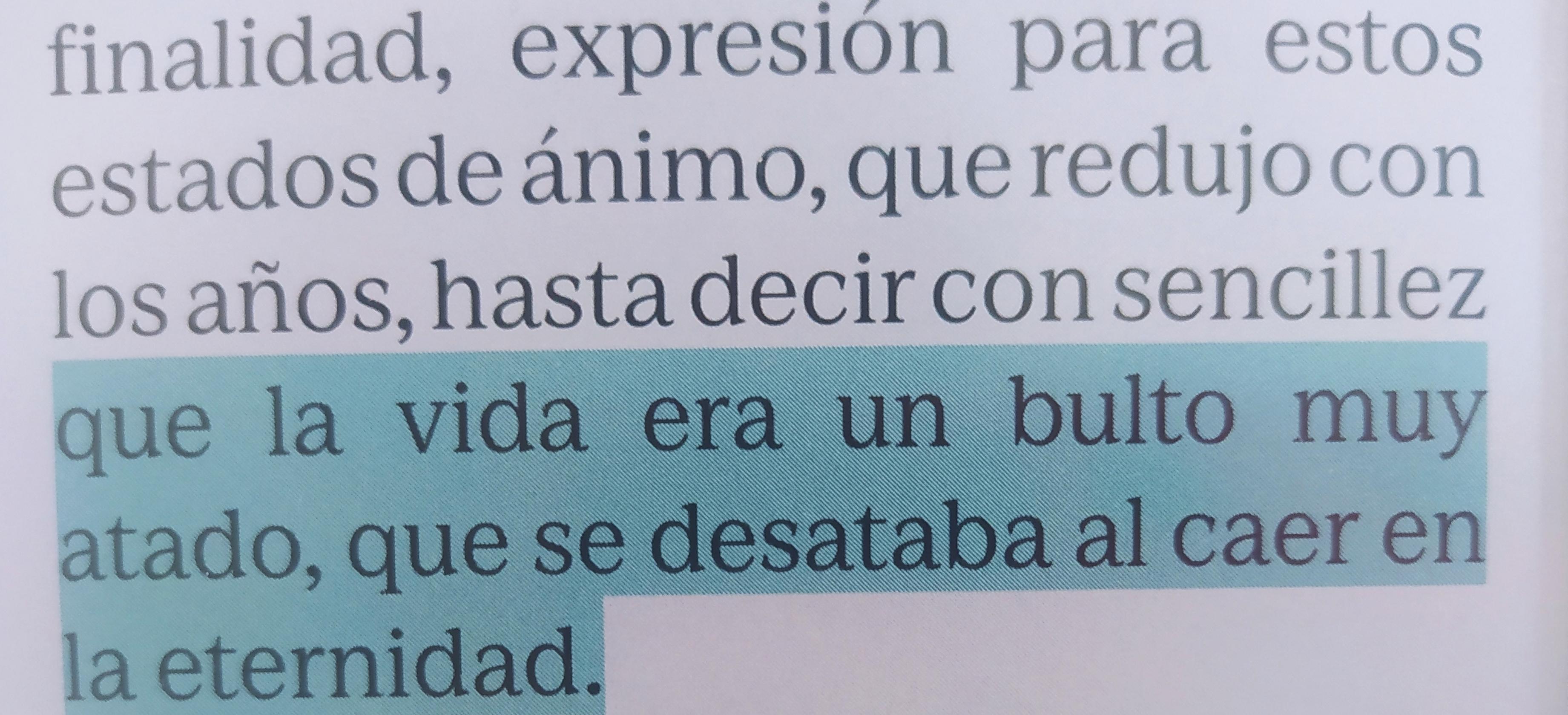
Alt...
José Lezama Lima, _Paradiso_.
The Bullet that Missed by Richard Osman #books #literature #dedication

Alt...
To Ingrid.
I was waiting for you.
![[?]](https://assets.journa.host/accounts/avatars/116/301/910/897/143/817/original/ae3fea78ce3cbe42.jpg)
Ok, but what about an anti- #bullfight #vegan tour?
https://www.salon.com/2026/06/23/hemingways-madrid-one-bite-at-a-time/ #madrid #spain #hemingway #literature #churros #vermouth #food #drink
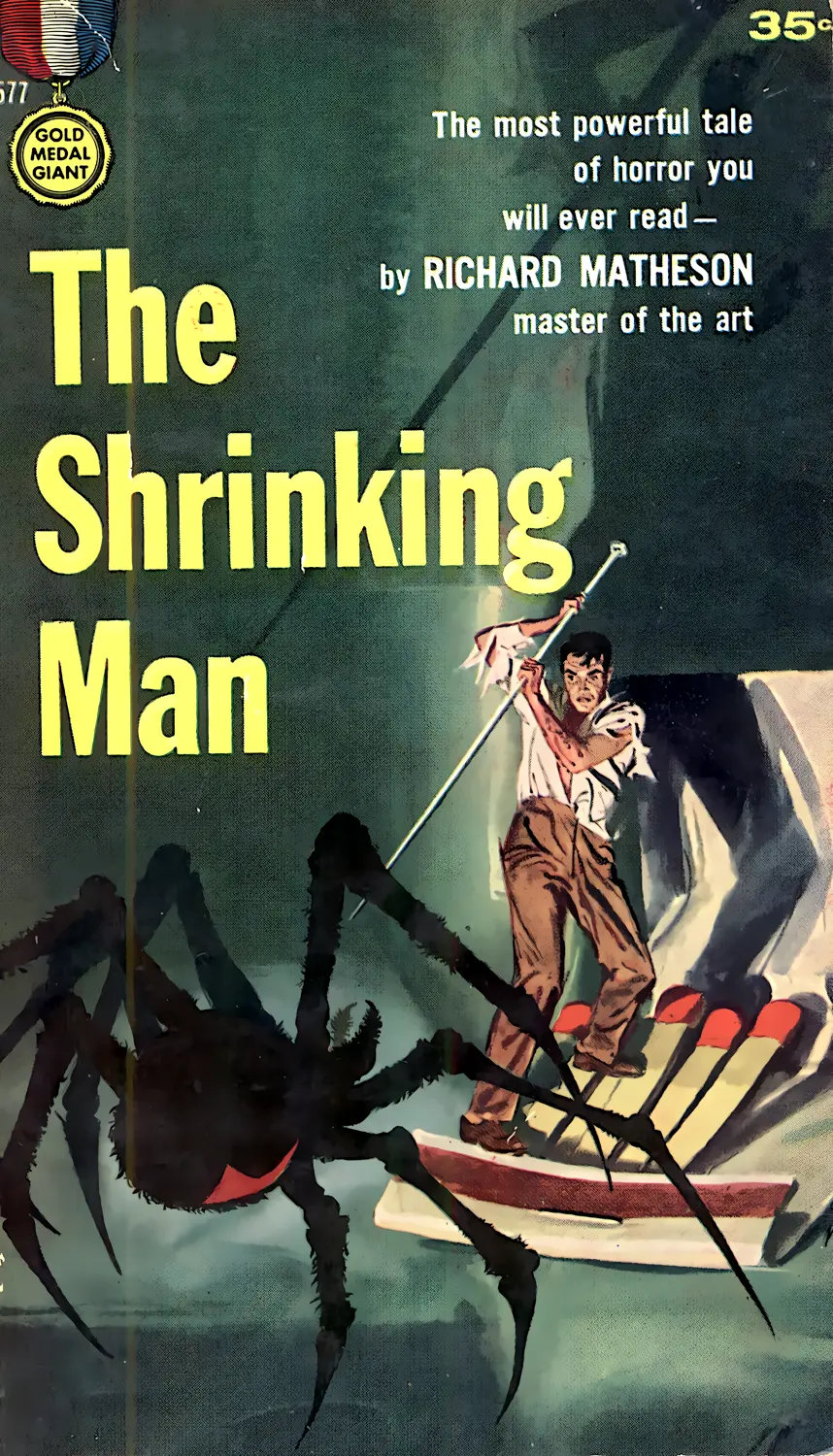
Died this day: 06/23/2013 (b. 02/20/1926) Richard Burton Matheson was an American science fiction author. The author of I Am Legend (1954), adapted for the screen three times: "The Last Man on Earth" (1964), "The Omega Man" (1971), & "I Am Legend," (2007). The Incredible Shrinking Man (1958) won the Hugo.
https://en.wikipedia.org/wiki/Richard_Matheson
#Literature #SciFi #ScienceFiction #books #bookstodon #coverart #bookart #bookcovers
#RichardMatheson @books @scifi @Scifiart @sciencefiction
Alt...
The cover of Richard Matheson’s *The Shrinking Man*, featuring art by Mitchell Hooks, depicts a tense, claustrophobic confrontation. A massive spider looms in the foreground, its thick, obsidian limbs partially obscuring the left side of the frame. Its sharp-tipped legs extend toward the center, creating a sense of imminent danger. To the right, a man in a crisp white long-sleeved shirt and textured brown trousers stands precariously atop an open matchbook. He brandishes a long, thin, needle, gripping it tightly while gazing at the creature with a fearful expression.
The title, "The Shrinking Man," is prominently displayed in large, bold, bright yellow sans-serif lettering, spanning vertically from the top middle toward the bottom left. In the top right, text reads, "The most powerful tale of horror you will ever read—" above "by RICHARD MATHESON, master of the art." The top left features a metallic gold circular emblem with a blue ribbon inscribed "GOLD MEDAL GIANT," while the top right shows the price "35c" in small white font.
The background is a moody gradient of deep teal and pitch black, suggesting a shadowed indoor setting. Dramatic, directional lighting casts high-contrast shadows, highlighting the man’s white shirt and the matchbook. The palette is dominated by dark greens, blacks, and earthy browns, contrasted by the luminous yellow title and stark white elements.
![[?]](https://files.mastodon.social/accounts/avatars/113/282/498/739/956/501/original/964230142e386501.png)
