Search results for tag #scifi
![[?]](https://files.mastodon.social/accounts/avatars/113/562/618/718/751/893/original/172470463899840c.webp)
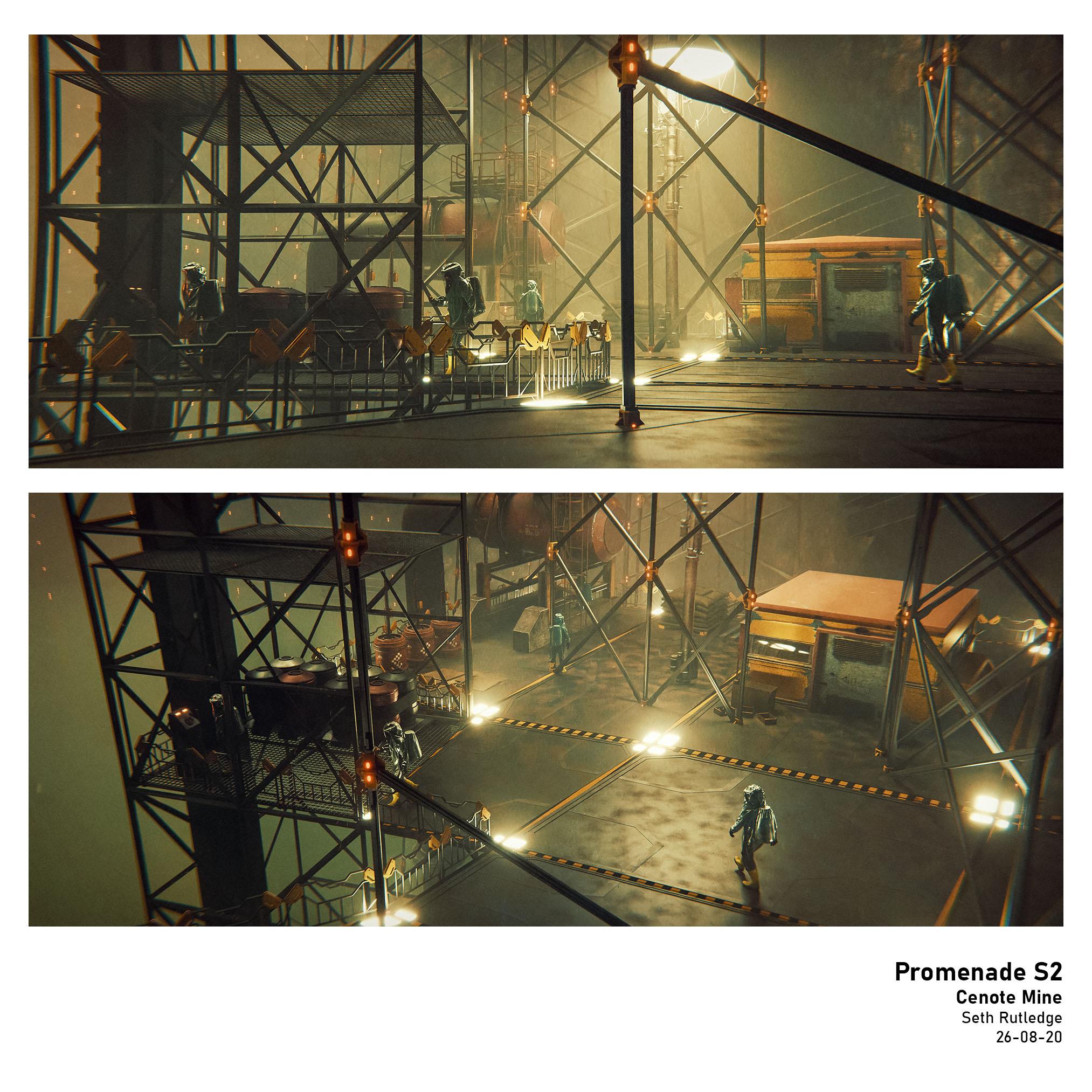
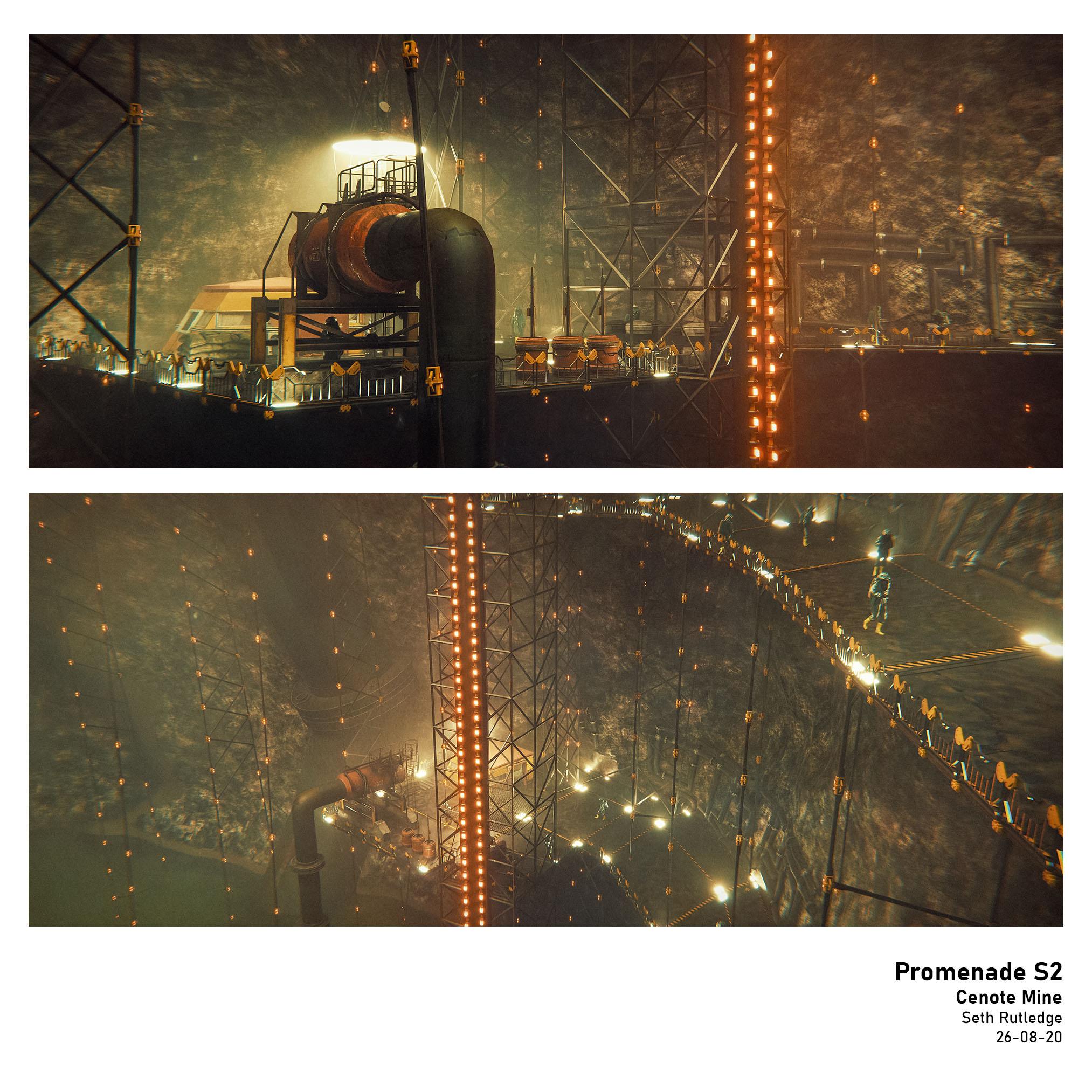
The gas mines within the cenotes were by far the largest employer on the planet, and working in them was both highly lucrative and dangerous. The House prided itself on the extents they took to keep their workers safe, but accidents happened.
#Art #ConceptArt #Blender #SciFi #WorldBuilding
Alt...
Two views of the platforms and service elevator within a cenote gas mine. Workers in full protective gear walk along the 3 tears of gantries, while a service elevator connects the levels to the surface.
Alt...
Two views of the platforms and service elevator within a cenote gas mine. Workers in full protective gear walk along the 3 tears of gantries, while a service elevator connects the levels to the surface.
![[?]](https://bookstodon-files.web.thunderhost.net/accounts/avatars/113/948/505/269/996/580/original/9b500ff2b11d8e9c.png)
Died this day: 08/20/2001 (b. 06/24/1915) - 25th anniversary
Fred Hoyle was an English science fiction author of The Black Cloud, Ossian's Ride, A for Andromeda and others...
https://en.wikipedia.org/wiki/Fred_Hoyle
Please BOOST!
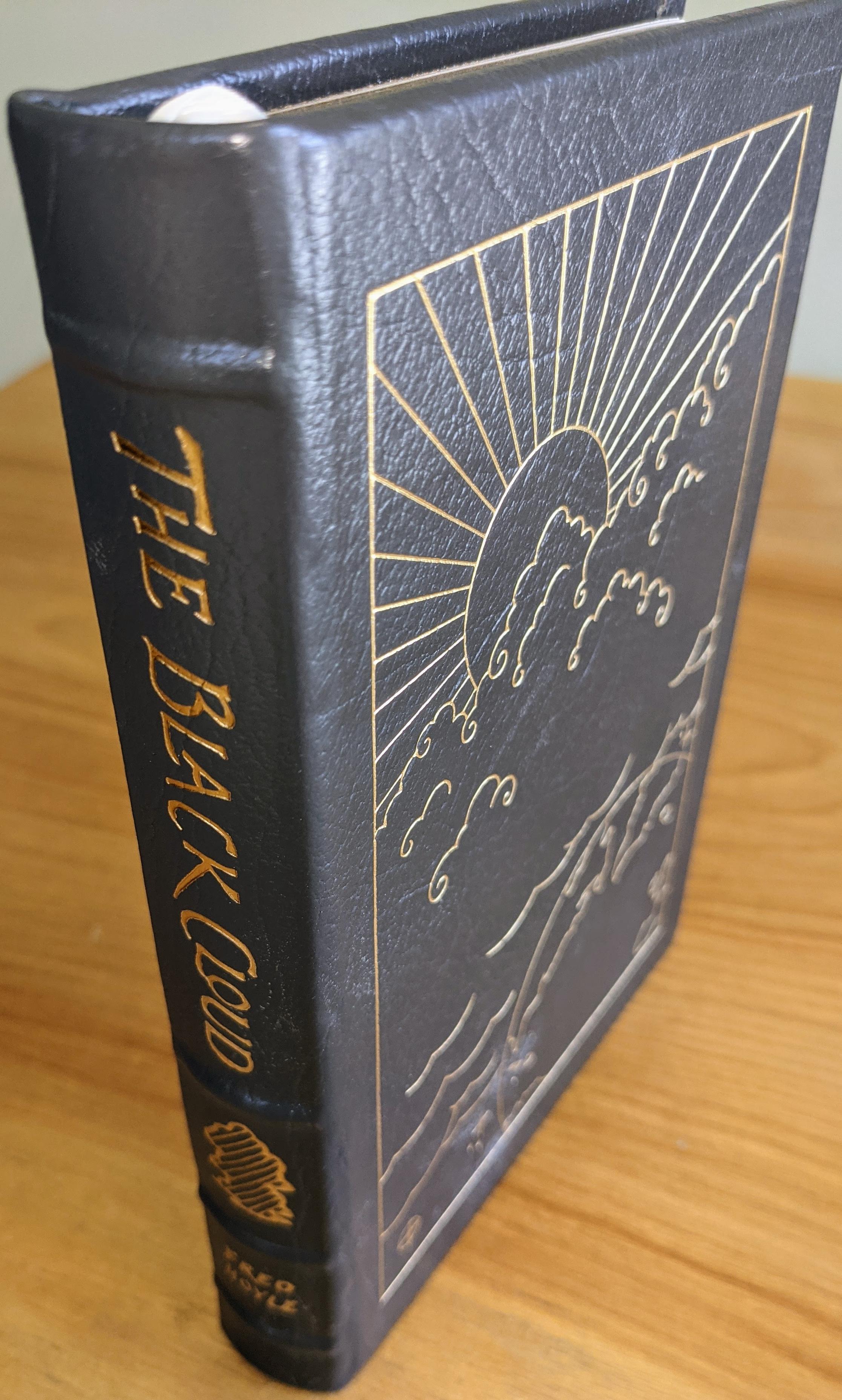
SPECIAL COLLECTORS EDITION of The Black Cloud by Fred Hoyle
https://astralcomputing.com/books/the-black-cloud-hoyle-easton-press
or see the full collection here:
#Literature #SciFi #ScienceFiction #books #bookstodon #coverart #bookart #bookcovers
#FredHoyle
@books @scifi @Scifiart @sciencefiction
Alt...
THE BLACK CLOUD by Fred Hoyle, a Collector's Edition from the Masterpieces of Science Fiction Collection by The Easton Press, issued as a limited run. The volume is bound in full grey leather with a hubbed spine, the leather softly grained with a fine, lightly creased texture and a deep charcoal-grey tone. The title, THE BLACK CLOUD, runs vertically up the spine in 22k gold stylized script; below it, set between raised hubbed bands, sits a small 22k gold emblem of a stylized cloud, and near the foot the author name FRED HOYLE appears in 22k gold. The front cover is framed by a thin 22k gold rule border and carries original artwork by Richard Powers, rendered as fine 22k gold line-work on the dark leather ground: a rising sun, its many straight rays fanning outward, partially eclipsed by a large dark cloud of curling gold outlines, with further stylized clouds and rolling wave-like forms toward the lower right. The page block is printed on acid-neutral, archival paper and finished with gilded edges. The binding features Smyth sewing and concealed muslin joints, and the inside front cover holds a pristine bookplate. A single-owner copy from a private collection, it is accented throughout in 22k gold and has always been stored in a dust-free bookcase in a dry climate. The condition is pristine, as-new, and unread.
Alt...
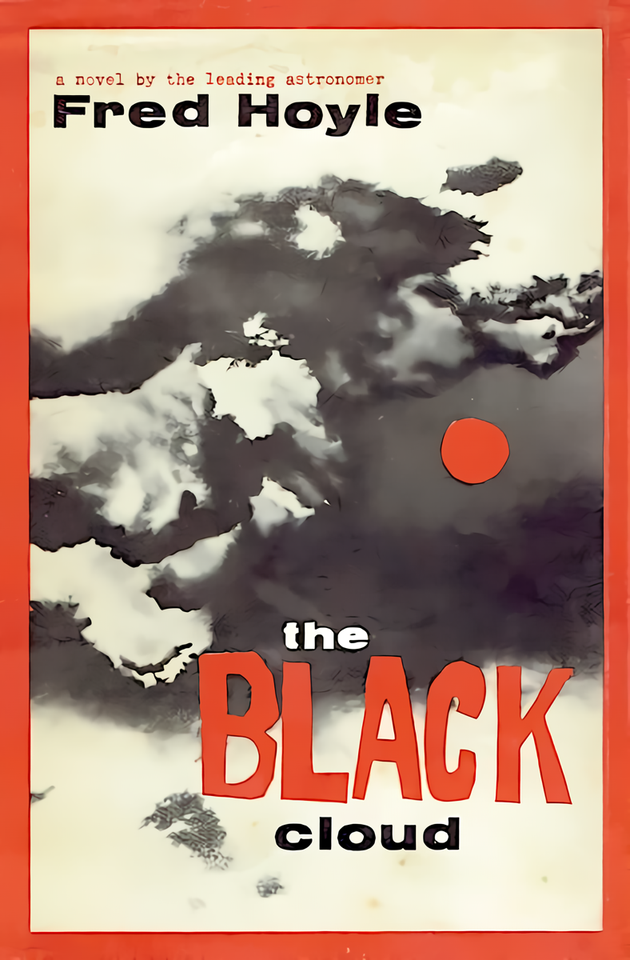
The book cover for "the BLACK cloud" by Fred Hoyle, with cover art by Desmond Skirrow.
The title, "the BLACK cloud", is positioned in the lower half of the cover. "the" is in small, white, lowercase, sans-serif font. "BLACK" is in a large, bold, red, uppercase, sans-serif font. "cloud" is in small, black, lowercase, sans-serif font.
The author's name, "Fred Hoyle", is located at the top of the cover in a large, black, bold, sans-serif font. Above the name, a smaller line of text in a red, lowercase, sans-serif font reads, "a novel by the leading astronomer".
The overall scene features a dramatic, high-contrast sky filled with large, dark, swirling clouds. The clouds are a deep charcoal or black color and appear thick and textured, with irregular, jagged edges. They are set against a bright, off-white or pale cream background, creating a stark, atmospheric contrast. A solid, bright red circle, resembling a sun or a planet, is positioned on the right side of the cover, partially obscured by the dark clouds.
The color palette is limited and striking, consisting of white, black, charcoal, and a vibrant red. The background is a flat, pale cream color. The lighting is stark and dramatic, with the bright white areas contrasting sharply with the dark, heavy clouds. The texture of the clouds appears somewhat grainy or mottled, adding to the sense of movement and turbulence. The entire cover is enclosed within a thick, solid red border.
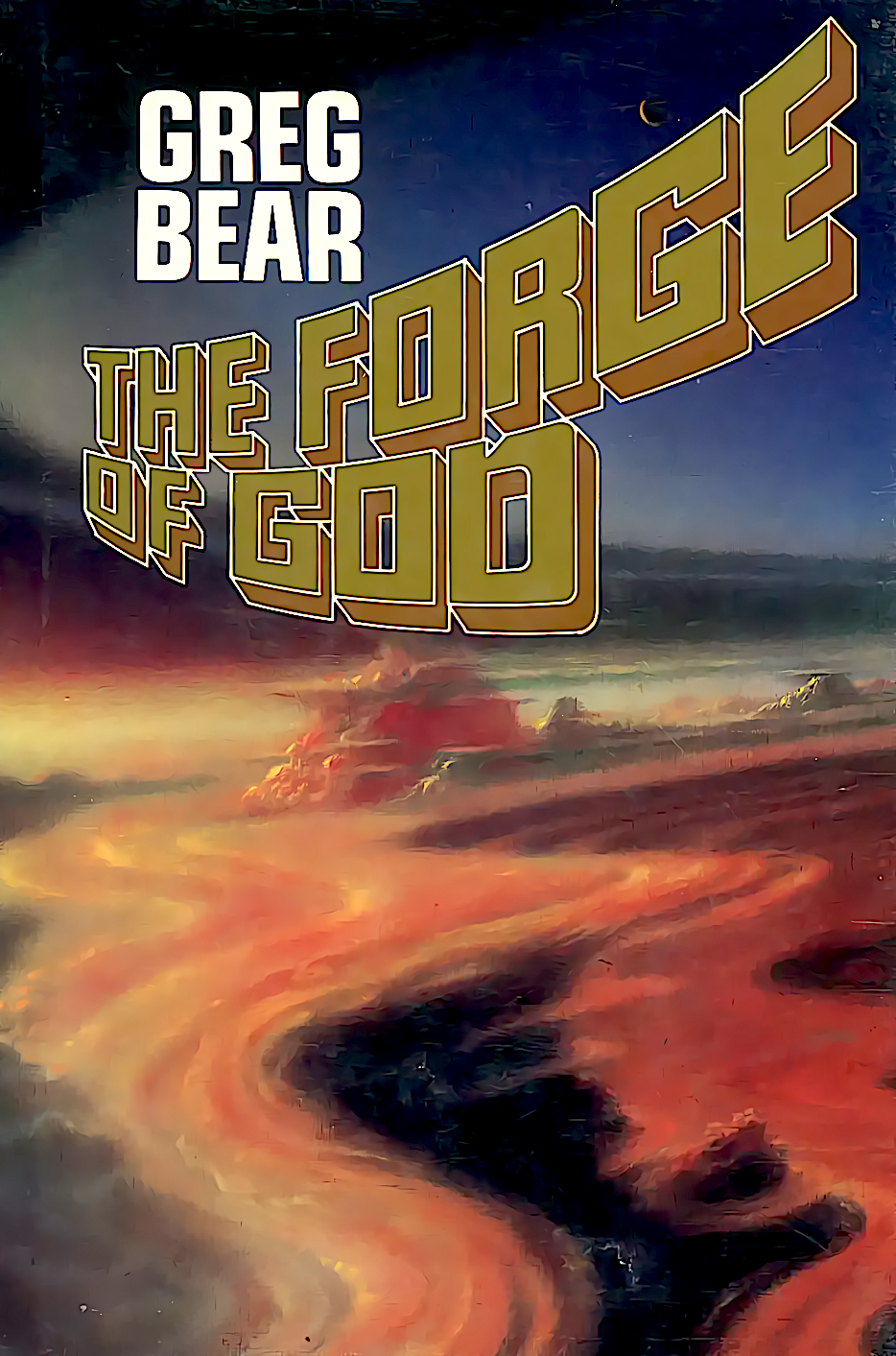
Born this day: 08/20/1951 (d. 11/19/2022) - 75th anniversary. Gregory Dale Bear was an American science fiction writer. His work covered themes of conflict, consciousness, and accelerated evolution. The Forge of God was nominated for the Nebula, Hugo and Locus Awards.
https://en.wikipedia.org/wiki/Greg_Bear
#Literature #SciFi #ScienceFiction #books #bookstodon #coverart #bookart #bookcovers
#GregBear @books @scifi @Scifiart @sciencefiction
Art by Alan Gutierrez
Alt...
The cover for Greg Bear’s The Forge of God, featuring art by Alan Gutierrez, is dominated by a massive, 3D-style title. The text "THE FORGE OF GOD" is rendered in bright, metallic yellow-gold with thick dark outlines and heavy, obsidian-like drop shadows that provide physical weight. The typography tilts upward from left to right. Positioned directly above the title, the author's name, "GREG BEAR," is set in bold, crisp white, sans-serif capital letters that stand out sharply against the darkness.
The background presents an expansive, abstract cosmic landscape. The upper portion consists of a deep, near-black navy blue evoking outer space, with a small, faint, pale circular object in the far top right corner. Below the title, the scene transitions into a turbulent expanse of energy. A thick, flowing band of warm tones—creams, pale yellows, vibrant oranges, and fiery reds—sweeps diagonally from the lower left toward the center, resembling a river of molten lava or a solar nebula.
Below this luminous mass, the landscape descends into deep shadows and craggy textures of black and dark umber, suggesting rugged earth or cooling volcanic rock. In the mid-ground, hazy shapes resembling distant mountains or nebulous clouds are bathed in an amber glow from the light band above. The lighting is intensely dramatic, defined by extreme contrast between brilliant, glowing streaks and profound, dark voids. The overall image possesses a painterly texture that emphasizes fluid movement and immense cosmic scale.
![[?]](https://pxscdn.com/cache/avatars/647184139271968067/avatar_pa6b2.png)
![[?]](https://bookwyrm-social.sfo3.digitaloceanspaces.com/images/avatars/649e0c42-1d83-4686-932a-d52ec1894779.jpg)
Spoiler ahead ⚠️ [SENSITIVE CONTENT]
Essun broke Nassun's hand 😳
I didn't remember that. Gods, that's so fucked up. Essun was a terrible mother. Yeah, I know: Not entirely her fault—she's been feared and hated by stills her whole life, she was raised by a paramilitary organization that taught with violence and punishment, and she was trying to make her daughter safe in a world that would kill her just for being who she is—but at some point every parent has to take responsibility for their own actions and can't just blame the way they were raised for the awful things they do to their children.
Intentionally breaking your child's hand to teach a lesson absolutely lands you in the "terrible parent" category.
Fuck me.
And then Nassun comes to love Schaffa. Fucking Schaffa! Deer gods, this is all so twisted.
@bookstodon@fedigroups.social #Books #Reading #SFF #SciFi #Fantasy #Fiction #BrokenEarth
(comment on The Obelisk Gate)
Alt...
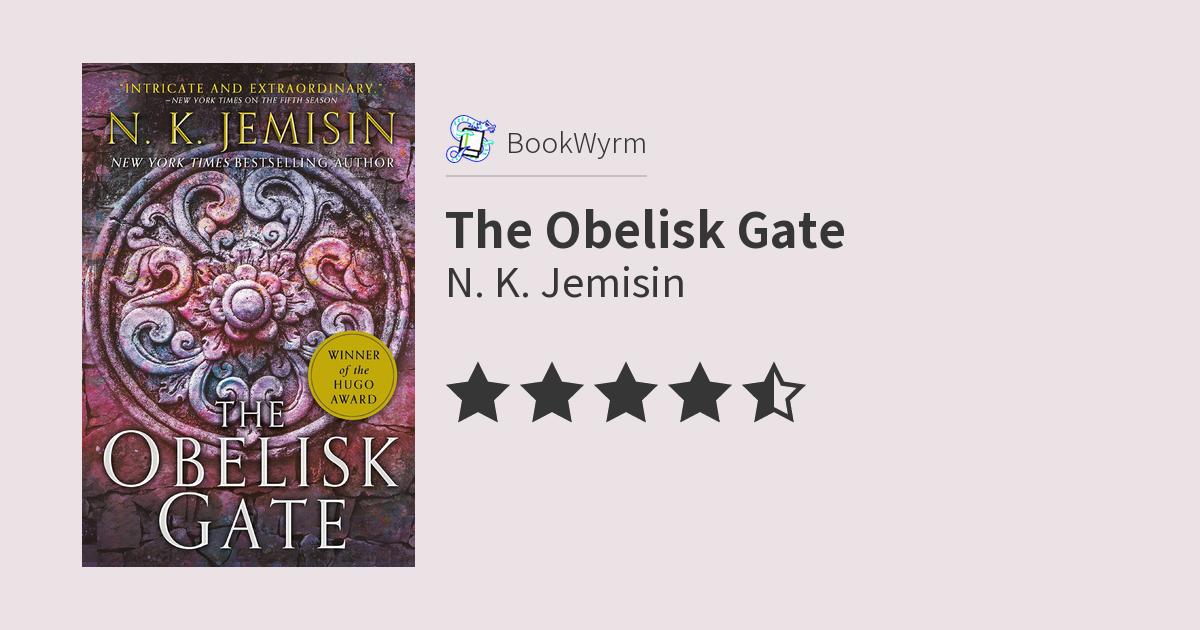
N. K. Jemisin: The Obelisk Gate (EBook, 2016, Orbit)
![[?]](https://files.mastodon.social/accounts/avatars/110/651/650/056/515/787/original/2e4779562810e79e.png)
Journey Through the Video Game World
#kindle - https://amazon.com/Journey-Through-Video-Game-World-ebook/dp/B00Q96UPRC/
#kobo - https://kobo.com/ca/en/ebook/journey-through-the-video-game-world
#apple - https://itunes.apple.com/us/book/id1448603621
#nook - http://barnesandnoble.com/s/2940156328222
#google - https://play.google.com/store/books/details/Ashad_Mukadam_Journey_Through_the_Video_Game_World?id=1wGcBQAAQBAJ
#scribd - http://scribd.com/book/396870249
#readers get your copy today!
Born this day: 08/19/1950 Mary Doria Russell is a retired American novelist. She is best known for her work, The Sparrow, and its sequel, Children of God, about a Jesuit priest who travels to a faraway planet, winner of Arthur C. Clarke, BSFA, and Tiptree awards.
https://en.wikipedia.org/wiki/Mary_Doria_Russell
#Literature #SciFi #ScienceFiction #books #bookstodon #coverart #bookart #bookcovers
#MaryDoriaRussell @books @scifi @Scifiart @sciencefiction
Art by Robin Locke Monda
Alt...
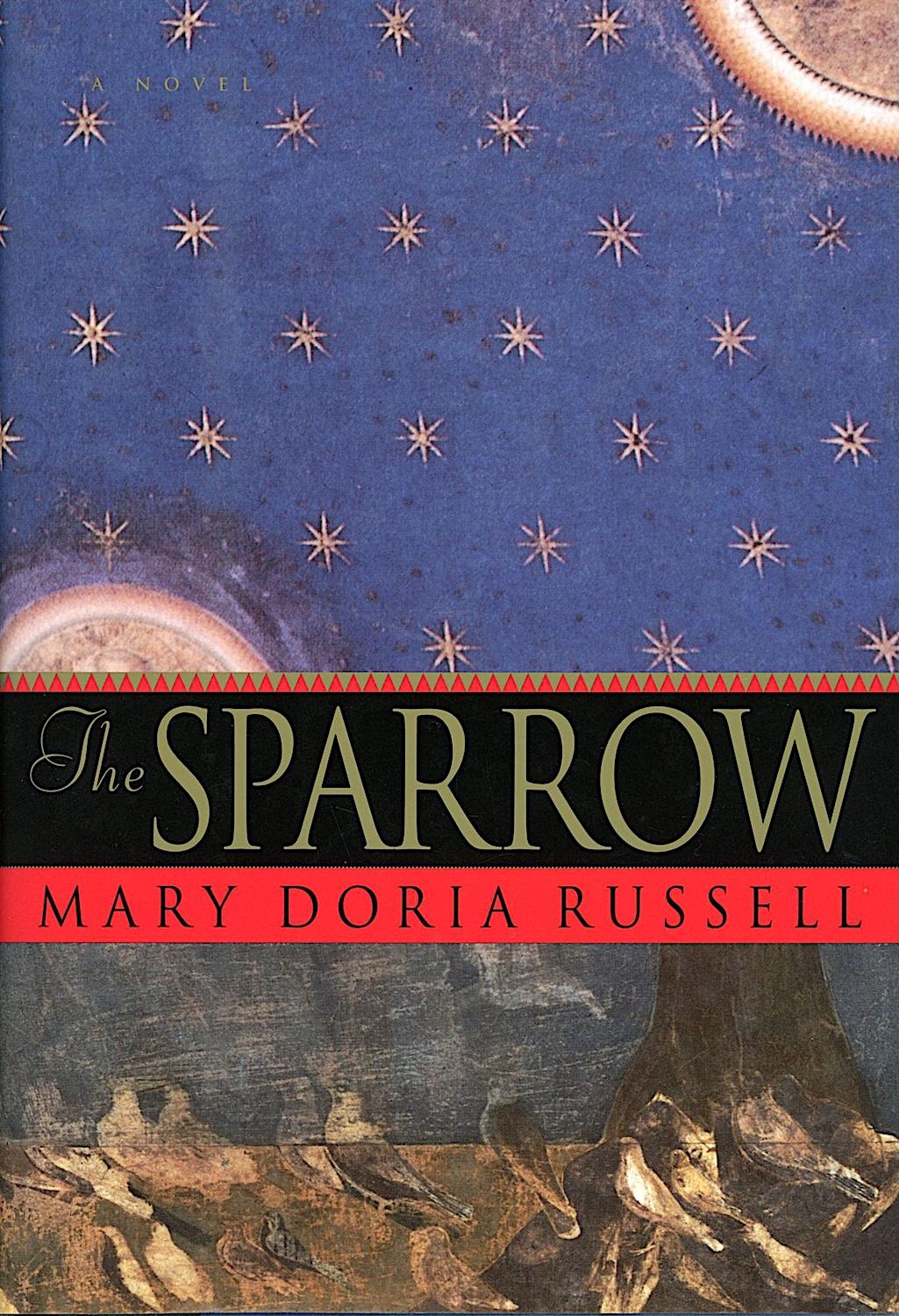
The cover of Mary Doria Russell’s The Sparrow is divided into three horizontal sections by black bands and a thin red decorative border.
Cover Art by Robin Locke Monda
The top section features a textured, deep blue background resembling an aged fresco or starry night sky, patterned with gold eight-pointed stars of varying sizes. In the upper right, a portion of a large, pale golden circular shape—perhaps a moon or sun—is visible with a scalloped or gear-like edge. A partial, lighter arc appears in the lower left. The words "A NOVEL" are printed in a small, gold, serif font near the top left.
The middle section contains the title and author against black and red backgrounds. A thin strip at the top of this section is decorated with a row of small, downward-pointing red triangles. Below this, the word "The" is written in elegant, white, cursive script, followed by "SPARROW" in large, gold, all-caps serif lettering on a black background. The author's name, "MARY DORIA RUSSELL," is printed in a black, all-caps serif font on a solid red rectangular band beneath the title.
The bottom section features an earthy, dark-toned painting of several sparrows, depicted in muted shades of brown, tan, and cream. Clustered along the bottom edge, they appear to be resting or walking on textured, dark ground. The lighting is dim and atmospheric, with heavy shadows and a painterly texture suggesting an old oil painting. The palette is dominated by deep blues, golds, blacks, and warm earth tones.
![[?]](https://media.mstdn.social/accounts/avatars/109/415/455/159/936/808/original/0cb05f56e021cb8f.jpg)
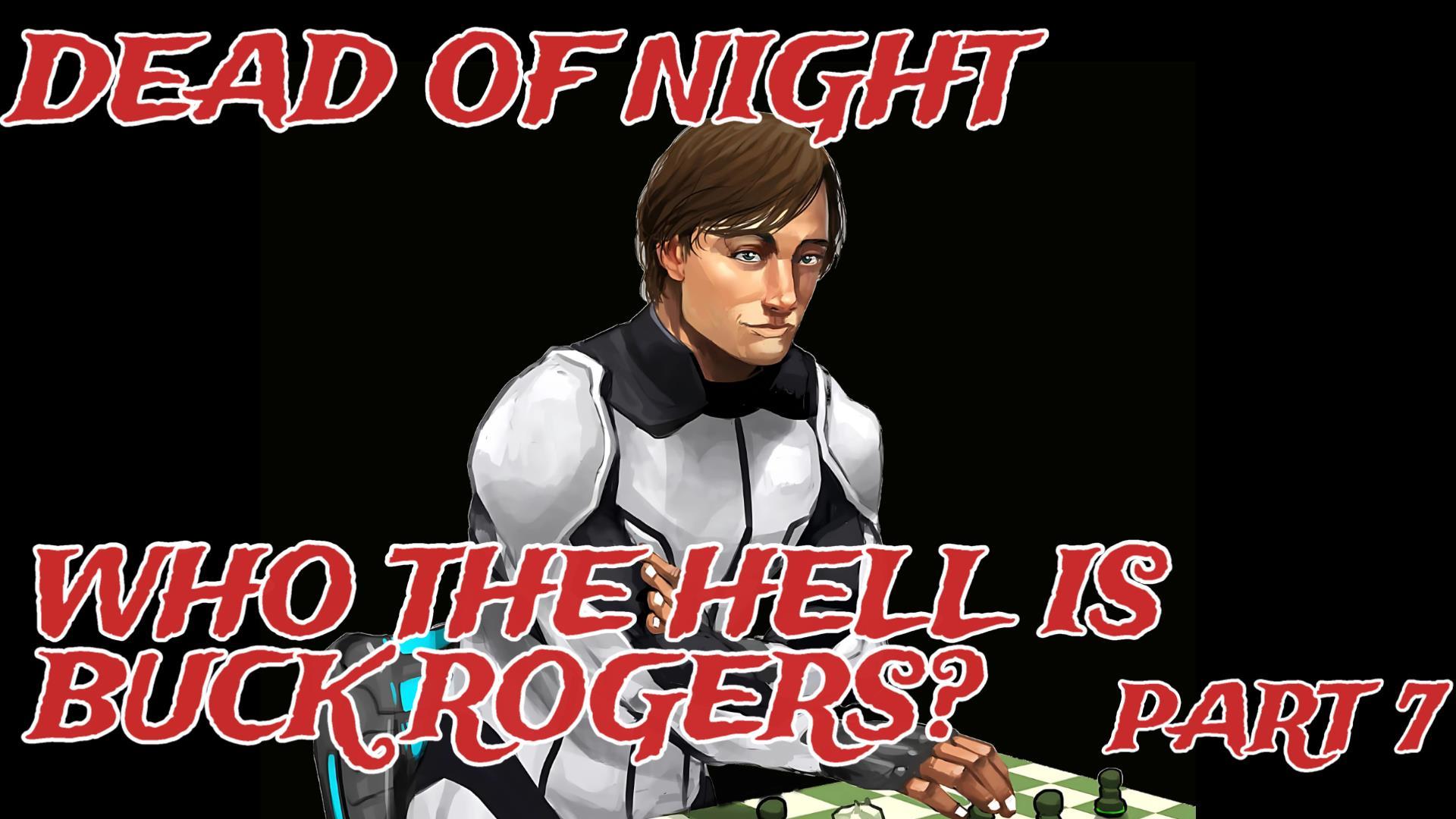
Chapter 7 - "Dead Of Night"
Carter Vincent wakes during the night, haunted by the ghosts of his long-dead family, only to find the inert Cain silently maintaining a vigil over him. Carter is unsure whether to count this as creepy or not, given Cain's status as an android. But he is grateful for the company in his emotional state.
#bookstodon #scifi #sciencefiction #scifibooks #books
![[?]](https://files.mastodon.social/accounts/avatars/114/818/815/143/105/862/original/0b710b9e59e105c0.jpg)
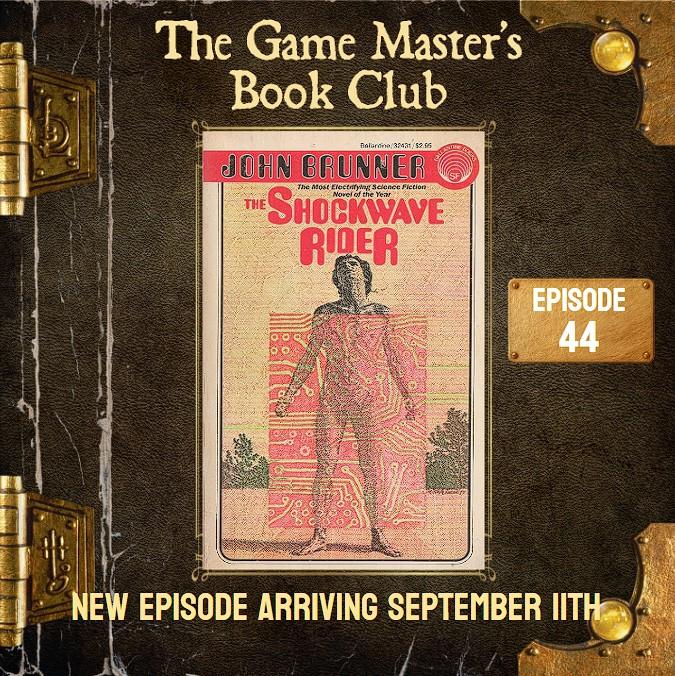
GMBC ep44 Dialing Up the Future: Exploring Themes from The Shockwave Rider by John Brunner https://www.k-squareproductions.com/gmbc
#scifi #retroscifi #thriller #espionage #hackers #1970s #books #bookstagram
Died this day: 08/19/2017 (b. 08/18/1925) Brian Wilson Aldiss was an English writer, named a Grand Master by the Science Fiction Writers of America in 1999. He wrote the short story "Supertoys Last All Summer Long" (1969), the basis for the Steven Spielberg film A.I. Artificial Intelligence (2001).
https://en.wikipedia.org/wiki/Brian_Aldiss
#Literature #SciFi #ScienceFiction #books #bookstodon #coverart #bookart #bookcovers
#BrianAldiss
#AI @books @scifi @Scifiart @sciencefiction
Alt...
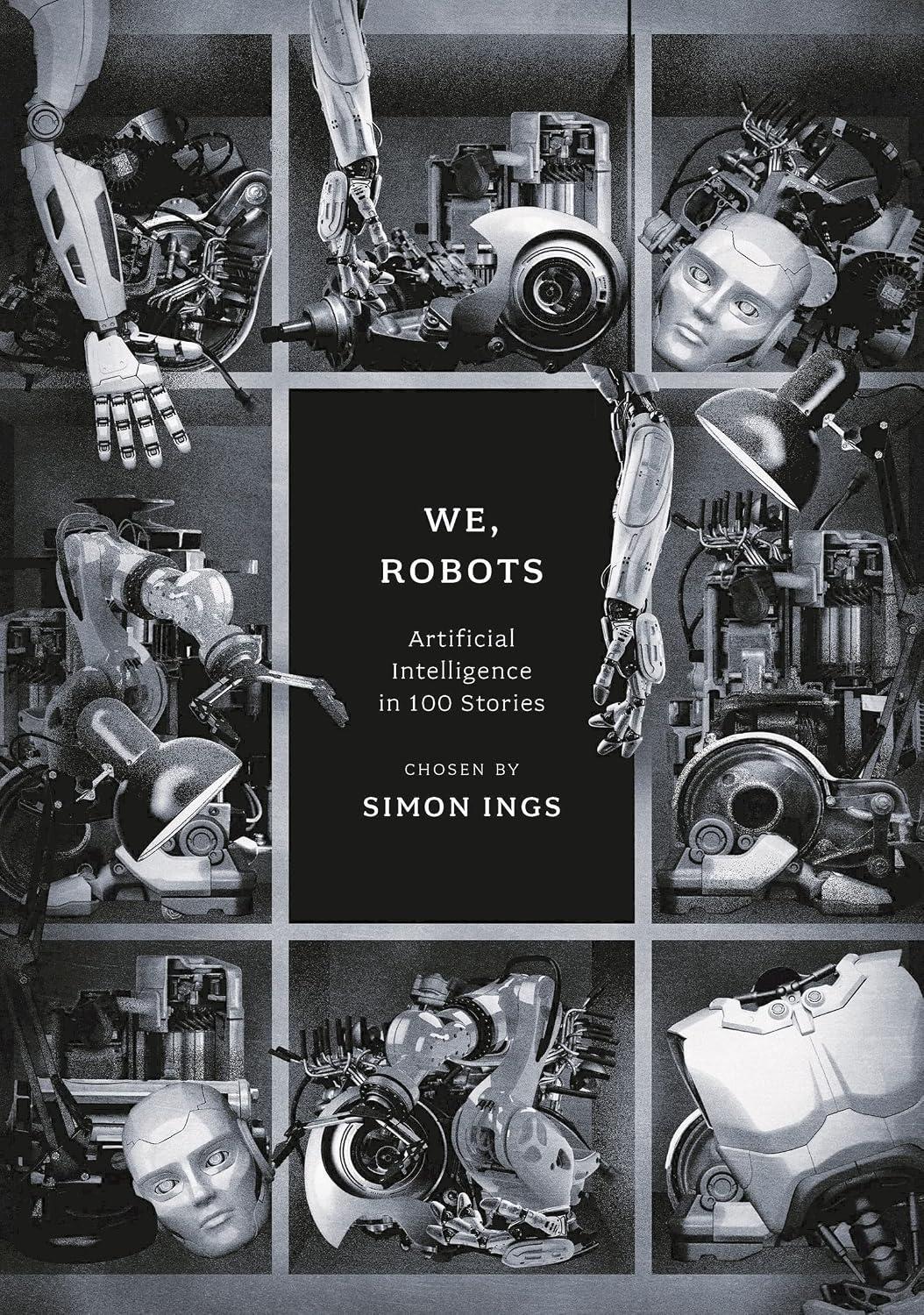
WE, ROBOTS: Artificial Intelligence in 100 Stories, chosen by Simon Ings. Cover art by Maurizio Manzieri.
This black and white cover features a central dark gray rectangle containing the title "WE, ROBOTS" and subtitle "Artificial Intelligence in 100 Stories" in white, sans-serif font, followed by "CHOSEN BY SIMON INGS."
The background is a nine-panel grid formed by dark borders. Each panel contains highly detailed, monochromatic illustrations of robotic components, appearing like parts on a shelf. Dramatic, high-contrast lighting creates a metallic, sculptural feel.
Top-left: A mechanical arm ending in a detailed hand with visible joints.
Top-center: A complex assembly of gears, pistons, and heavy limbs.
Top-right: A smooth, pale humanoid face looking upward amidst dark mechanical structures.
Middle-left: A robotic limb connected to a thick base and tubes.
Middle-right: An articulated arm hangs vertically next to the central block, adjacent to a mechanical assembly with a lamp-like structure.
Bottom-left: A pale humanoid head near heavy industrial machinery and deep shadows.
Bottom-center: A dense, chaotic cluster of gears, wires, and metallic plates forming a complex core.
Bottom-right: The upper torso and shoulder of a sleek, white robotic figure.
The overall aesthetic is gritty, industrial, and high-tech, using grayscale tones to emphasize textures like polished metal, matte plastic, and oily shadows.
Alt...
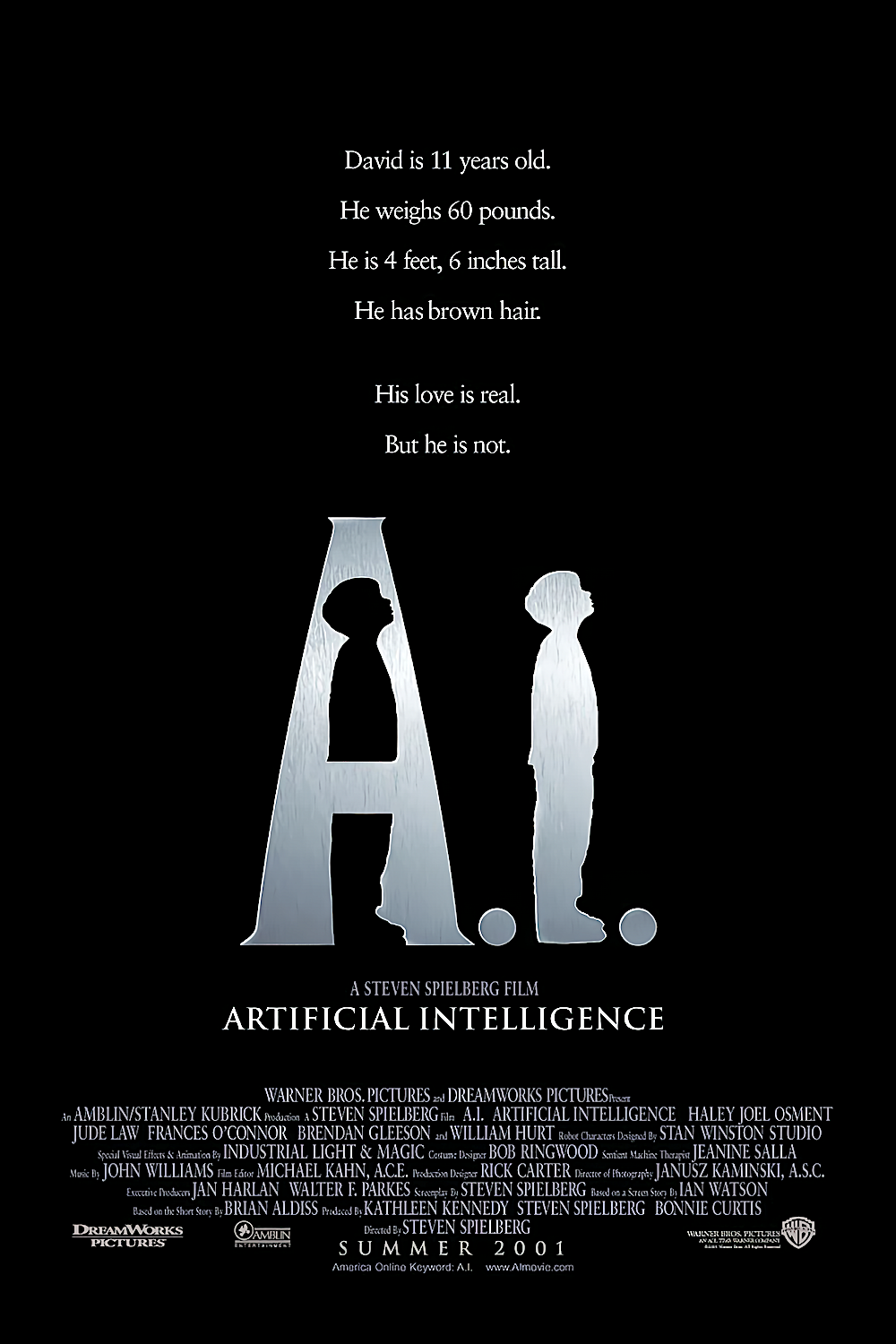
Movie poster for Steven Spielberg's "Artificial Intelligence," featuring cover art by Intralink Film Graphic Design and Kaiser Creative.
The composition is minimalist and profoundly dark, set against a solid, matte black void. Dominating the center are large, stylized silver characters forming the letters "A.I." The "A" is a bold, metallic silhouette of a person's head and shoulders facing right, with a hollow interior. Beside it, the "I" is a smaller, polished silver silhouette of a child looking upward toward the right, topped with a small circular dot. These characters feature a highly reflective, metallic texture with sharp highlights and deep shadows.
In the upper half, crisp white, left-aligned text reads:
"David is 11 years old.
He weighs 60 pounds.
He is 4 feet, 6 inches tall.
He has brown hair.
His love is real.
But he is not."
Near the bottom third, the title "ARTIFICIAL INTELLIGENCE" is centered in large, stark white, capitalized serif letters. Directly above it reads "A STEVEN SPIELBERG FILM." Beneath the title, a dense list of credits appears in fine white lettering, including producers Warner Bros. Pictures, DreamWorks Pictures, and Amblin/Stanley Kubrick, along with actors and crew. Based on the Short Story By BRIAN ALDISS. The bottom center displays the release date: "SUMMER 2001." All text utilizes clean white or silver sans-serif and subtle serif fonts against the black vacuum.
Died this day: 08/19/1967 (b. 08/16/1884) Hugo Gernsback was an American editor and magazine publisher of Amazing Stories. He is often referred to as "The Father of Science Fiction". In his honor, annual awards presented at the World Science Fiction Convention are named the "Hugos".
https://en.wikipedia.org/wiki/Hugo_Gernsback
#Literature #SciFi #ScienceFiction #books #bookstodon #coverart #bookart #bookcovers
#HugoGernsback @books @scifi @Scifiart @sciencefiction
Alt...
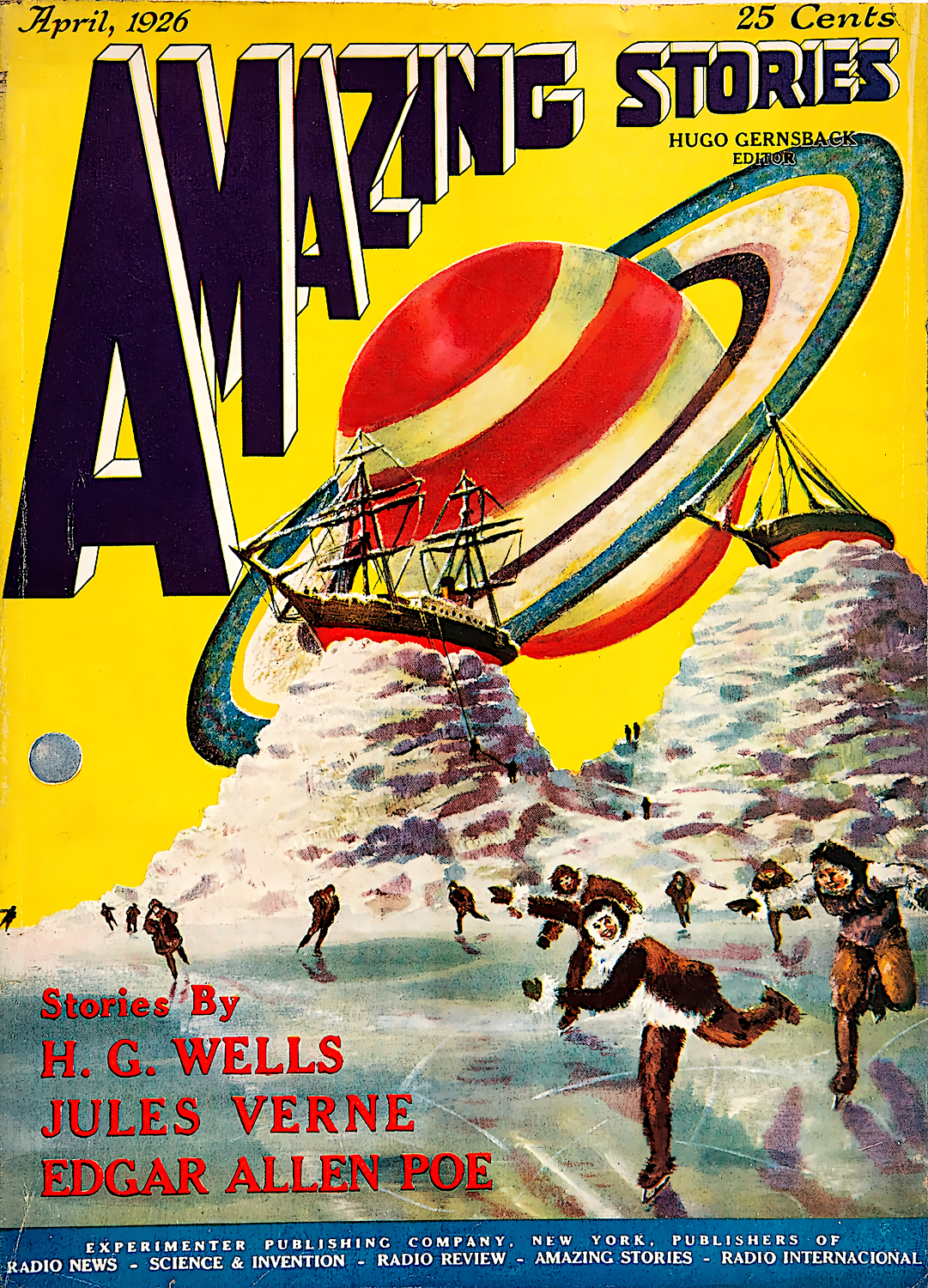
AMAZING STORIES (April 1926) Vol 1
Cover art by Frank R. Paul
Hugo Gernsback Editor, Stories By H. G. Wells, Jules Verne, Edgar Allen Poe, 25 Cents, Experimenter Publishing Company, New York, Publishers of Radio News - Science & Invention - Radio Review - Amazing Stories - Radio Internacional
Several men in brown fur-lined coats, skate across an icy landscape beneath a large, ringed planet.
Above these figures, a multi-masted sailing ship with rigging floats near a large red and white striped planet with a ring. A small grey moon hangs in the bright yellow sky above snowy mountains.
![[?]](https://media.mastodon.scot/accounts/avatars/109/365/828/609/023/752/original/bec05486b3800c25.jpg)
Writes Sir Arthur Conan Doyle in The Hound of the Baskervilles: "The past and the present are within the field of my inquiry, but what a man may do in the future is a hard question to answer."
Ponder questions of time and space with us on 5 September at the next edition of Writing the Occult!
🧵⬇️
#scifi #sciencefiction #horror #fantasy #writers #writing #writingquotes #sherlockholmes #writingevents #creativity #creativetoots #books

Alt...
The quote from the post is laid over an image of a misty forest, pictured in black and white.
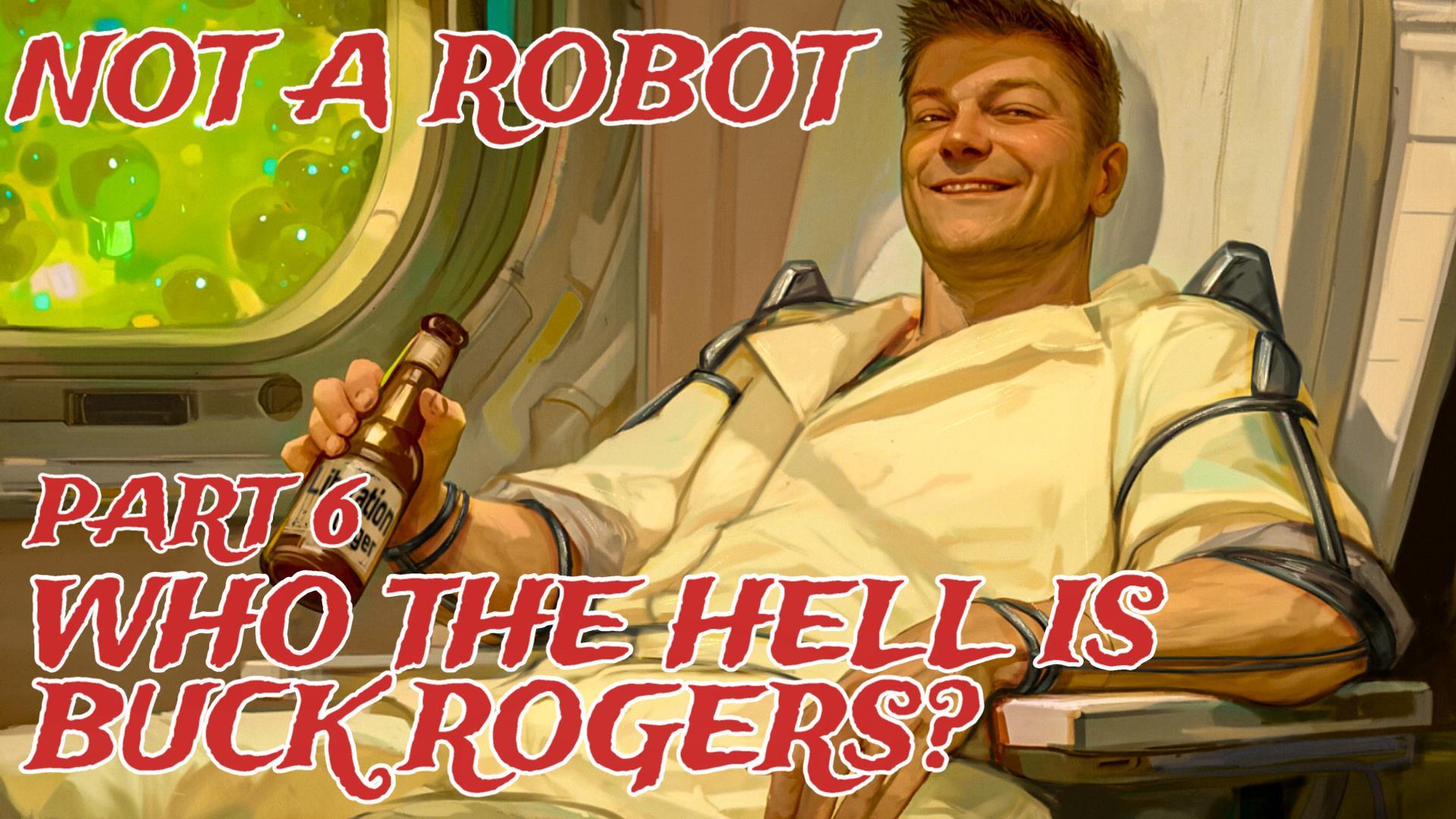
Chapter 6 - "Not A Robot"
Carter Vincent comes continues his rehabilitation, and finds out a few details about the future he finds himself in, most notably about how his new companion, Cain, is a synthetic intellect. Cain does flinch at the term 'robot', which is literally taken from the Czech word that invokes forced labour.
#bookstodon #scifi #sciencefiction #scifibooks #books
Born this day: 08/18/1925 (d. 08/19/2017) Brian Wilson Aldiss was an English writer, named a Grand Master by the Science Fiction Writers of America in 1999. He wrote the short story "Supertoys Last All Summer Long" (1969), the basis for the Steven Spielberg film A.I. Artificial Intelligence (2001).
https://en.wikipedia.org/wiki/Brian_Aldiss
#Literature #SciFi #ScienceFiction #books #bookstodon #coverart #bookart #bookcovers
#BrianAldiss
#AI @books @scifi @Scifiart @sciencefiction
Alt...
WE, ROBOTS: Artificial Intelligence in 100 Stories, chosen by Simon Ings. Cover art by Maurizio Manzieri.
This black and white cover features a central dark gray rectangle containing the title "WE, ROBOTS" and subtitle "Artificial Intelligence in 100 Stories" in white, sans-serif font, followed by "CHOSEN BY SIMON INGS."
The background is a nine-panel grid formed by dark borders. Each panel contains highly detailed, monochromatic illustrations of robotic components, appearing like parts on a shelf. Dramatic, high-contrast lighting creates a metallic, sculptural feel.
Top-left: A mechanical arm ending in a detailed hand with visible joints.
Top-center: A complex assembly of gears, pistons, and heavy limbs.
Top-right: A smooth, pale humanoid face looking upward amidst dark mechanical structures.
Middle-left: A robotic limb connected to a thick base and tubes.
Middle-right: An articulated arm hangs vertically next to the central block, adjacent to a mechanical assembly with a lamp-like structure.
Bottom-left: A pale humanoid head near heavy industrial machinery and deep shadows.
Bottom-center: A dense, chaotic cluster of gears, wires, and metallic plates forming a complex core.
Bottom-right: The upper torso and shoulder of a sleek, white robotic figure.
The overall aesthetic is gritty, industrial, and high-tech, using grayscale tones to emphasize textures like polished metal, matte plastic, and oily shadows.
Alt...
Movie poster for Steven Spielberg's "Artificial Intelligence," featuring cover art by Intralink Film Graphic Design and Kaiser Creative.
The composition is minimalist and profoundly dark, set against a solid, matte black void. Dominating the center are large, stylized silver characters forming the letters "A.I." The "A" is a bold, metallic silhouette of a person's head and shoulders facing right, with a hollow interior. Beside it, the "I" is a smaller, polished silver silhouette of a child looking upward toward the right, topped with a small circular dot. These characters feature a highly reflective, metallic texture with sharp highlights and deep shadows.
In the upper half, crisp white, left-aligned text reads:
"David is 11 years old.
He weighs 60 pounds.
He is 4 feet, 6 inches tall.
He has brown hair.
His love is real.
But he is not."
Near the bottom third, the title "ARTIFICIAL INTELLIGENCE" is centered in large, stark white, capitalized serif letters. Directly above it reads "A STEVEN SPIELBERG FILM." Beneath the title, a dense list of credits appears in fine white lettering, including producers Warner Bros. Pictures, DreamWorks Pictures, and Amblin/Stanley Kubrick, along with actors and crew. Based on the Short Story By BRIAN ALDISS. The bottom center displays the release date: "SUMMER 2001." All text utilizes clean white or silver sans-serif and subtle serif fonts against the black vacuum.
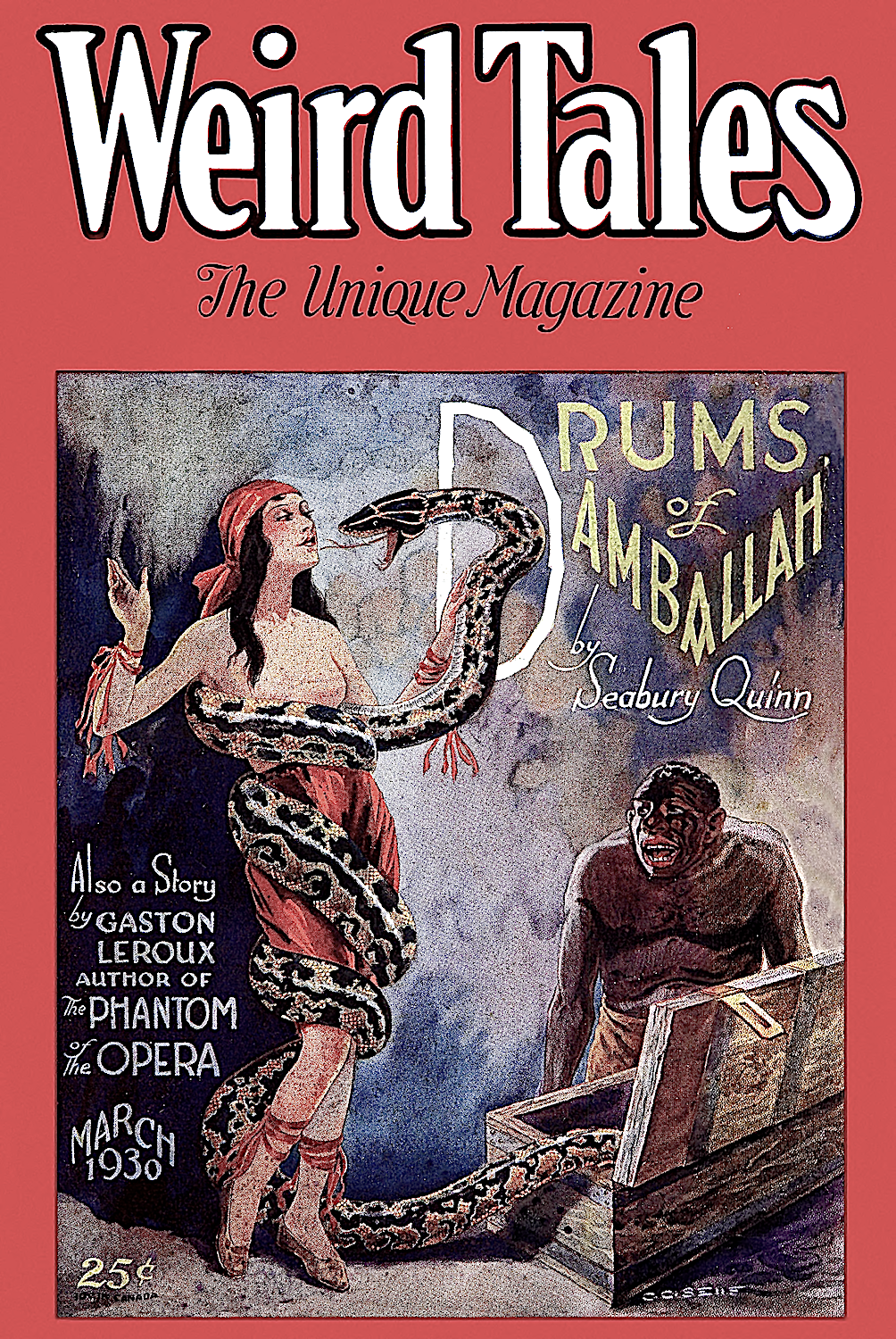
Weird Tales vol 15 number 03 (March 1930) - featured story: Drums of Amballah by Seabury Quinn
#Literature #SciFi #ScienceFiction #books #bookstodon #coverart #bookart #bookcovers
#WeirdTales
#SeaburyQuinn
@books @scifi @Scifiart @sciencefiction
Cover art by C. C. Senf
Alt...
Weird Tales vol 15 number 03 (March 1930) - featured story: Drums of Amballah by Seabury Quinn.
Cover art by C. C. Senf.
The Unique Magazine, Also a Story by Gaston Leroux author of The Phantom of the Opera, 25c
A large snake coils around a woman while a man leans out from behind a wooden chest. On the left side of the frame, a woman with long dark hair and a red headscarf stands upright and looks upward toward the head of a snake. She wears a red sleeveless garment and a red garment, both featuring gold trim. A large snake with black and grey patterned scales is coiled around the woman's torso and arm, with its head raised near her face and its body extending toward the bottom left. On the lower right side of the frame, a man with short dark hair is bare to the waist and leans out from behind a wooden chest, with his hand resting against the edge of the chest. The scene is set against a dark, smoky atmosphere containing swirling grey and blue clouds. Colors include red, gold, black, white, grey, and brown.
![[?]](https://bookstodon-files.web.thunderhost.net/accounts/avatars/116/233/525/957/321/280/original/fc7b09af91d4b5ea.png)
“This short story collection is sheer entertainment with a thick seem of seriousness…. The beauty of these stories is that each in their own way shows a human side, of people who love, hate, fear and yearn. Dila’s wonderful imagination lifts this collection into an alien yet familiar space, where the ‘other’ is lampooned in a fantastical way.”
Available for pre-order. Read a sample story here
www.ododopress.com/short-story-collection/a-killing-in-the-sun/
![[?]](https://cdn.masto.host/mastodonart/accounts/avatars/109/281/731/193/217/279/original/2ff2a030f52aff29.png)
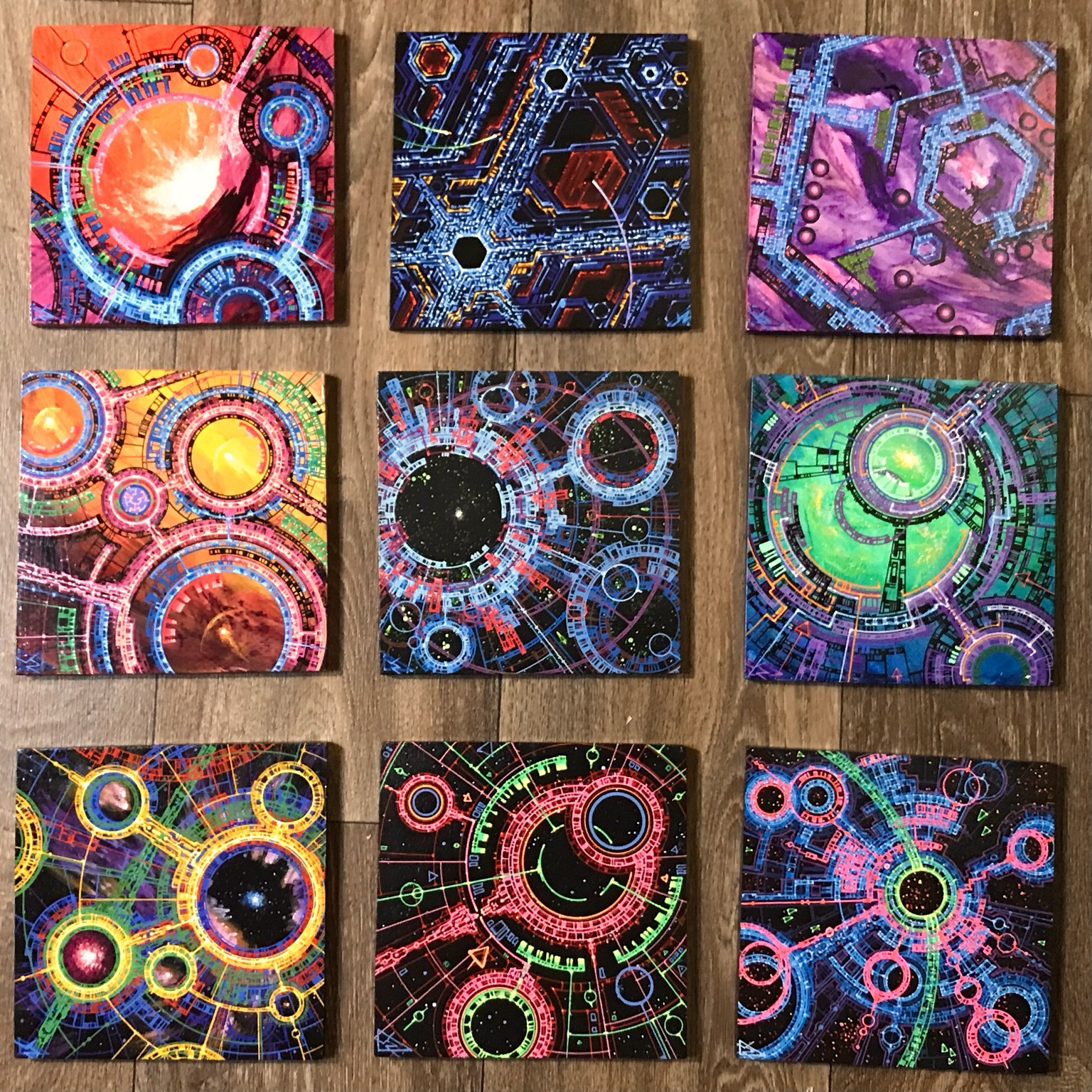
Back in my hands and available! Nine lovely 6”/15cm square MiniGeos. The two at bottom right are UV-reactive! $140 ea/2 for $250 (plus shipping). Ships immediately! Message me if interested. 😎👍
Please boost and share, solo artist supporting myself in the US! 🙏🙏
@Curator #ArtForSale #MastoArt #FediGiftShop #space #scifi #abstractart #geometricart #geometricabstraction #homedecor
Alt...
9 square small Geometron arts, linear and circular line graphics laid over colorful space nebula backgrounds.
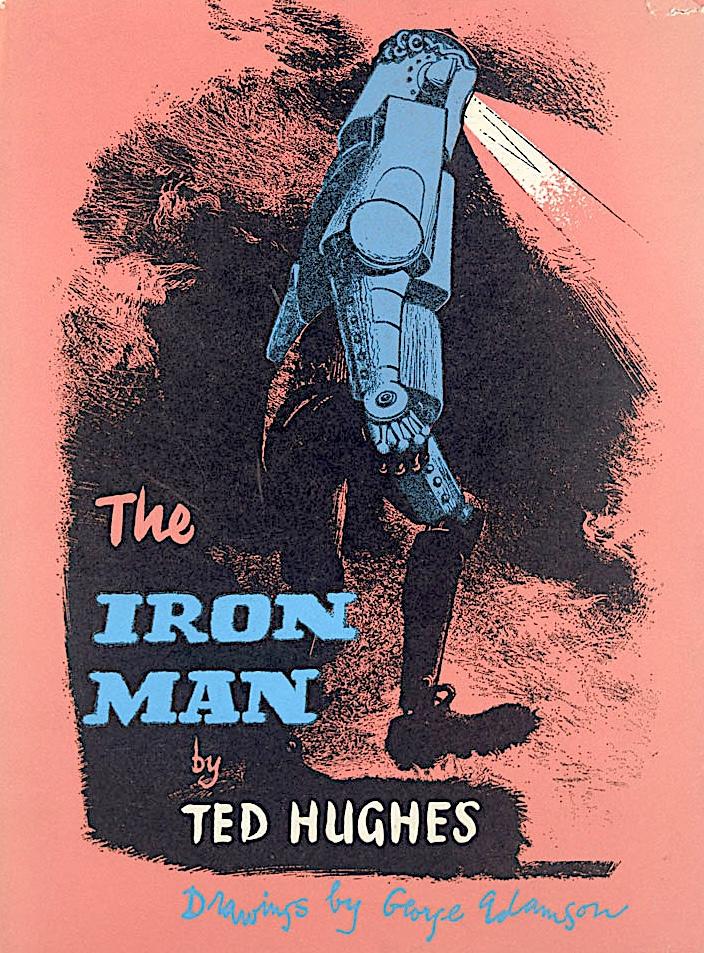
Born this day: 08/17/1930 (d. 10/28/1998) Edward James Hughes was an English poet, translator, and children's Sci Fi writer who wrote The Iron Man: A Children's Story in Five Nights (1968). In 1999, Warner Bros. released an animated film using the novel as a basis, titled The Iron Giant.
https://en.wikipedia.org/wiki/Ted_Hughes
#Literature #SciFi #ScienceFiction #books #bookstodon #coverart #bookart #bookcovers
#TedHughes @books @scifi @Scifiart @sciencefiction
Alt...
The cover of Ted Hughes' The Iron Man, featuring art by George Adamsson, depicts a large, stylized mechanical figure centered against an abstract, textured background. Moving right in a dynamic lunging posture, the "Iron Man" features a massive, segmented light blue robotic head and upper torso dominating the upper frame. These components consist of thick, interlocking plates with visible circular joints rendered in shades of pale light blue and matte dark grey. The lower body transitions into darker, slender, skeletal limbs made of thinner metallic segments, ending in a heavy, solid dark boot.
The background uses heavy, expressive black and salmon pink brushstrokes to create chaotic energy, with thick, impasto-like textures. A sharp, diagonal streak of stark white light cuts through the upper right corner. The palette is limited to salmon pink, deep black, light blue, and white. High-contrast lighting casts much of the figure's lower half into dense, opaque shadow, emphasizing its silhouette.
The title, "The IRON MAN," is prominently displayed on the left in large, bold, blue serif lettering with a slight dark shadow for depth. Below this, the author’s name, "by TED HUGHES," appears in clean, bright white sans-serif capitals set against a solid black rectangular block at the bottom left. At the very bottom edge, small blue handwritten-style text reads, "Drawings by George Adamson."
Alt...
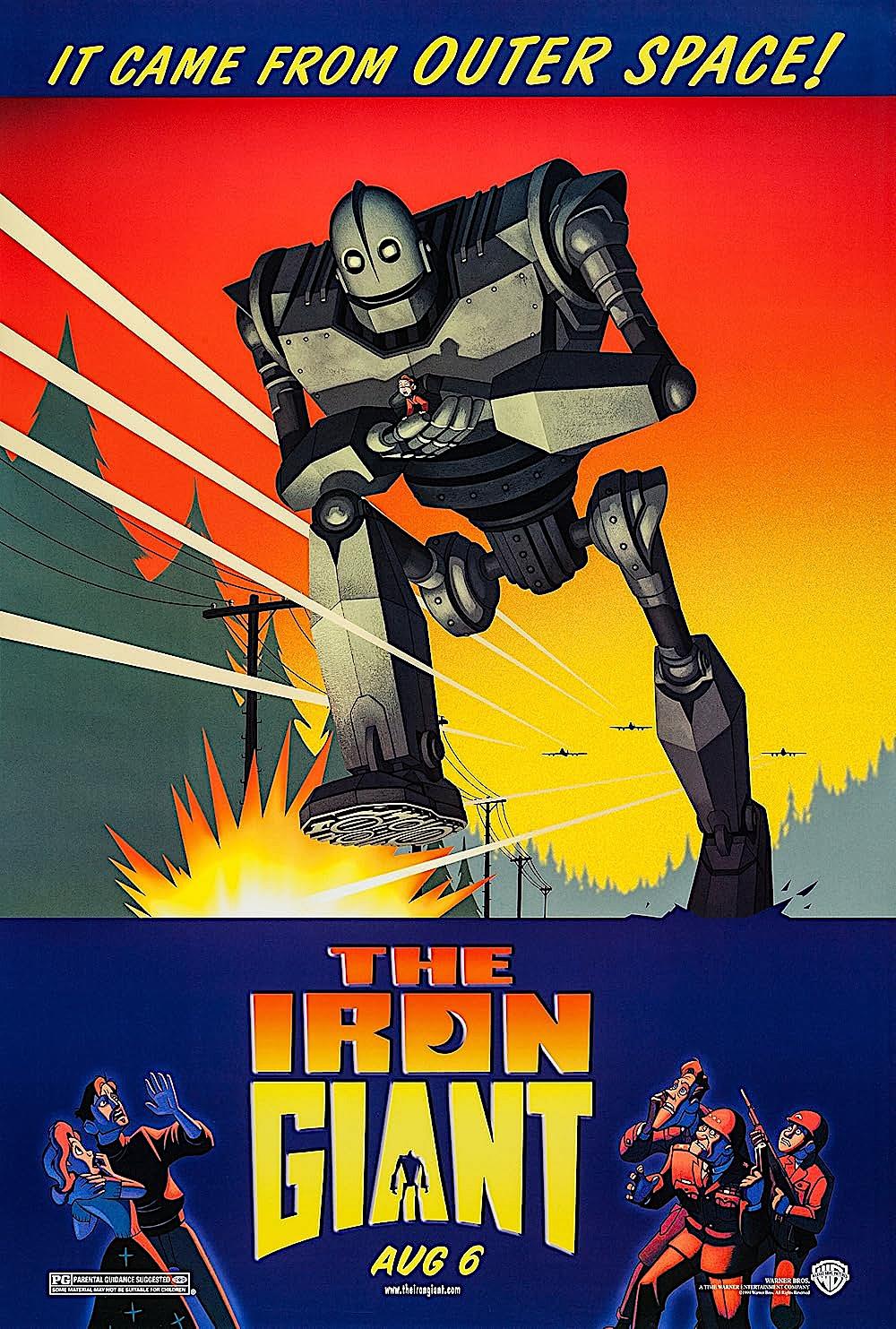
Movie poster for The Iron Giant (Release date: Aug 6).
The top two-thirds features a large, stylized illustration of the titular metallic robot walking through a forest under a vibrant sunset. At the very top, a dark blue banner displays the bright yellow, italicized, sans-serif text "IT CAME FROM OUTER SPACE!"
Rendered in matte grey and charcoal with silver rivets and heavy mechanical joints, the bulky, angular robot has two large, glowing white circular eyes. The boy, Hogarth, is nestled within a small chest compartment, looking upward with a wide-eyed expression. The giant's massive right foot, textured with metal plating, steps near weathered wooden utility poles, triggering an explosion of brilliant orange and yellow light with flying debris and dust. Long, thin white streaks cut diagonally from the upper left toward the lower right across the sky. The background features a dramatic gradient shifting from deep crimson to bright orange and pale yellow, with silhouetted dark green evergreen trees lining the left side.
The bottom third has a solid dark blue background. The title "THE IRON GIANT" is centered in large, blocky, 3D-style yellow letters with thick red outlines, with "AUG 6" in smaller yellow font below. On the bottom left, a small graphic shows the boy and the robot's head alongside illegible text. On the bottom right, four soldiers in bright red uniforms and helmets are depicted in an action pose, aiming rifles upward toward the giant. Small, illegible production credits and logos are at the bottom edge.
![[?]](https://retro-pizza.s3.de.io.cloud.ovh.net/accounts/avatars/109/236/433/446/967/713/original/f1e1ec8e2fc3a883.jpg)
Folks, it's about an hour until #MONSTERDON the weekly monster movie watch party! Best set up a hashtag filter if you don't wanna see it.
If you'd like to join in, this week's movie is STAR ODYSSEY (1979), which is like if Starcrash had no talent. Yeah, yikes.
You can watch the movie free with ads over on Tubi: https://tubitv.com/movies/565402/star-odyssey
Or you can download from Archive.org over here: https://archive.org/details/star-odyssey-1979-vhs-film
Just hit play at the top of the hour and toot along. See you there!
Chapter 4 - "Awakening"
While the satellite passengers are being evacuated to the Liberator, Doctor Akari Takuma and Doctor Denom Richt awaken the occupant of the capsule displaying the critical error, Carter Vincent. Progress seems to be made until a small detail is overlooked: one of the doctors attending is of the Fillim species, and Carter hails from a time when humanity thought they were alone in the universe.
#bookstodon #scifi #sciencefiction #scifibooks #books
Born this day: 08/16/1884 (d. 08/19/1967) Hugo Gernsback was an American editor and magazine publisher of Amazing Stories. He is often referred to as "The Father of Science Fiction". In his honor, annual awards presented at the World Science Fiction Convention are named the "Hugos".
https://en.wikipedia.org/wiki/Hugo_Gernsback
#Literature #SciFi #ScienceFiction #books #bookstodon #coverart #bookart #bookcovers
#HugoGernsback @books @scifi @Scifiart @sciencefiction
Alt...
AMAZING STORIES (April 1926) Vol 1
Cover art by Frank R. Paul
Hugo Gernsback Editor, Stories By H. G. Wells, Jules Verne, Edgar Allen Poe, 25 Cents, Experimenter Publishing Company, New York, Publishers of Radio News - Science & Invention - Radio Review - Amazing Stories - Radio Internacional
Several men in brown fur-lined coats, skate across an icy landscape beneath a large, ringed planet.
Above these figures, a multi-masted sailing ship with rigging floats near a large red and white striped planet with a ring. A small grey moon hangs in the bright yellow sky above snowy mountains.
![[?]](https://media.troet.cafe/troet/accounts/avatars/110/198/564/430/170/696/original/b738f44289672ae3.jpg)
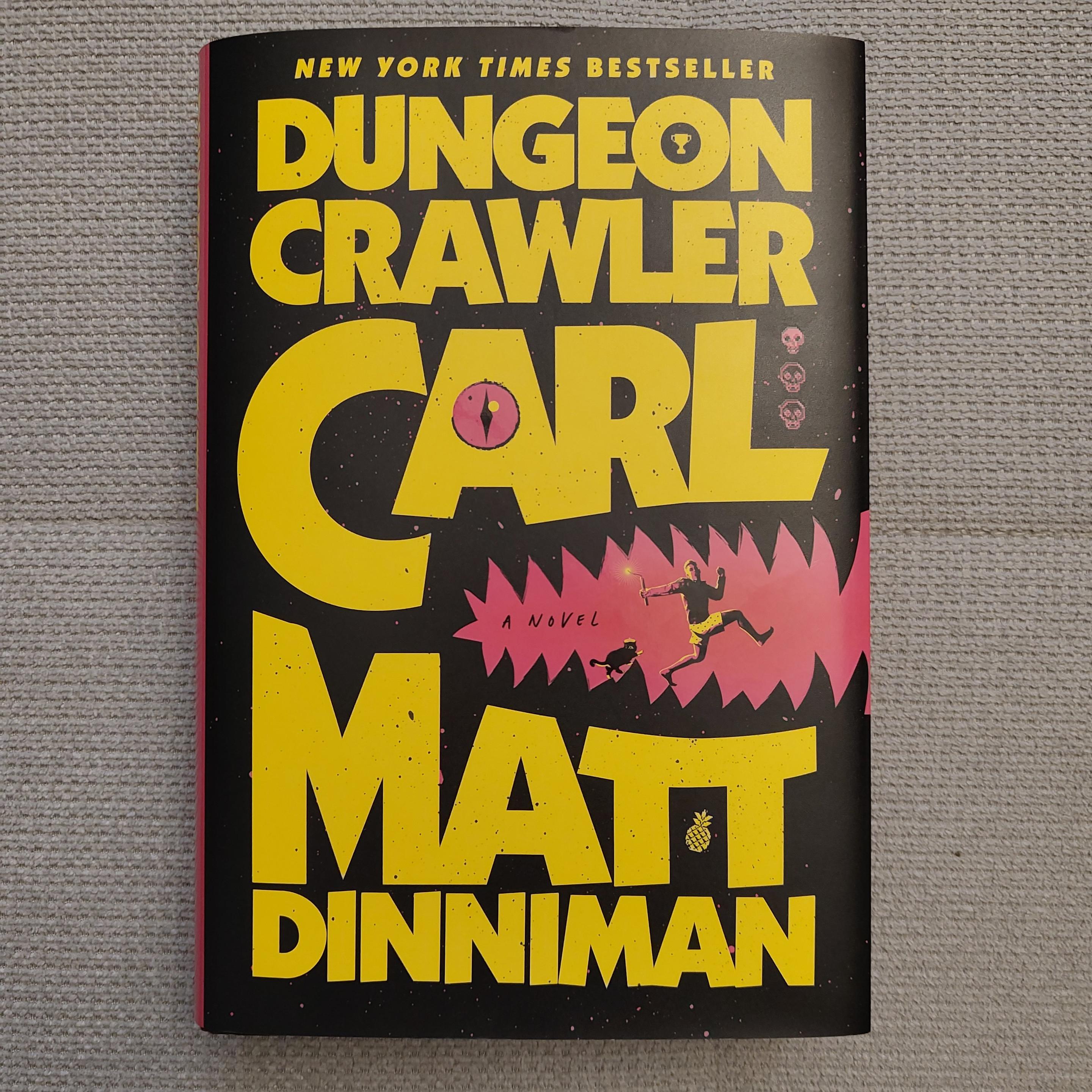
Gelesen: Dungeon Crawler Carl (2020) von Matt Dinniman
Unterhaltsamer Start der mittlerweile achtteiligen Reihe
#books #bookstodon #sciencefiction #scifi #litrpg
Alt...
Cover des Romans Dungeon Crawler Carl von Matt Dinniman
From the British Fantasy Society:
Andrew Knighton takes a journey through the history of science fiction with a rare books catalogue—a place where connection and authenticity are still valued.
https://britishfantasysociety.org/old-books-and-bright-futures-the-quo-vadis-catalogue/
#rarebooks #books #sciencefiction #scifi #writers #writing #writingcommunity

Alt...
A text-heavy graphic features the cover of the Quo Vadis catalogue from Peter Harrington Rare Books
![[?]](https://files.mastodon.social/accounts/avatars/113/182/026/346/756/528/original/d2bbb08042e0b513.jpg)
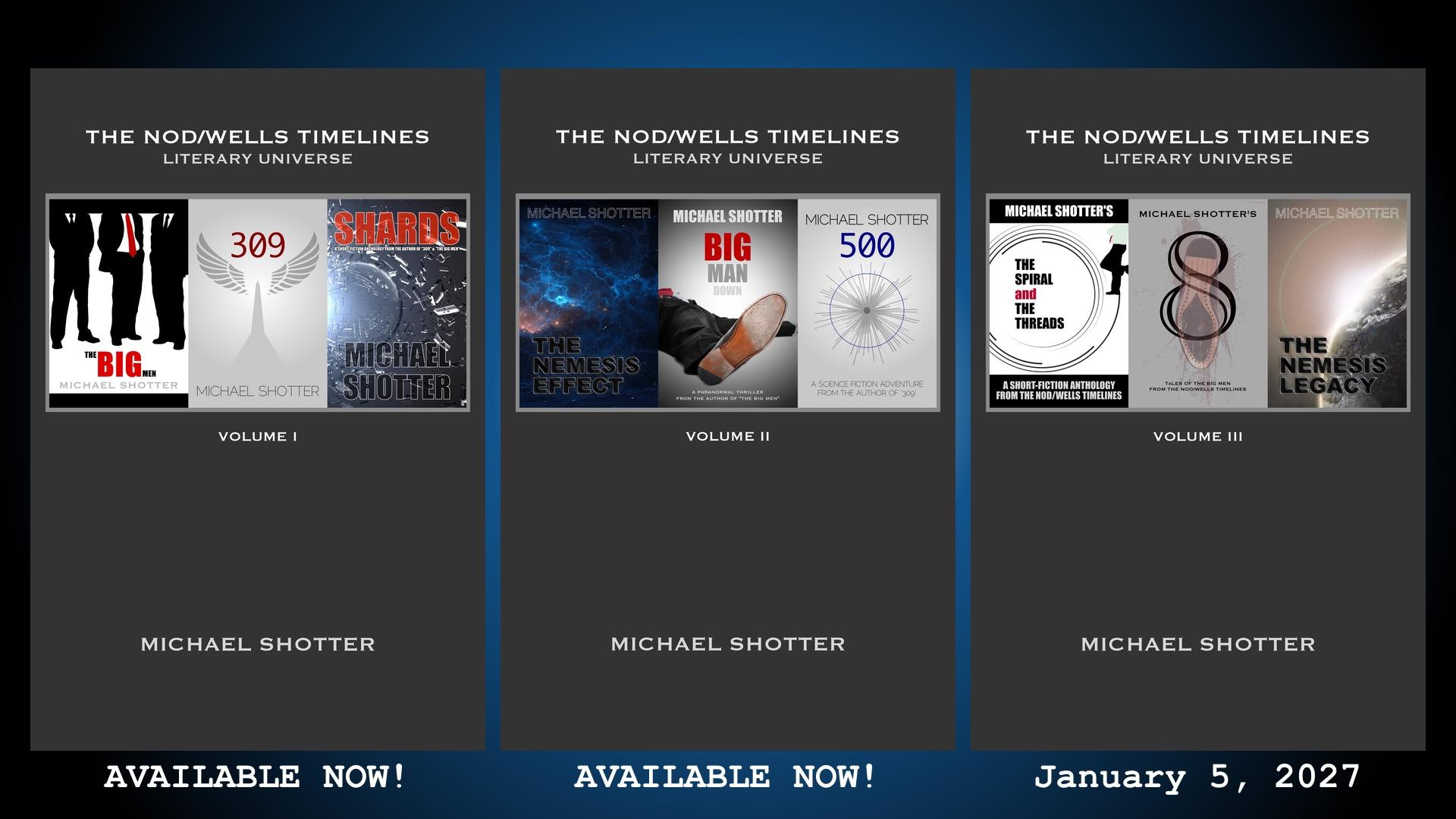
"The Nod/Wells Timelines - The Official Compendium" is coming in March of 2027. Prepare yourself by catching up on any of the nine books set in the universe you might have missed, or begin your journey today with "The Nod/Wells Timelines - A Primer," now at a 4.25 on Goodreads!
#specfic #scifi #horror #thriller #book #books #read #reads #reading #readingcommunity #booksofmastodon #readersofmastodon #speculativefiction #sciencefiction #booksof2026 #bookstodon #booktodon
Alt...
"The Nod/Wells Timelines" omnibus editions by Michael Shotter

Alt...
"The Nod/Wells Timelines - A Primer" by Michael Shotter on Goodreads
![[?]](https://cdn.masto.host/mastodonart/accounts/avatars/114/046/890/995/156/319/original/b3245043f6598358.jpg)
As a big fan of both Trek and Discworld, I support the flawless logic of this crossover 😜😂
@reading @bookstodon @books @fantasy
@humor@fedigroups.social @humor@lemmy.world @aiop
#GeekMemes #Geek #Meme
#Discworld #StarTrek #Spock #GreatAtuin
#Humor #Humour #Funny
#Fantasy #SciFi
#Reading #Readers #TV #Books #ReadingCommunity #Bookstodon #FantasyBooks
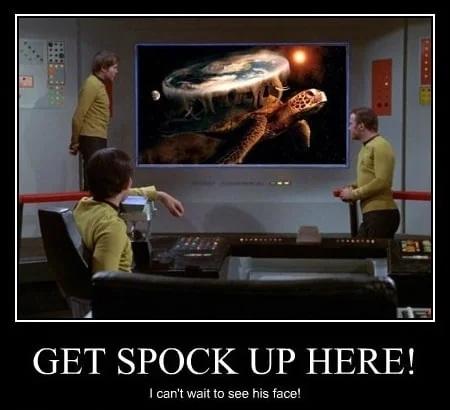
Alt...
A meme from the bridge of Star Trek the original series, with Great A'Tuin showing on the viewscreen
Caption: "GET SPOCK UP HERE! I can't wait to see his face!"
Breakfast on a Sunday morning could look like this; soft boiled eggs and kabalagala, (pancakes made in Uganda from cassava flour and overripe bananas) and a good read, a #solarpunk story about an old woman who has to organize the defense of her decentralized nation when a colonizer invades.
You can read a sample chapter and get the book here;
https://www.ododopress.com/novellas/the-blossoming-of-the-big-tree/
#solarpunksunday #book #books #bookstodon #sff #SciFi
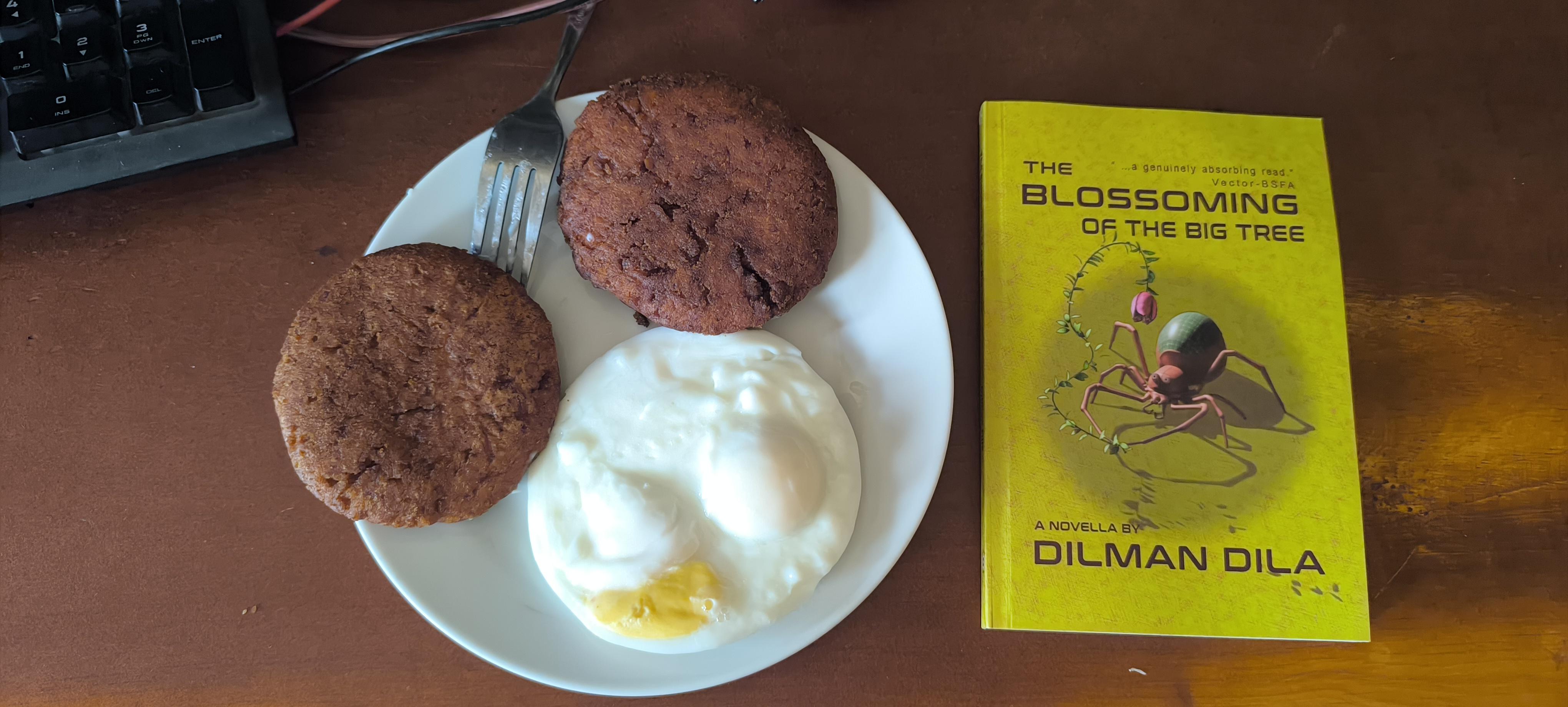
Alt...
A working breakfast of two kabalagala (pancakes) which are disc shaped delicacies, sitting on a saucer with soft boiled eggs and a fork. Beside them is a yellow book, The Blossoming of the Big Ttee, a novella by Dilman Dila. They sit on a red-brown desk and a part of a keyboard shows at one end.
Chapter 2 - "Sleeping Satellite"
The crew of the HDR Liberator finds an abandoned object in deep space. The odds of finding a lost and drifting spaceship are phenomenal, especially if away from oft-travelled routes. By a small miracle, one is found, but it is not a recent wreck, but much, much older than expected.
#bookstodon #scifi #sciencefiction #scifibooks #books

Chapter 3 - "Tomb Raiders"
Doctor Akari Takuma and Doctor Denom Richt investigate the satellite and find ancient hieroglyphics determined to be in ancient English. During the investigation, they find it full of suspended humans from the pre-Expansion period. Some have since died without ever waking up, but plenty still live. However, they do find one that is in need of critical evaluation.
#bookstodon #scifi #sciencefiction #scifibooks #books
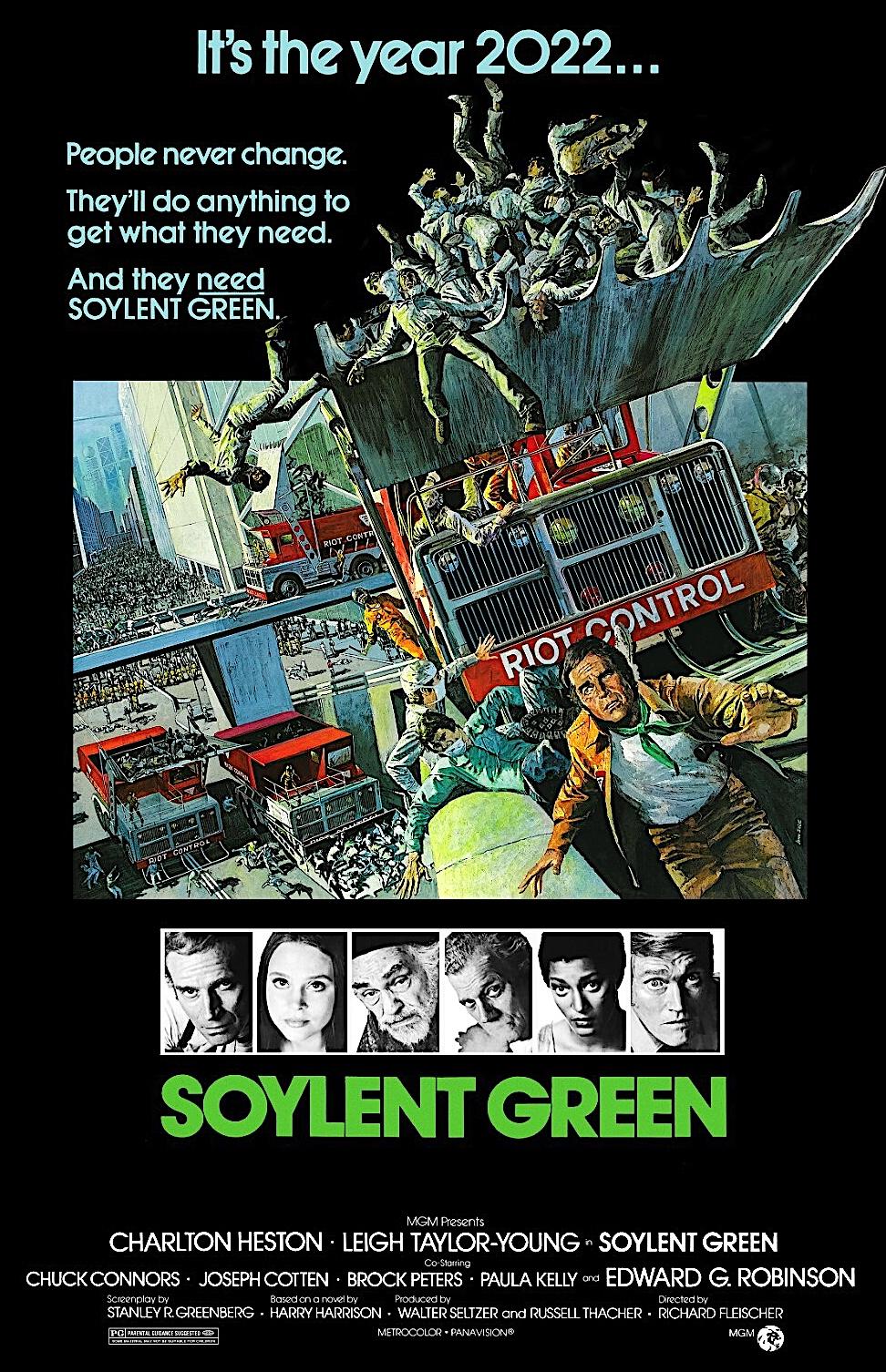
Died this day: 08/15/2012 (b. 03/12/1924) Harry Max Harrison was an American science fiction author, known mostly for his character The Stainless Steel Rat and for his novel Make Room! Make Room! (1966). The latter was the rough basis for the motion picture Soylent Green (1973).
https://en.wikipedia.org/wiki/Harry_Harrison_(writer)
#Literature #SciFi #ScienceFiction #books #bookstodon #coverart #bookart #bookcovers
#HarryHarrison @books @scifi @Scifiart @sciencefiction
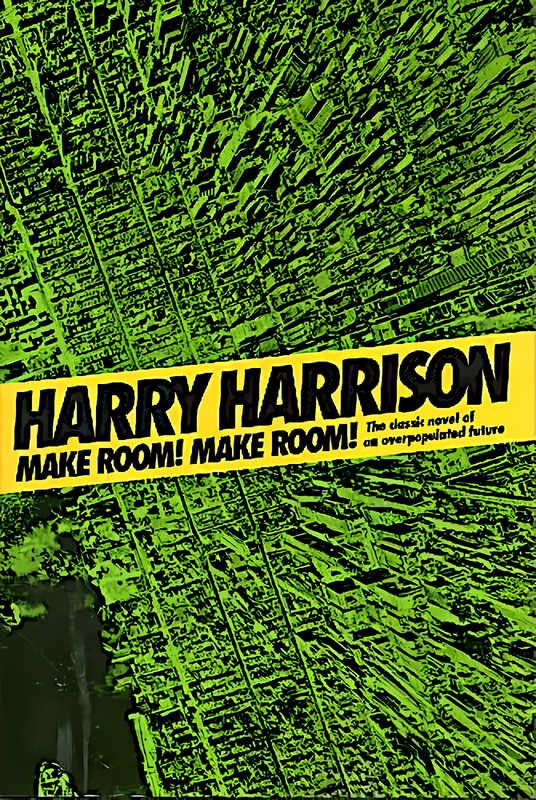
Alt...
Make Room! Make Room! by Harry Harrison
Cover Artist: Alan Aldridge
Overall scene: A high-angle, bird's-eye view of a dense, hyper-congested futuristic cityscape. The composition is filled with an overwhelming array of rectangular structures, skyscrapers, and narrow corridors stretching toward the horizon, creating a sense of claustrophobic, infinite urban sprawl.
Supporting details:
The image uses a high-contrast, two-scale color palette of bright neon green and deep black, providing a stark, mechanical appearance. A prominent bright yellow horizontal banner stretches across the middle. The author's name, "HARRY HARRISON," is printed in large, bold, black sans-serif capital letters within this banner. Directly below, the title "MAKE ROOM! MAKE ROOM!" appears in a slightly smaller, black, italicized bold font, accompanied by the subtext: "The classic novel of an overpopulated future."
The background landscape consists of intricate, jagged geometric patterns representing buildings and streets. The lighting is flat, using sharp contrast between glowing green textures and black shadows to define immense depth rather than a single light source. No people, vehicles, or organic elements are visible; the scene is entirely architectural and metallic, emphasizing a cold, dehumanized environment. Perspective lines converge toward distant points, reinforcing the feeling of endless density.
Alt...
Theatrical release Movie poster by John Solie for Soylent Green.
The top features large, white sans-serif text: "It's the year 2022..." followed by left-aligned white text: "People never change. They'll do anything to get what they need. And they need SOYLENT GREEN."
The central image is a gritty, high-contrast, painterly illustration by John Solie depicting chaos on a futuristic elevated highway. A large, metallic, upward-curved structure dominates the upper right, with several figures falling from it. Below this is a red "RIOT CONTROL" vehicle (with bold orange lettering) part of a convoy of red trucks. In the foreground, a man in a tan jacket and light teal shirt leans forward with an intense, distressed expression. Other struggling figures are scattered throughout. The palette of dark blues, blacks, and deep reds creates a somber atmosphere, with dramatic lighting highlighting faces and metallic surfaces against deep shadows.
Below the illustration is a horizontal row of seven black-and-white cast headshots. Beneath these, the title "SOYLENT GREEN" appears in large, bold, neon green sans-serif letters.
The bottom credits read: "MGM Presents CHARLTON HESTON • LEIGH TAYLOR-YOUNG • SOYLENT GREEN. CHUCK CONNORS • JOSEPH COTTON • BROCK PETERS • PAULA KELLY and EDWARD G. ROBINSON. Screenplay by STANLEY R. GREENBERG • Adapted from a novel by HARRY HARRISON. Produced by WALTER SELZER and RUSSELL THACHER. Directed by RICHARD FLEISCHER. MGM/METRO-GOLDWYN-MAYER/PANAVISION." Small MGM and Panavision logos are at the bottom right.
![[?]](https://files.mastodon.social/accounts/avatars/114/456/143/575/897/492/original/c92d5689cb2b6023.jpg)
Bonjour! 🖖😎
Gaia Pulse
by Solar Phasing
https://solarphasing.bandcamp.com/track/gaia-pulse
#music #fedimusic #musodon #mastomusic #electronicmusic #experimentalmusic #modular #modularsynth #berlinschool #electronica #ambient #drone #soundscape #atmospheric #experimental #scifi #sciencefiction #synthetizer #synth #spacemusic #art #culture #bandcamp
![[?]](https://files.mastodon.online/accounts/avatars/108/195/192/538/322/188/original/5e84c0a68ef089a9.jpg)
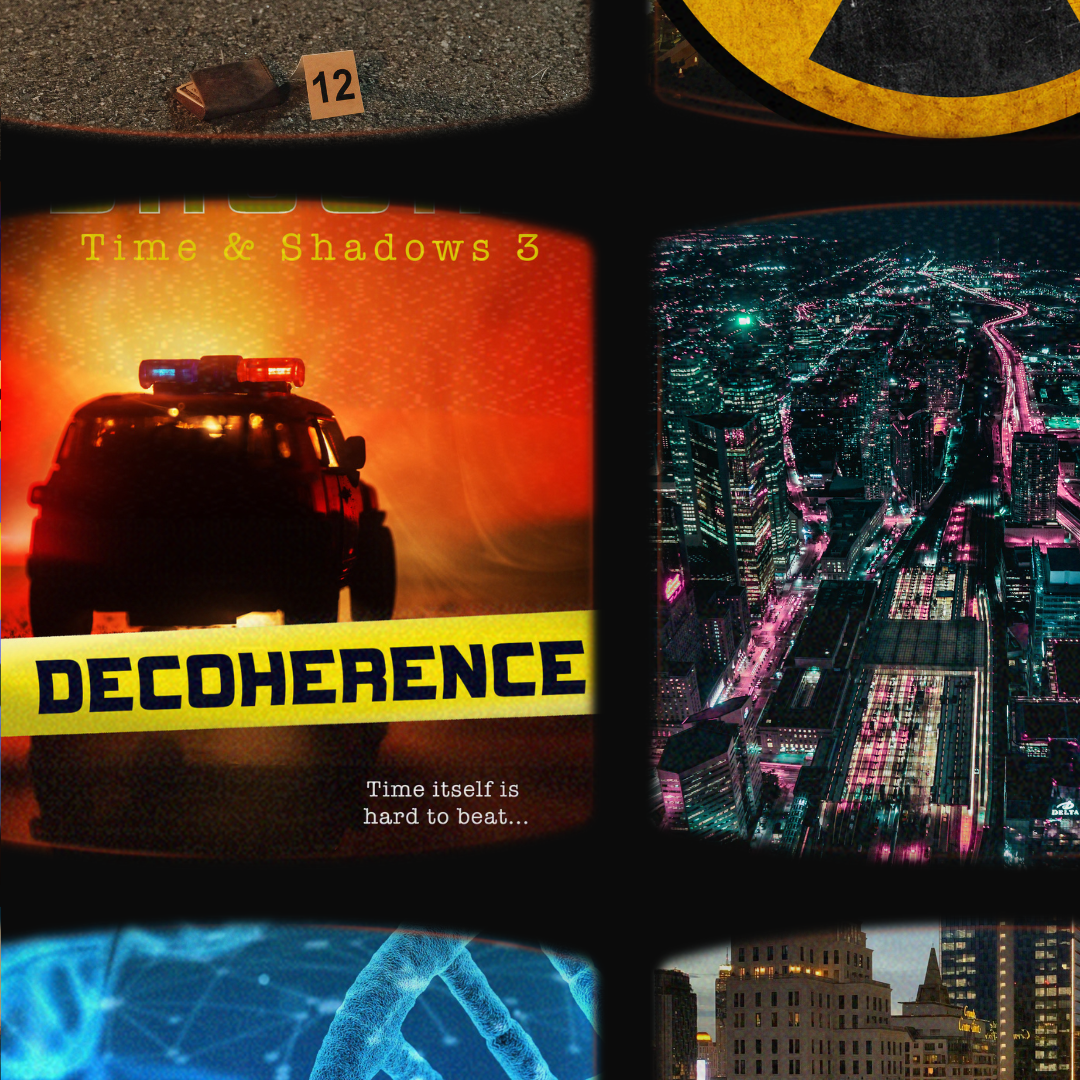
"There are people who will kill to protect certain secrets, or to own them. Since I’m not in the habit of endangering people without a reason, let’s try this: You might need this, and I’m basing that on a well-informed hunch.”
Alt...
The cover of DECOHERENCE with the tag line "Time itself is hard to beat" with a black background and pictures of cities, DNA, and crime scenes almost framing it.