Search results for tag #nature
![[?]](https://files.defcon.social/dcsocial-s3/accounts/avatars/113/208/344/507/078/943/original/014820ad22daee1c.jpg)
2026 April 01
The Claw and Bubble Nebulae
* Image Credit & Copyright: Richard Whitehead
https://richardwhitehead.photography/
* Text: Keighley Rockcliffe (NASA GSFC, UMBC CSST, CRESST II)
https://kerockcliffe.com/
Explanation:
What unexpected things do you see when you look up at the night sky? Today’s image resembles an abstract painting, with large swaths of color strewn across a cosmic canvas seemingly without design. Despite the image's abstract nature, the human mind finds patterns, identifying a large claw reaching up towards a floating bubble. Embedded within these seemingly random structures are the physical laws that govern how light and matter interact. The Claw (Sh2-157) and Bubble (NGC 7635) Nebulae glow colors that are mapped to the yellow and blue shown, indicating the presence of hydrogen and oxygen ionized by the intense light emitted from stars several times the mass of the Sun. This image depicts both the chaos and structure of astronomical processes, showing that a common thread between art and science is to look for the unexpected.
https://www.riseart.com/guide/2366/guide-to-abstract-art
https://www.psychologytoday.com/us/blog/singular-perspective/202105/why-the-human-brain-is-so-good-detecting-patterns
https://science.nasa.gov/mission/webb/science-overview/science-explainers/spectroscopy-101-light-and-matter/
https://apod.nasa.gov/apod/ap171026.html
https://apod.nasa.gov/apod/ap220323.html
https://apod.nasa.gov/apod/ap170531.html
https://delsaert.com/deep-sky/nebulae/h-alpha/
https://astronomy.swin.edu.au/cosmos/*/HII+Region
https://www.arts.gov/stories/blog/2014/art-and-science-talk-scientist-lisa-hoffman
https://apod.nasa.gov/apod/ap260401.html
#space #nebula #astrophotography #photography #science #nature #NASA #apod

Alt...
2026 April 01
Large clouds of interstellar gas and dust of various shapes and sizes cover the image. A cloud shaped like a bubble sits atop the image, while a cloud shaped like a claw is in the middle.
The Claw and Bubble Nebulae
* Image Credit & Copyright: Richard Whitehead
* Text: Keighley Rockcliffe (NASA GSFC, UMBC CSST, CRESST II)
Explanation:
What unexpected things do you see when you look up at the night sky? Today’s image resembles an abstract painting, with large swaths of color strewn across a cosmic canvas seemingly without design. Despite the image's abstract nature, the human mind finds patterns, identifying a large claw reaching up towards a floating bubble. Embedded within these seemingly random structures are the physical laws that govern how light and matter interact. The Claw (Sh2-157) and Bubble (NGC 7635) Nebulae glow colors that are mapped to the yellow and blue shown, indicating the presence of hydrogen and oxygen ionized by the intense light emitted from stars several times the mass of the Sun. This image depicts both the chaos and structure of astronomical processes, showing that a common thread between art and science is to look for the unexpected.
Authors & editors: Robert Nemiroff (MTU) & Jerry Bonnell (UMCP)
NASA Official: Amber Straughn Specific rights apply.
NASA Web Privacy, Accessibility, Notices;
A service of: ASD at NASA / GSFC,
NASA Science Activation
& Michigan Tech. U.
2026 April 7
IC 4592: The Blue Horsehead Reflection Nebula
* Image Credit & Copyright: Rabeea Alkuwari
https://www.instagram.com/bolahdan/
Explanation:
Do you see the horse's head? What you are seeing is not the famous Horsehead nebula toward Orion, but rather a fainter nebula that only takes on a familiar form with deeper imaging. The main part of the here-imaged molecular cloud complex is reflection nebula IC 4592. Reflection nebulas are made up of very fine dust that normally appears dark but can look quite blue when reflecting the visible light of energetic nearby stars. In this case, the source of much of the reflected light is a star at the eye of the horse. That star is part of Nu Scorpii, one of the brighter star systems toward the constellation of the Scorpion (Scorpius). A second reflection nebula dubbed IC 4601 is visible surrounding two stars just below the image center. The featured picture was taken from Sawda Natheel in Qatar.
https://apod.nasa.gov/apod/ap220921.html
https://apod.nasa.gov/apod/ap210509.html
https://apod.nasa.gov/apod/ap210704.html
https://www.instagram.com/p/DUnQd2NEmK6/
https://en.wikipedia.org/wiki/Reflection_nebula
https://apod.nasa.gov/apod/ap030706.html
https://science.nasa.gov/ems/09_visiblelight
https://en.wikipedia.org/wiki/Nu_Scorpii
https://en.wikipedia.org/wiki/Scorpius
https://apod.nasa.gov/apod/reflection_nebulae.html
https://www.astrobin.com/iky5d6/B/
https://www.atnf.csiro.au/outreach/education/senior/astrophysics/binary_intro.html
https://youtu.be/E6vPLKHINlU
https://en.wikipedia.org/wiki/Qatar
https://apod.nasa.gov/apod/ap260407.html
#space #nebula #astrophotography #photography #science #nature #NASA #apod

Alt...
2026 April 7
A starfield surrounds a large nebula that is mostly brown and blue and has an appearance reminiscent of the head of a horse. This nebula is not the more famous Horsehead Nebula.
IC 4592: The Blue Horsehead Reflection Nebula
* Image Credit & Copyright: Rabeea Alkuwari
Explanation:
Do you see the horse's head? What you are seeing is not the famous Horsehead nebula toward Orion, but rather a fainter nebula that only takes on a familiar form with deeper imaging. The main part of the here-imaged molecular cloud complex is reflection nebula IC 4592. Reflection nebulas are made up of very fine dust that normally appears dark but can look quite blue when reflecting the visible light of energetic nearby stars. In this case, the source of much of the reflected light is a star at the eye of the horse. That star is part of Nu Scorpii, one of the brighter star systems toward the constellation of the Scorpion (Scorpius). A second reflection nebula dubbed IC 4601 is visible surrounding two stars just below the image center. The featured picture was taken from Sawda Natheel in Qatar.
Authors & editors: Robert Nemiroff (MTU) & Jerry Bonnell (UMCP)
NASA Official: Amber Straughn Specific rights apply.
NASA Web Privacy, Accessibility, Notices;
A service of: ASD at NASA / GSFC,
NASA Science Activation
& Michigan Tech. U.Authors & editors: Robert Nemiroff (MTU) & Jerry Bonnell (UMCP)
NASA Official: Amber Straughn Specific rights apply.
2026 April 26
Mystic Mountain Monster being Destroyed
* Image Credit: Hubble, NASA, ESA;
https://hla.stsci.edu/
https://www.nasa.gov/
https://www.esa.int/
* Processing & License: Judy Schmidt
https://geckzilla.com/
Explanation:
Inside the head of this interstellar monster is a star that is slowly destroying it. The huge monster, actually an inanimate series of pillars of gas and dust, measures light years in length. The in-head star is not itself visible through the opaque interstellar dust but is bursting out partly by ejecting opposing beams of energetic particles called Herbig-Haro jets. Located about 7,500 light years away in the Carina Nebula and known informally as Mystic Mountain, the appearance of these pillars is dominated by dark dust even though they are composed mostly of clear hydrogen gas. The featured image was taken with the Hubble Space Telescope. All over these pillars, the energetic light and winds from massive newly formed stars are evaporating and dispersing the dusty stellar nurseries in which they formed. Within a few million years, the head of this giant, as well as most of its body, will have been completely evaporated by internal and surrounding stars.
https://spaceplace.nasa.gov/light-year/
http://espg.sr.unh.edu/ism/what1.html#dust
https://en.wikipedia.org/wiki/Herbig%E2%80%93Haro_object
https://apod.nasa.gov/apod/ap190623.html
https://en.wikipedia.org/wiki/Hydrogen
https://www.flickr.com/photos/geckzilla/49452041152/in/faves-53460575@N03/
https://science.nasa.gov/mission/hubble/overview/about-hubble/
https://science.nasa.gov/ems/10_ultravioletwaves
https://apod.nasa.gov/apod/ap200121.html
https://www.youtube.com/watch?v=kvrAFFVVE9E
https://apod.nasa.gov/apod/ap260426.html
#space #nebula #astrophotography #photography #science #nature #NASA #apod

Alt...
2026 April 26
The featured image shows a large pillar of dust and gas in the Carina Nebula. The pillar has many humps and several jets.
Mystic Mountain Monster being Destroyed
* Image Credit: Hubble, NASA, ESA; Processing & License: Judy Schmidt
Explanation:
Inside the head of this interstellar monster is a star that is slowly destroying it. The huge monster, actually an inanimate series of pillars of gas and dust, measures light years in length. The in-head star is not itself visible through the opaque interstellar dust but is bursting out partly by ejecting opposing beams of energetic particles called Herbig-Haro jets. Located about 7,500 light years away in the Carina Nebula and known informally as Mystic Mountain, the appearance of these pillars is dominated by dark dust even though they are composed mostly of clear hydrogen gas. The featured image was taken with the Hubble Space Telescope. All over these pillars, the energetic light and winds from massive newly formed stars are evaporating and dispersing the dusty stellar nurseries in which they formed. Within a few million years, the head of this giant, as well as most of its body, will have been completely evaporated by internal and surrounding stars.
Authors & editors: Robert Nemiroff (MTU) & Jerry Bonnell (UMCP)
NASA Official: Amber Straughn Specific rights apply.
NASA Web Privacy, Accessibility, Notices;
A service of: ASD at NASA / GSFC,
NASA Science Activation
& Michigan Tech. U.
2026 April 28
CG 30: Cometary Globules
* Image Credit & Copyright: Marcelo Salemme
https://www.astromgs.com/
Explanation:
They're like mountain peaks, but they are forming stars. Bright-rimmed, flowing shapes gather near the center of this rich starfield toward the borders of the nautical southern constellations Puppis and Vela. Composed of interstellar gas and dust, the grouping of light-year sized cometary globules is about 1300 light-years distant. Energetic ultraviolet light from nearby hot stars has molded the globules and ionized their bright rims. The globules also stream away from the Vela supernova remnant which may have influenced their swept-back shapes. Within them, cores of cold gas and dust are likely collapsing to form low mass stars whose formation will ultimately cause the globules to disperse. In fact, cometary globule CG 30 (upper right in the group) sports a small reddish glow inside its head, a telltale sign of energetic jets from a star in the early stages of formation.
https://en.wikipedia.org/wiki/Argo_Navis
https://science.nasa.gov/universe/dust-in-the-stellar-wind-a-cosmological-primer/
https://spaceplace.nasa.gov/light-year/en/
https://science.nasa.gov/ems/10_ultravioletwaves/
https://apod.nasa.gov/apod/ap071215.html
http://arxiv.org/abs/astro-ph/0502285
https://apod.nasa.gov/apod/ap190110.html
https://astronomy.swin.edu.au/cosmos/d/Dust+Grain
https://pbs.twimg.com/media/BUCOEePIcAAht9h.jpg
https://apod.nasa.gov/apod/ap230104.html
https://ui.adsabs.harvard.edu/abs/1990MNRAS.242..419S/abstract
https://science.nasa.gov/universe/stars/
http://en.wikipedia.org/wiki/Star_formation
https://apod.nasa.gov/apod/ap260428.html
#space #nebula #astrophotography #photography #science #nature #NASA #apod

Alt...
2026 April 28
A star field with a few red wisps surrounds a nebula that has many several dark components each of which has a dark head closer to the top of the image. A red glow is brightest near the top of each component.
CG 30: Cometary Globules
* Image Credit & Copyright: Marcelo Salemme
Explanation:
They're like mountain peaks, but they are forming stars. Bright-rimmed, flowing shapes gather near the center of this rich starfield toward the borders of the nautical southern constellations Puppis and Vela. Composed of interstellar gas and dust, the grouping of light-year sized cometary globules is about 1300 light-years distant. Energetic ultraviolet light from nearby hot stars has molded the globules and ionized their bright rims. The globules also stream away from the Vela supernova remnant which may have influenced their swept-back shapes. Within them, cores of cold gas and dust are likely collapsing to form low mass stars whose formation will ultimately cause the globules to disperse. In fact, cometary globule CG 30 (upper right in the group) sports a small reddish glow inside its head, a telltale sign of energetic jets from a star in the early stages of formation.
Authors & editors: Robert Nemiroff (MTU) & Jerry Bonnell (UMCP)
NASA Official: Amber Straughn Specific rights apply.
NASA Web Privacy, Accessibility, Notices;
A service of: ASD at NASA / GSFC,
NASA Science Activation
& Michigan Tech. U.
2026 May 3
Trifid Pillars and Jets
* Image Credit: NASA, ESA, STScI
https://www.nasa.gov/
https://www.esa.int/
https://www.stsci.edu/
* Processing: J. DePasquale (STScI)
https://jdepasquale.com/
https://www.stsci.edu/
Explanation:
Dust pillars are like interstellar mountains. They survive because they are more dense than their surroundings, but they are slowly being eroded away by a hostile environment. Visible in the featured picture by the Hubble Space Telescope is the end of a huge gas and dust pillar in the Trifid Nebula (M20), punctuated by a smaller pillar pointing up and an unusual jet pointing to the upper left. Many of the bright dots are newly formed stars. A star near the small pillar's end is slowly being stripped of its accreting gas by radiation from a tremendously brighter star situated off the top of the image. The jet extends nearly a light-year and would not be visible without external illumination. As gas and dust evaporate from the pillars, the hidden stellar source of this jet will likely be uncovered, possibly over the next 20,000 years.
https://apod.nasa.gov/apod/ap241022.html
https://youtu.be/ChEHQUMEkXw?t=20
https://science.nasa.gov/missions/hubble/nasas-hubble-dazzles-with-young-stars-in-trifid-nebula/
https://science.nasa.gov/mission/hubble/
https://en.wikipedia.org/wiki/Trifid_Nebula
https://apod.nasa.gov/apod/ap251205.html
https://science.nasa.gov/mission/hubble/science/science-highlights/exploring-the-birth-of-stars/
https://apod.nasa.gov/apod/ap240507.html
https://science.nasa.gov/universe/stars/
https://youtu.be/QFwfV2A1ZgY
https://chandra.harvard.edu/photo/cosmic_distance.html
https://apod.nasa.gov/apod/ap030706.html
https://i.pinimg.com/564x/ce/fb/c2/cefbc2fb4ca5022aa7f0d5b77d426c50.jpg
https://apod.nasa.gov/apod/ap250528.html
https://apod.nasa.gov/apod/fap/ap260503.html
#space #nebula #astrophotography #photography #science #nature #NASA #apod

Alt...
2026 May 3
A field of stars on the left is mirred by a wall of opaque brown dust on the right. Jutting out from the wall is a long pillar with a rounded end that has a prominent light- colored jet emanating toward the upper left. The stellar background toward the upper left is dark blue.
Trifid Pillars and Jets
* Image Credit: NASA, ESA, STScI
* Processing: J. DePasquale (STScI)
Explanation:
Dust pillars are like interstellar mountains. They survive because they are more dense than their surroundings, but they are slowly being eroded away by a hostile environment. Visible in the featured picture by the Hubble Space Telescope is the end of a huge gas and dust pillar in the Trifid Nebula (M20), punctuated by a smaller pillar pointing up and an unusual jet pointing to the upper left. Many of the bright dots are newly formed stars. A star near the small pillar's end is slowly being stripped of its accreting gas by radiation from a tremendously brighter star situated off the top of the image. The jet extends nearly a light-year and would not be visible without external illumination. As gas and dust evaporate from the pillars, the hidden stellar source of this jet will likely be uncovered, possibly over the next 20,000 years.
Authors & editors: Robert Nemiroff (MTU) & Jerry Bonnell (UMCP)
NASA Official: Amber Straughn Specific rights apply.
NASA Web Privacy, Accessibility, Notices;
A service of: ASD at NASA / GSFC,
NASA Science Activation
& Michigan Tech. U.
2025 April 9
HH 49: Interstellar Jet from Webb
* Image Credit: NASA, ESA, CSA, STScI, JWST
https://www.esa.int/
https://science.nasa.gov/mission/webb/
https://www.stsci.edu/
https://www.asc-csa.gc.ca/eng/
https://www.nasa.gov/
Explanation:
What's at the tip of this interstellar jet? First let's consider the jet: it is being expelled by a star system just forming and is cataloged as Herbig-Haro 49 (HH 49). The star system expelling this jet is not visible -- it is off to the lower right. The complex conical structure featured in this infrared image by the James Webb Space Telescope also includes another jet cataloged as HH 50. The fast jet particles impact the surrounding interstellar gas and form shock waves that glow prominently in infrared light -- shown here as reddish-brown ridges. This JWST image also resolved the mystery of the unusual object at HH 49's tip: it is a spiral galaxy far in the distance. The blue center is therefore not one star but many, and the surrounding circular rings are actually spiral arms.
https://webbtelescope.org/contents/media/images/2025/112/01JNGTQ49XY0NHG1Y31RAGYH1Y
https://apod.nasa.gov/apod/ap070811.html
https://www.thebrighterside.news/post/nasas-webb-telescope-reveals-cosmic-tornado-in-action/
https://en.wikipedia.org/wiki/Herbig%E2%80%93Haro_object
https://ui.adsabs.harvard.edu/abs/2006AJ....132.1923B/abstract
https://www.youtube.com/watch?v=U_GviglW954
https://www.youtube.com/watch?v=J7tPEOVGKkw
https://en.wikipedia.org/wiki/Spiral_arm
https://apod.nasa.gov/apod/ap240101.html
https://apod.nasa.gov/apod/ap250409.html
#space #galaxy #webb #astrophotography #photography #science #nature #NASA

Alt...
2025 April 9
A dark starfield is dominated by a red cone-like nebula with its base on the bottom right and extending diagonally through the image. At the peak of the cone toward the upper left is a background spiral galaxy. Please see the explanation for more detailed information.
HH 49: Interstellar Jet from Webb
Image Credit: NASA, ESA, CSA, STScI, JWST
Explanation:
What's at the tip of this interstellar jet? First let's consider the jet: it is being expelled by a star system just forming and is cataloged as Herbig-Haro 49 (HH 49). The star system expelling this jet is not visible -- it is off to the lower right. The complex conical structure featured in this infrared image by the James Webb Space Telescope also includes another jet cataloged as HH 50. The fast jet particles impact the surrounding interstellar gas and form shock waves that glow prominently in infrared light -- shown here as reddish-brown ridges. This JWST image also resolved the mystery of the unusual object at HH 49's tip: it is a spiral galaxy far in the distance. The blue center is therefore not one star but many, and the surrounding circular rings are actually spiral arms.
Authors & editors: Robert Nemiroff (MTU) & Jerry Bonnell (UMCP)
NASA Official: Amber Straughn Specific rights apply.
NASA Web Privacy, Accessibility, Notices;
A service of: ASD at NASA / GSFC,
NASA Science Activation
& Michigan Tech. U.
2026 May 5
Orion over Mount Teide
* Image Credit & Copyright: Marcin Rosadziński
https://www.instagram.com/krakow_astrophotography/
Explanation:
Orion is rarely seen like this. To achieve this majestic vista, you need a camera capable of taking such long duration exposures that faint features in the night sky become revealed. Iconic nebulas that appear include the Orion Nebula, the Flame Nebula, and Barnard's Loop. For contrast, it also helps to have a volcano on the foreground, in this case the Teide volcano on Tenerife on the Canary Islands of Spain. But if you want your Teide volcano snow-covered, you also need good timing -- because that only happens, typically, for a few days each year. Good timing also includes waiting for Orion to appear just behind Teide, which occurred late last year after sunset. The featured image is the result of a series of images taken consecutively with the same camera from the same location.
https://apod.nasa.gov/apod/ap090120.html
https://en.wikipedia.org/wiki/Long-exposure_photography
https://apod.nasa.gov/apod/ap240131.html
https://apod.nasa.gov/apod/ap250420.html
https://apod.nasa.gov/apod/ap250902.html
https://apod.nasa.gov/apod/ap090224.html
https://science.nasa.gov/science-org-term/eo-topics-natural-events-volcanoes/
https://youtu.be/aVtyMNpCkWY
https://youtu.be/gi-V3xD7oII
https://en.wikipedia.org/wiki/Canary_Islands
https://en.wikipedia.org/wiki/Spain
https://therealtenerife.com/posts/how-many-months-of-the-year-can-you-find-snow-on-mount-teide/
https://static.boredpanda.com/blog/wp-content/uploads/2014/07/cat-waiting-window-69.jpg
https://science.nasa.gov/asset/hubble/orion-constellation/
https://apod.nasa.gov/apod/ap231203.html
https://www.instagram.com/p/DXU1jyUCKfl/
https://apod.nasa.gov/apod/ap260505.html
#space #galaxy #astrophotography #photography #science #nature #NASA #apod

Alt...
2026 May 5
A starry sky is seen above a snowy volcano peak. The sky is bright with many stars and red nebula. In the foreground is dark soil and green evergreen trees.
Orion over Mount Teide
* Image Credit & Copyright: Marcin Rosadziński
Explanation:
Orion is rarely seen like this. To achieve this majestic vista, you need a camera capable of taking such long duration exposures that faint features in the night sky become revealed. Iconic nebulas that appear include the Orion Nebula, the Flame Nebula, and Barnard's Loop. For contrast, it also helps to have a volcano on the foreground, in this case the Teide volcano on Tenerife on the Canary Islands of Spain. But if you want your Teide volcano snow-covered, you also need good timing -- because that only happens, typically, for a few days each year. Good timing also includes waiting for Orion to appear just behind Teide, which occurred late last year after sunset. The featured image is the result of a series of images taken consecutively with the same camera from the same location.
Authors & editors: Robert Nemiroff (MTU) & Jerry Bonnell (UMCP)
NASA Official: Amber Straughn Specific rights apply.
NASA Web Privacy, Accessibility, Notices;
A service of: ASD at NASA / GSFC,
NASA Science Activation
& Michigan Tech. U.
.. annotated version of previous post.
#space #galaxy #astrophotography #photography #science #nature #NASA #apod

Alt...
.. annotated version of previous post.
2026 May 19
NGC 2170: The Angel Nebula
* Image Credit & Copyright: Jason Marriott
https://www.instagram.com/unsolicitedspacepix/
Explanation:
Is this a painting or a photograph? In this celestial abstract art composed with a cosmic brush, dusty nebula NGC 2170, also known as the Angel Nebula, shines just above the image center. Reflecting the light of nearby hot stars, NGC 2170 is joined by other bluish reflection nebulae, a red emission region, many dark absorption nebulae, and a backdrop of colorful stars. Like the common household items that abstract painters often choose for their subjects, the clouds of gas, dust, and hot stars featured here are also commonly found in a setting like this one -- a massive, star-forming molecular cloud in the constellation of the Unicorn (Monoceros). The giant molecular cloud Mon R2, is impressively close, estimated to be only 2,400 light-years or so away. At that distance, this canvas would be over 60 light-years across.
https://en.wikipedia.org/wiki/Abstract_art
https://en.wikipedia.org/wiki/NGC_2170
https://apod.nasa.gov/apod/ap070228.html
https://apod.nasa.gov/apod/reflection_nebulae.html
https://apod.nasa.gov/apod/emission_nebulae.html
https://apod.nasa.gov/apod/dark_nebulae.html
https://apod.nasa.gov/apod/ap251228.html
https://www.thecollector.com/famous-abstract-artists/
https://science.nasa.gov/universe/stars/
https://www.instagram.com/p/DXzjEFkjmhq/
https://spaceplace.nasa.gov/constellations/
https://i.pinimg.com/originals/45/b7/eb/45b7eb6cdfa79df25c1d28e0d4a6f1c2.jpghttps://en.wikipedia.org/wiki/Monoceros
https://astronomy.swin.edu.au/cosmos/m/Molecular+Cloud
https://ui.adsabs.harvard.edu/abs/1997AJ....114..198C/abstract
https://ui.adsabs.harvard.edu/abs/2005A%26A...430..523W/abstract
https://chandra.harvard.edu/photo/cosmic_distance.html
https://www.youtube.com/watch?v=jL5KZWDe8x8
https://science.nasa.gov/exoplanets/what-is-a-light-year/
https://apod.nasa.gov/apod/ap260519.html
#space #galaxy #astrophotography #photography #science #nature #NASA #apod

Alt...
2026 May 19
A starfield surrounds a colorful nebula that glows both red and blue but is filled with dust, both light brown and dark brown.
NGC 2170: The Angel Nebula
* Image Credit & Copyright: Jason Marriott
Explanation:
Is this a painting or a photograph? In this celestial abstract art composed with a cosmic brush, dusty nebula NGC 2170, also known as the Angel Nebula, shines just above the image center. Reflecting the light of nearby hot stars, NGC 2170 is joined by other bluish reflection nebulae, a red emission region, many dark absorption nebulae, and a backdrop of colorful stars. Like the common household items that abstract painters often choose for their subjects, the clouds of gas, dust, and hot stars featured here are also commonly found in a setting like this one -- a massive, star-forming molecular cloud in the constellation of the Unicorn (Monoceros). The giant molecular cloud Mon R2, is impressively close, estimated to be only 2,400 light-years or so away. At that distance, this canvas would be over 60 light-years across.
Authors & editors: Robert Nemiroff (MTU) & Jerry Bonnell (UMCP)
NASA Official: Amber Straughn Specific rights apply.
NASA Web Privacy, Accessibility, Notices;
A service of: ASD at NASA / GSFC,
NASA Science Activation
& Michigan Tech. U.
2026 May 20
The Dark Wolf Nebula
* Image Credit & Copyright: William Vrbasso
https://www.stellaraustralis.com/
* Text: Keighley Rockcliffe (NASA GSFC, UMBC CSST, CRESST II)
https://kerockcliffe.com/
Explanation:
A dark wolf lies in gum. No, this isn’t a riddle! Today's image features the Dark Wolf Nebula (Sandqvist–Lindroos 17), a spooky dust cloud embedded within the Gum 55 (RCW 113) Nebula in the Scorpius constellation. While dust is a pest to us, it serves a vital role in creating the necessary conditions for stars to be born. The Dark Wolf absorbs the intense ultraviolet and visible light emitted by young stars in Gum 55 and re-emits it at longer, mainly infrared, wavelengths. This prevents the higher energy light from heating up the gas in the region. When a region of gas is cool enough, gravity takes over and causes the gas to collapse into a star. Not only does dust act as an interstellar thermostat, but it is also the meet-cute for single hydrogen atoms forming molecular hydrogen, the building block for stars. The seemingly sinister Dark Wolf is actually a harbinger of cosmic life.
https://www.instagram.com/p/DKYkOj9PUVg/
https://www.eso.org/public/news/eso2416/
https://ui.adsabs.harvard.edu/scan/manifest/1976A&A....53..179S
https://articles.adsabs.harvard.edu/pdf/1955MmRAS..67..155G
https://articles.adsabs.harvard.edu/pdf/1960MNRAS.121..103R
https://apod.nasa.gov/apod/ap210616.html
https://science.nasa.gov/universe/dust-in-the-stellar-wind-a-cosmological-primer/
https://science.nasa.gov/universe/stars/
https://science.nasa.gov/ems/10_ultravioletwaves/
https://science.nasa.gov/ems/09_visiblelight/
https://science.nasa.gov/ems/07_infraredwaves/
https://astronomy.swin.edu.au/cosmos/d/Dust+Grain
https://en.wikipedia.org/wiki/Meet_cute
https://apod.nasa.gov/apod/ap260520.html
#space #galaxy #astrophotography #photography #science #nature #NASA #apod

Alt...
2026 May 20
A dark and whispy cloud blocks the background light from surrounding gas and stars. It resembles the head, snout, and jaws of a wolf.
The Dark Wolf Nebula
* Image Credit & Copyright: William Vrbasso
* Text: Keighley Rockcliffe (NASA GSFC, UMBC CSST, CRESST II)
Explanation:
A dark wolf lies in gum. No, this isn’t a riddle! Today's image features the Dark Wolf Nebula (Sandqvist–Lindroos 17), a spooky dust cloud embedded within the Gum 55 (RCW 113) Nebula in the Scorpius constellation. While dust is a pest to us, it serves a vital role in creating the necessary conditions for stars to be born. The Dark Wolf absorbs the intense ultraviolet and visible light emitted by young stars in Gum 55 and re-emits it at longer, mainly infrared, wavelengths. This prevents the higher energy light from heating up the gas in the region. When a region of gas is cool enough, gravity takes over and causes the gas to collapse into a star. Not only does dust act as an interstellar thermostat, but it is also the meet-cute for single hydrogen atoms forming molecular hydrogen, the building block for stars. The seemingly sinister Dark Wolf is actually a harbinger of cosmic life.
Authors & editors: Robert Nemiroff (MTU) & Jerry Bonnell (UMCP)
NASA Official: Amber Straughn Specific rights apply.
NASA Web Privacy, Accessibility, Notices;
A service of: ASD at NASA / GSFC,
NASA Science Activation
& Michigan Tech. U.
2026 May 25
Thackeray's Globules
* Image Credit & Copyright: John Hayes
https://app.astrobin.com/u/jhayes_tucson
Explanation:
What are these strange space globs? Situated in rich star fields and glowing hydrogen gas, these opaque clouds of interstellar dust and gas are so large they might be able to form stars. Their home is known as IC 2944, a bright stellar nursery located about 7,600 light years away toward the constellation of the Centaur (Centaurus). The largest of these dark globules, first spotted by A. D. Thackeray in 1950 using a telescope in South Africa, is likely two separate but overlapping clouds, each more than one light-year wide. Along with other data, the featured Hubble palette image from the El Sauce Observatory in Chile, indicates that Thackeray's globules are fractured and churning as a result of intense ultraviolet radiation from young, hot stars already energizing and heating the bright emission nebula. These and similar dark globules known to be associated with other star forming regions may ultimately be dissipated by their hostile environment -- like cosmic lumps of butter in a hot frying pan.
https://apod.nasa.gov/apod/ap170219.html
https://apod.nasa.gov/apod/ap030706.html
http://en.wikipedia.org/wiki/IC_2944
https://en.wikipedia.org/wiki/Centaurus
https://apod.nasa.gov/apod/ap230129.html
https://en.wikipedia.org/wiki/A._David_Thackeray
https://en.wikipedia.org/wiki/South_Africa
https://science.nasa.gov/exoplanets/what-is-a-light-year/
https://app.astrobin.com/u/jhayes_tucson?i=o2g8br
https://youtu.be/shbwtlPIDI4
https://science.nasa.gov/asset/hubble/thackerays-globules-dense-opaque-dust-clouds-in-star-forming-region-ic-2944/
https://science.nasa.gov/ems/10_ultravioletwaves/
https://apod.nasa.gov/apod/emission_nebulae.html
https://en.wikipedia.org/wiki/Bok_globule
https://apod.nasa.gov/apod/ap250623.html
https://apod.nasa.gov/apod/ap980921.html
http://www.youtube.com/watch?v=cmFMN91W2C4
https://apod.nasa.gov/apod/ap260525.html
#space #galaxy #astrophotography #photography #science #nature #NASA #apod

Alt...
2026 May 25
A starfield with a blue background shows several unusual brown globs. They are generally irregularly shaped.
Thackeray's Globules
* Image Credit & Copyright: John Hayes
Explanation:
What are these strange space globs? Situated in rich star fields and glowing hydrogen gas, these opaque clouds of interstellar dust and gas are so large they might be able to form stars. Their home is known as IC 2944, a bright stellar nursery located about 7,600 light years away toward the constellation of the Centaur (Centaurus). The largest of these dark globules, first spotted by A. D. Thackeray in 1950 using a telescope in South Africa, is likely two separate but overlapping clouds, each more than one light-year wide. Along with other data, the featured Hubble palette image from the El Sauce Observatory in Chile, indicates that Thackeray's globules are fractured and churning as a result of intense ultraviolet radiation from young, hot stars already energizing and heating the bright emission nebula. These and similar dark globules known to be associated with other star forming regions may ultimately be dissipated by their hostile environment -- like cosmic lumps of butter in a hot frying pan.
Authors & editors: Robert Nemiroff (MTU) & Jerry Bonnell (UMCP)
NASA Official: Amber Straughn Specific rights apply.
NASA Web Privacy, Accessibility, Notices;
A service of: ASD at NASA / GSFC,
NASA Science Activation
& Michigan Tech. U.
2026 May 31
Eagle Nebula Pillars in Infrared from Hubble
* Image Credit: NASA, ESA, Hubble, HLA
https://www.nasa.gov/
https://www.esa.int/
https://science.nasa.gov/mission/hubble/
https://hla.stsci.edu/
* Processing: Luis Romero Ventura
https://www.instagram.com/luisromeroventura/
Explanation:
Newborn stars are forming in the Eagle Nebula. They are gravitationally contracting in pillars of dense gas and dust. The intense radiation of these newly-formed bright stars is causing surrounding material to boil away. This image, taken with the Hubble Space Telescope in near infrared light, allows the viewer to see through much of the thick dust that makes the pillars opaque in visible light. The giant structures are light years in length and dubbed informally the Pillars of Creation. Associated with the open star cluster M16, the Eagle Nebula lies about 6,500 light years away. The Eagle Nebula is a satisfying target for small telescopes in a nebula-rich part of the sky toward the split constellation Serpens Cauda (the tail of the snake).
https://apod.nasa.gov/apod/ap150107.html
https://www.instagram.com/p/Bjj5V-3FUvi/
https://apod.nasa.gov/apod/ap021124.html
https://science.nasa.gov/ems/07_infraredwaves/
https://asd.gsfc.nasa.gov/blueshift/index.php/2016/09/13/hubble-false-color/
https://upload.wikimedia.org/wikipedia/commons/d/d1/3D_data_visualisation_of_the_Pillars_of_Creation.webm
https://science.nasa.gov/ems/09_visiblelight/
https://apod.nasa.gov/apod/ap150107.html
https://spaceplace.nasa.gov/light-year/
https://en.wikipedia.org/wiki/Pillars_of_Creation
https://apod.nasa.gov/apod/open_clusters.html
https://apod.nasa.gov/apod/ap030921.html
https://chandra.harvard.edu/photo/cosmic_distance.html
https://apod.nasa.gov/apod/ap230515.html
https://blogmais.files.wordpress.com/2008/04/imagem_ht_07-04-23.jpg?w=256&h=258
https://en.wikipedia.org/wiki/Serpens
https://apod.nasa.gov/apod/ap260531.html
#space #galaxy #astrophotography #photography #science #nature #NASA #apod

Alt...
2026 May 31
A starfield surrounds three large brown pillars of dark dust. The pillars are shown vertically.
Eagle Nebula Pillars in Infrared from Hubble
* Image Credit: NASA, ESA, Hubble, HLA
* Processing: Luis Romero Ventura
Explanation:
Newborn stars are forming in the Eagle Nebula. They are gravitationally contracting in pillars of dense gas and dust. The intense radiation of these newly-formed bright stars is causing surrounding material to boil away. This image, taken with the Hubble Space Telescope in near infrared light, allows the viewer to see through much of the thick dust that makes the pillars opaque in visible light. The giant structures are light years in length and dubbed informally the Pillars of Creation. Associated with the open star cluster M16, the Eagle Nebula lies about 6,500 light years away. The Eagle Nebula is a satisfying target for small telescopes in a nebula-rich part of the sky toward the split constellation Serpens Cauda (the tail of the snake).
Authors & editors: Robert Nemiroff (MTU) & Jerry Bonnell (UMCP)
NASA Official: Amber Straughn Specific rights apply.
NASA Web Privacy, Accessibility, Notices;
A service of: ASD at NASA / GSFC,
NASA Science Activation
& Michigan Tech. U.
2026 June 10
The Eagle Nebula and Friends
* Image Credit & Copyright: Emmanuel Delgadillo
https://app.astrobin.com/u/Astrono-Mono
* Text: Keighley Rockcliffe (NASA GSFC, UMBC CSST, CRESST II)
https://kerockcliffe.com/
Explanation:
What looks as if it is going to swallow the great Pillars of Creation? The Eagle Nebula (M16) is not a bird, a plane, or Superman. M16 is actually a combination of several celestial objects. NGC 6611 is the young star cluster that appears to peak out beneath the Eagle’s “wings”. The ultraviolet light from these stars ionizes the surrounding gas, creating the emission nebula IC 4703. The Stellar Spire is seen reaching towards the Pillars of Creation from the left. Both are structures of cold gas and dust that are optimal for star formation. Some astronomers previously thought the Pillars of Creation had been evaporated away by a supernova. Because M16 is 6,000 light years away, we would not be able to see the Pillars’ destruction for thousands more years. However, there is no conclusive evidence of the theorized supernova, so the Pillars of Creation will likely continue to create stars for millions of years.
https://apod.nasa.gov/apod/ap260531.html
https://apod.nasa.gov/apod/ap221004.html
https://science.nasa.gov/mission/hubble/science/explore-the-night-sky/hubble-messier-catalog/messier-16/
https://apod.nasa.gov/apod/ap020103.html
https://science.nasa.gov/ems/10_ultravioletwaves/
https://www.astronomy.com/science/i-read-that-ultraviolet-light-is-the-cause-of-hii-regions-but-this-light-is-invisible-so-why-are-these-objects-the-color-red/
https://astronomy.swin.edu.au/cosmos/E/emission+nebula
https://esahubble.org/images/heic0506b/
https://apod.nasa.gov/apod/ap030706.html
https://apod.nasa.gov/apod/ap220314.html
https://www.space.com/3154-pillars-creation-toppled-stellar-blast.html
https://science.nasa.gov/exoplanets/what-is-a-light-year/
https://www.space.com/16396-eagle-nebula-m16-hubble-images-pillars-of-creation.html
https://apod.nasa.gov/apod/ap260610.html
#space #galaxy #astrophotography #photography #science #nature #NASA #apod

Alt...
2026 June 10
Gas, dust, and stars are scattered across the image. A dark silhouette that looks like an eagle swoops downward towards three small pillars of gas. Other gas and dust pillar-like features reach out of the surrounding nebula. A central cluster of stars sits beneath the eagle silhouette.
The Eagle Nebula and Friends
* Image Credit & Copyright: Emmanuel Delgadillo
* Text: Keighley Rockcliffe (NASA GSFC, UMBC CSST, CRESST II)
Explanation:
What looks as if it is going to swallow the great Pillars of Creation? The Eagle Nebula (M16) is not a bird, a plane, or Superman. M16 is actually a combination of several celestial objects. NGC 6611 is the young star cluster that appears to peak out beneath the Eagle’s “wings”. The ultraviolet light from these stars ionizes the surrounding gas, creating the emission nebula IC 4703. The Stellar Spire is seen reaching towards the Pillars of Creation from the left. Both are structures of cold gas and dust that are optimal for star formation. Some astronomers previously thought the Pillars of Creation had been evaporated away by a supernova. Because M16 is 6,000 light years away, we would not be able to see the Pillars’ destruction for thousands more years. However, there is no conclusive evidence of the theorized supernova, so the Pillars of Creation will likely continue to create stars for millions of years.
Authors & editors: Robert Nemiroff (MTU) & Jerry Bonnell (UMCP)
NASA Official: Amber Straughn Specific rights apply.
.. annotated Version of previous posted image ..
The Eagle Nebula and Friends
Image Credit & Copyright: Emmanuel Delgadillo
https://app.astrobin.com/u/Astrono-Mono
#space #galaxy #astrophotography #photography #science #nature #NASA #apod

Alt...
.. annotated Version of previous posted image ..
2026 July 9
The Red Glow of the Cosmic Bat Nebula
* Image Credit & Copyright: Humbert Cédric
https://app.astrobin.com/u/diabolumberto#gallery
* Text: Keighley Rockcliffe (NASA GSFC, UMBC CSST, CRESST II)
https://kerockcliffe.com/
Explanation:
This Cosmic Bat wishes you a happy Summerween! This mid-year celebration of Halloween transcends hemispheres, even though summer in the Northern hemisphere is winter in the South. Contrary to its eery aura, the Cosmic Bat Nebula (LDN 43), not to be confused with the Bat Nebula (NGC 6995), is a vibrant birthplace for stars. A bit of young starlight peeks through the dense clouds of gas and dust that make up the Cosmic Bat’s 12 lightyear wingspan. The ultraviolet light from the young stars energizes the nebula’s hydrogen gas, causing it to glow an ominous red. The jet of glowing hydrogen gas emerging from the bat’s head hints at the star formation hidden within.
https://app.astrobin.com/u/diabolumberto?i=6qeyap#gallery
https://en.wikipedia.org/wiki/Summerween
https://apod.nasa.gov/apod/ap251030.html
https://articles.adsabs.harvard.edu/pdf/1962ApJS....7....1L
https://apod.nasa.gov/apod/ap251028.html
https://science.nasa.gov/universe/stars/
https://apod.nasa.gov/apod/ap230129.html
https://science.nasa.gov/ems/10_ultravioletwaves/
https://www.astronomy.com/science/i-read-that-ultraviolet-light-is-the-cause-of-hii-regions-but-this-light-is-invisible-so-why-are-these-objects-the-color-red/
https://apod.nasa.gov/apod/ap250528.html
https://astronomy.swin.edu.au/cosmos/*/Stellar+Jets
https://apod.nasa.gov/apod/ap260708.html
#space #nebula #astrophotography #photography #science #nature #NASA #apod

Alt...
2026 July 9
The Red Glow of the Cosmic Bat Nebula
* Image Credit & Copyright: Humbert Cédric
* Text: Keighley Rockcliffe (NASA GSFC, UMBC CSST, CRESST II)
Explanation:
This Cosmic Bat wishes you a happy Summerween! This mid-year celebration of Halloween transcends hemispheres, even though summer in the Northern hemisphere is winter in the South. Contrary to its eery aura, the Cosmic Bat Nebula (LDN 43), not to be confused with the Bat Nebula (NGC 6995), is a vibrant birthplace for stars. A bit of young starlight peeks through the dense clouds of gas and dust that make up the Cosmic Bat’s 12 lightyear wingspan. The ultraviolet light from the young stars energizes the nebula’s hydrogen gas, causing it to glow an ominous red. The jet of glowing hydrogen gas emerging from the bat’s head hints at the star formation hidden within.
Authors & editors: Robert Nemiroff (MTU) & Jerry Bonnell (UMCP)
NASA Official: Amber Straughn Specific rights apply.
NASA Web Privacy, Accessibility, Notices;
A service of: ASD at NASA / GSFC,
NASA Science Activation
& Michigan Tech. U.

Alt...
2026 July 9
There is a dark cloud of gas and dust resembling a bat with outstretched wings in the middle of the image. Two spots appear to glow from within where there are young stars. A different more diffuse glow appears to outline just below the bat and extending outward from the bats head. The background is scattered with stars.
The Red Glow of the Cosmic Bat Nebula
* Image Credit & Copyright: Humbert Cédric
* Text: Keighley Rockcliffe (NASA GSFC, UMBC CSST, CRESST II)
Explanation:
This Cosmic Bat wishes you a happy Summerween! This mid-year celebration of Halloween transcends hemispheres, even though summer in the Northern hemisphere is winter in the South. Contrary to its eery aura, the Cosmic Bat Nebula (LDN 43), not to be confused with the Bat Nebula (NGC 6995), is a vibrant birthplace for stars. A bit of young starlight peeks through the dense clouds of gas and dust that make up the Cosmic Bat’s 12 lightyear wingspan. The ultraviolet light from the young stars energizes the nebula’s hydrogen gas, causing it to glow an ominous red. The jet of glowing hydrogen gas emerging from the bat’s head hints at the star formation hidden within.
Authors & editors: Robert Nemiroff (MTU) & Jerry Bonnell (UMCP)
NASA Official: Amber Straughn Specific rights apply.
NASA Web Privacy, Accessibility, Notices;
A service of: ASD at NASA / GSFC,
NASA Science Activation
& Michigan Tech. U.
The Corona Australis Molecular Cloud and the Chandelier Cluster
* Image Credit: DES/DOE/FNAL/DECam/CTIO/NOIRLab/NSF/AURA
* Image Processing: T.A. Rector (UAA/NOIRLab), R. Colombari & M. Zamani (NOIRLab)
* Text: Keighley Rockcliffe (NASA GSFC, UMBC CSST, CRESST II)
https://kerockcliffe.com/
Explanation:
The Southern Crown (Corona Australis) dazzles with young and ancient celestial jewels. The Corona Australis Cloud is a collage of reflection and emission nebulae on the left of today’s image. At 430 light years away, this cloud is one of the closest star-forming regions to Earth. It contains gas cool enough (-260 Celsius or -440 Fahrenheit) to collapse into protostars. Recently formed stars paint blue hues across the cloud as their light reflects off surrounding material. The waltz of the R Coronae Australis binary system stirs up the nebula NGC 6729. The younger of the pair ionizes nearby gas with its ultraviolet light, causing it to glow. The Chandelier Cluster (NGC 6723) dangles from the top right, but is actually tens of thousands of light years farther away than its apparent star-forming neighbor. Although NGC 6723 experienced multiple periods of star-formation creating slightly younger stars, the chandelier twinkles with stars almost as old as the universe.
https://apod.nasa.gov/apod/ap181129.html
https://science.nasa.gov/universe/stories/quick-reads/decoding-nebulae/
https://noirlab.edu/public/news/noirlab2617/?lang
https://science.nasa.gov/mission/webb/science-overview/science-explainers/webbs-star-formation-discoveries/
https://lco.global/spacebook/stars/protostar/
https://apod.nasa.gov/apod/ap970219.html
https://app.astrobin.com/i/2hti5p
https://astronomy.swin.edu.au/cosmos/*/Ionisation
https://science.nasa.gov/missions/hubble/hubble-spies-starry-chandelier/
https://esahubble.org/images/potm2606a/
https://apod.nasa.gov/apod/ap260722.html
#space #nebula #astrophotography #photography #science #nature #NASA #apod

Alt...
The Corona Australis Molecular Cloud and the Chandelier Cluster
* Image Credit: DES/DOE/FNAL/DECam/CTIO/NOIRLab/NSF/AURA
* Image Processing: T.A. Rector (UAA/NOIRLab), R. Colombari & M. Zamani (NOIRLab)
* Text: Keighley Rockcliffe (NASA GSFC, UMBC CSST, CRESST II)
Explanation:
The Southern Crown (Corona Australis) dazzles with young and ancient celestial jewels. The Corona Australis Cloud is a collage of reflection and emission nebulae on the left of today’s image. At 430 light years away, this cloud is one of the closest star-forming regions to Earth. It contains gas cool enough (-260 Celsius or -440 Fahrenheit) to collapse into protostars. Recently formed stars paint blue hues across the cloud as their light reflects off surrounding material. The waltz of the R Coronae Australis binary system stirs up the nebula NGC 6729. The younger of the pair ionizes nearby gas with its ultraviolet light, causing it to glow. The Chandelier Cluster (NGC 6723) dangles from the top right, but is actually tens of thousands of light years farther away than its apparent star-forming neighbor. Although NGC 6723 experienced multiple periods of star-formation creating slightly younger stars, the chandelier twinkles with stars almost as old as the universe.
Authors & editors: Robert Nemiroff (MTU) & Jerry Bonnell (UMCP)
NASA Official: Amber Straughn Specific rights apply.
NASA Web Privacy, Accessibility, Notices;
A service of: ASD at NASA / GSFC,
NASA Science Activation
& Michigan Tech. U.
![[?]](https://media.beige.party/accounts/avatars/115/675/687/062/264/616/original/235defd28a774a79.png)
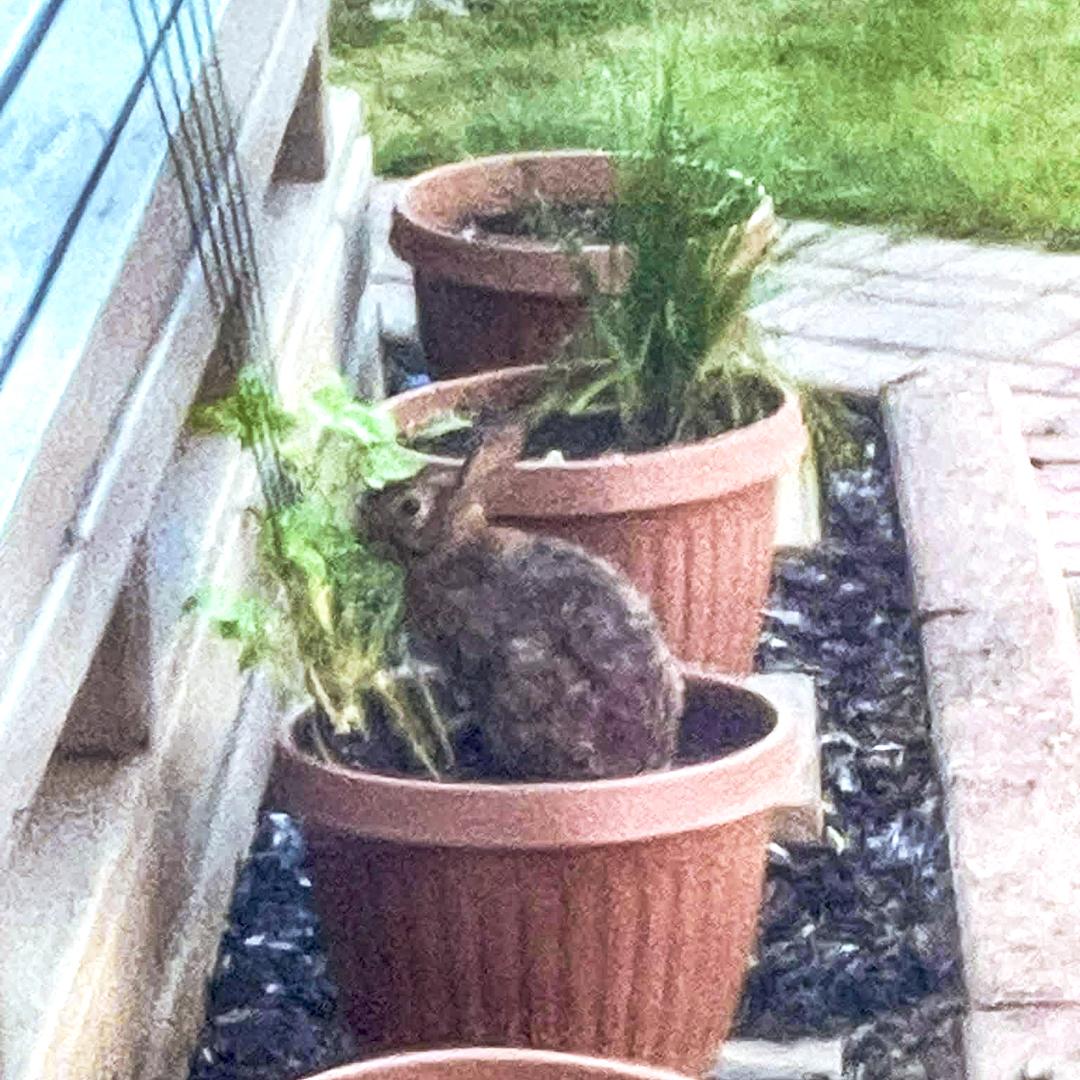
So many fur balls being posted here, I wanted to share a photo of our own regular visitor.
My kid has affectionately named him 'Dennis the Menace' because he's always chewing away at my wife's planted herbs. Here he (she?) is making himself comfy, sitting inside the pot enjoying a buffet of leafy greens.
He visits us every morning, surveys the yard for new food before scampering away to our neighbours' yard.
Enjoy!
#cats #cat #rabbit #bunny #nature
Alt...
a brown rabbit sitting inside a garden pot nibbling on planted leafy herbs in my garden
![[?]](https://files.mastodon.social/accounts/avatars/112/560/896/182/544/050/original/a51fe2ab84ca5e74.jpg)
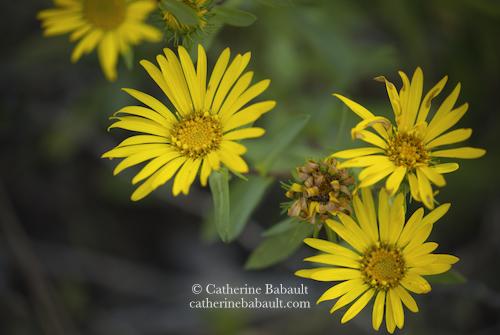
Little suns to brighten your day or evening. Entire-leaved gumweed aka Oregon gumweed (Grindelia stricta), Vancouver Island, British Columbia.
#BloomScrolling #photography #flowers #nature #VancouverIsland #BritishColumbia #VancouverIslandWildlife
Alt...
Five bright yellow flowers, that look like big daisies, surrounded by dark greenery.
![[?]](https://media.universeodon.com/accounts/avatars/109/362/535/847/508/379/original/d813a009e1e1ccbe.png)
Scissor Tail on Steel
I spotted this scissor‑tailed flycatcher (Tyrannus forficatus) as we were leaving our hotel in Harrison, Arkansas. It was a first for me.
Step into a world where even the smallest moments—like the glint in a bird's eye—tell their own story.
https://swede1952-photographs.pixels.com
#photo #photography #photographer #photographylovers #wildlife #nature #bird #birds #birding #birdwatching #birdphotography #scissortailedflycatcher

Alt...
"A scissor‑tailed flycatcher stands on the thick, twisted cable facing left, its slim body balanced with that easy confidence these birds have. Its head is angled slightly forward, giving the impression that it’s studying the open air ahead. The head is a soft, pale gray, smooth and rounded, while the wings deepen into darker charcoal tones, each feather neatly layered like fine etching.
A faint wash of peach warms its underside, subtle but unmistakable against the clean blue sky. And the tail — long, folded, and unmistakably scissor‑like — trails behind the bird to the right. It angles downward, not parallel to the cable, with the very tips just dipping below the top edge of the metal line. The tail feathers taper to dark points, giving the bird a sharp, elegant finish even in stillness.
The cable itself is thick and industrial, strands of metal twisted tightly together, catching sunlight in small silver glints. The contrast is striking: a delicate, poised bird resting on rugged steel, framed by an uninterrupted sky." - Microsoft Copilot with edits by the photographer
![[?]](https://media.mastodon.scot/accounts/avatars/109/265/263/648/640/206/original/3fc95a65f1a2bece.jpg)
Here's my namesake surfing through big waves out near the Riff Bank sandbank in the Inner Moray Firth. The underwater sandbanks are the other reason that the Inner Firth is designated a Special Area of Conservation, the first being the presence of resident Bottlenose dolphins, like big Charlie boy here. #Nature #Dolphins #Wildlife #Sea

Alt...
A Bottlenose dolphin surfing on top of a big wave, Inner Moray Firth, Scotland.
![[?]](https://s3.nl-ams.scw.cloud/birdstown-storage/accounts/avatars/110/243/945/207/987/582/original/5ce00268ad5ccac4.png)
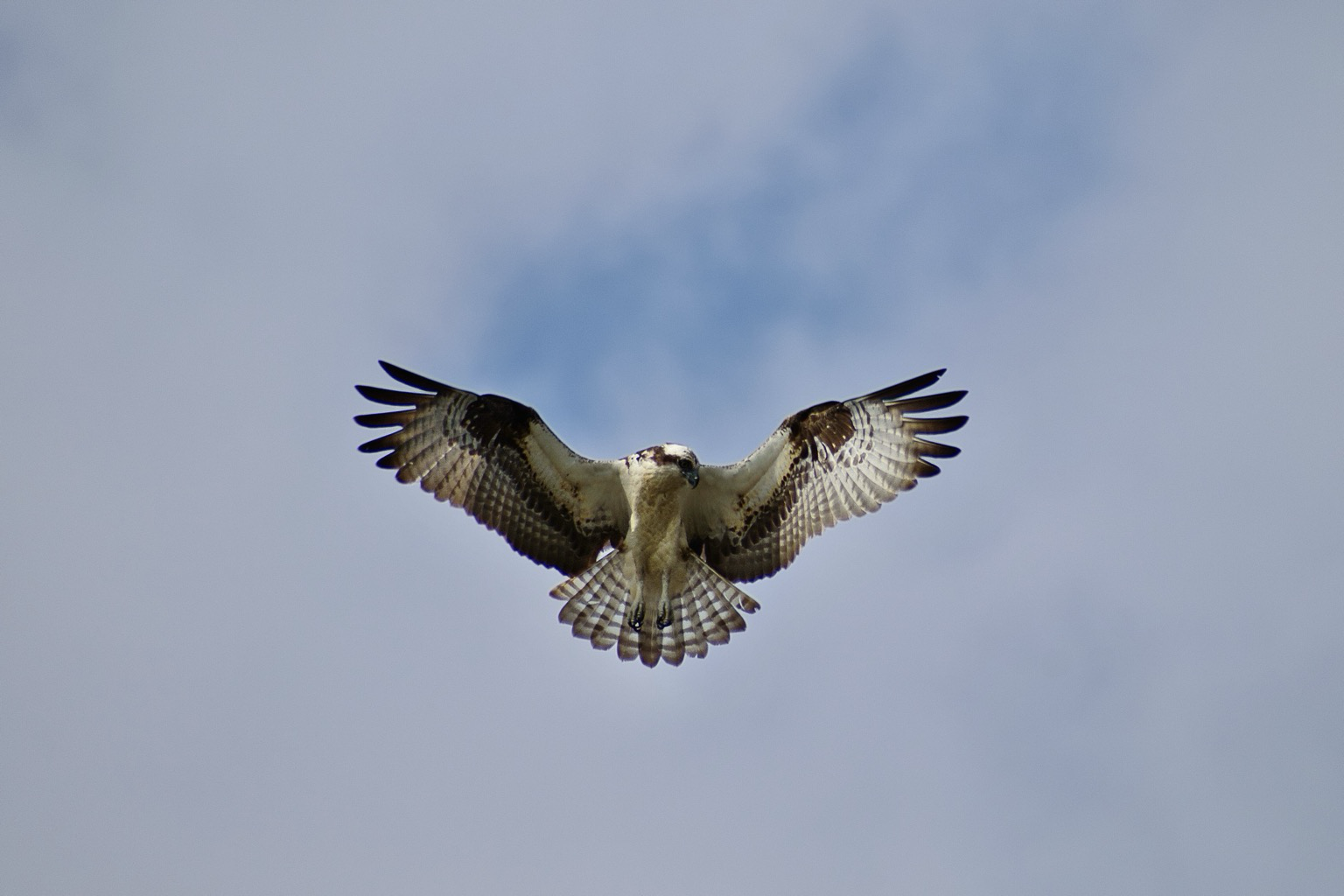
Ospreys turn hovering into an art form.
#birds #birding #raptor #BirdsOfPrey #summer #ChesapeakeBay #nature #NaturePhotography #SolaceInNature #creationstruck
Alt...
An osprey hovers against a blue and white cloud sky, wings in a vee shape with its striped tail fanned out. It is a large raptor, dark brown above, white below, dark stripes extending from neck to cheeks, and a wickedly sharp beak.
![[?]](https://media.beige.party/accounts/avatars/114/714/337/529/163/709/original/8fff4895d0fe2ff6.jpeg)
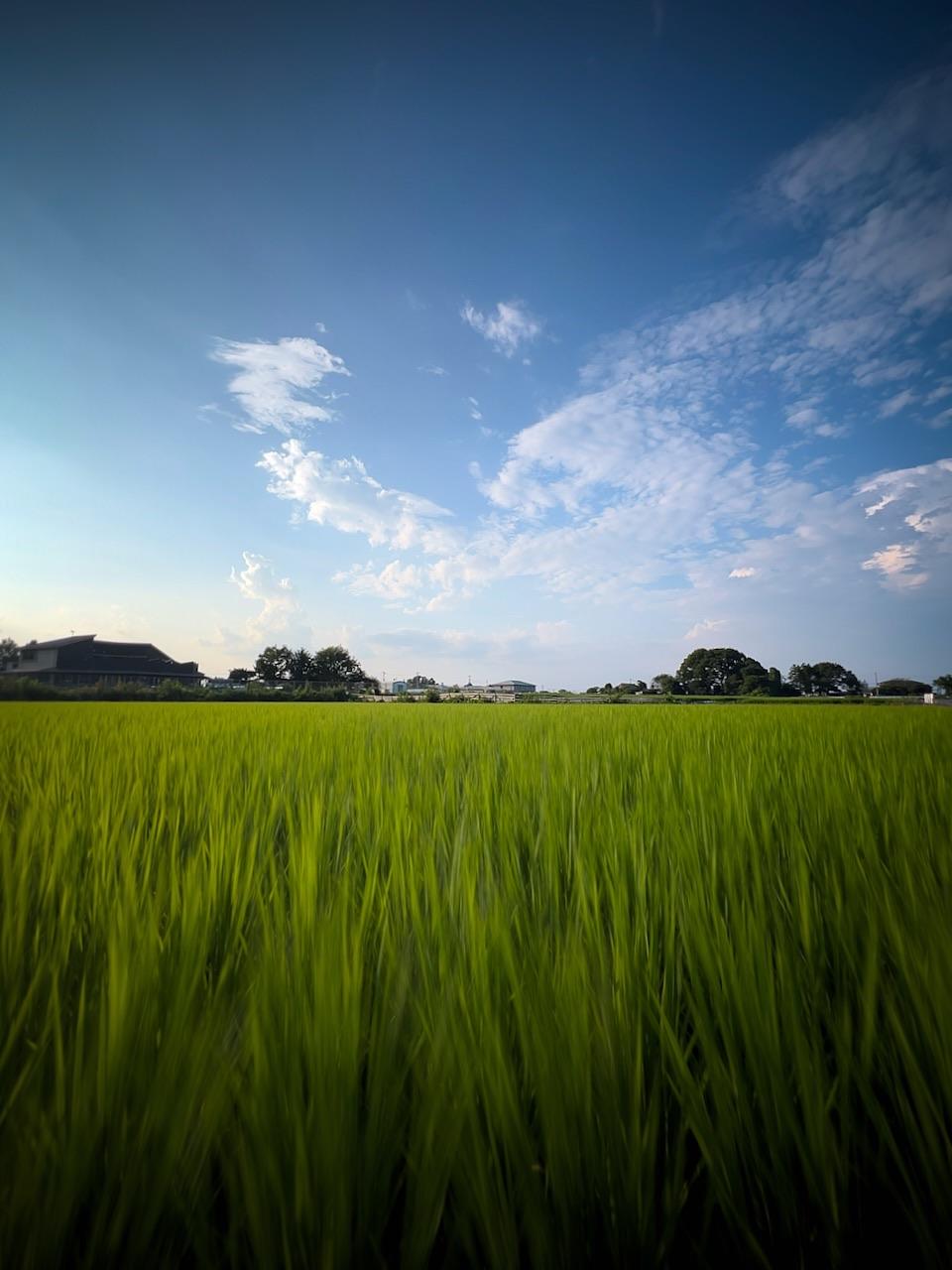
Rice paddy pic No. 88.
Taken yesterday across from our Monday classroom. It was 37C today. Like opening an oven door.
Alt...
Deep blue sky with puffy white clouds in the bottom right corner. A thin strip of trees and low buildings separate the sky from a wide sweep of rice plants which are sharp in the middle of the frame but blurred by movement at the foot. The rice paddy has no visible borders.
![[?]](https://pxscdn.com/cache/avatars/764567477268279499/avatar_3tw2.jpg)
#nature #naturephotography #farn #fern #decay #moss #mosstodon

Alt...
A close up photograph of a small section of a withered and brown fern frond. The leaves are curled up and the fron forms a diagonal from the upper left to lower right.
Parallel to the frond, above and to the right of it, is a small dark, dead tree branch.
In the lower left foreground are some branching strands of a deep green moss.
![[?]](https://media.beige.party/accounts/avatars/111/574/616/922/145/671/original/4e3f07a113dd91f7.png)
![[?]](https://pxscdn.com/cache/avatars/787879165920376064/avatar_yb01.png)
#MountainMonday meets #MonochromeMonday from today's hike.
#MoelSiabod #Cymru #Wales #NorthWales #Eryri #Snowdonia #mountains #hiking #gradient #steep #nature #Natur #landscape #Landschaft #naturephotography #landscapephotography #photography #Fotografie #amateurphotography #monochrome #bnw #bw #blackandwhite #noiretblanc #blackandwhitephotography
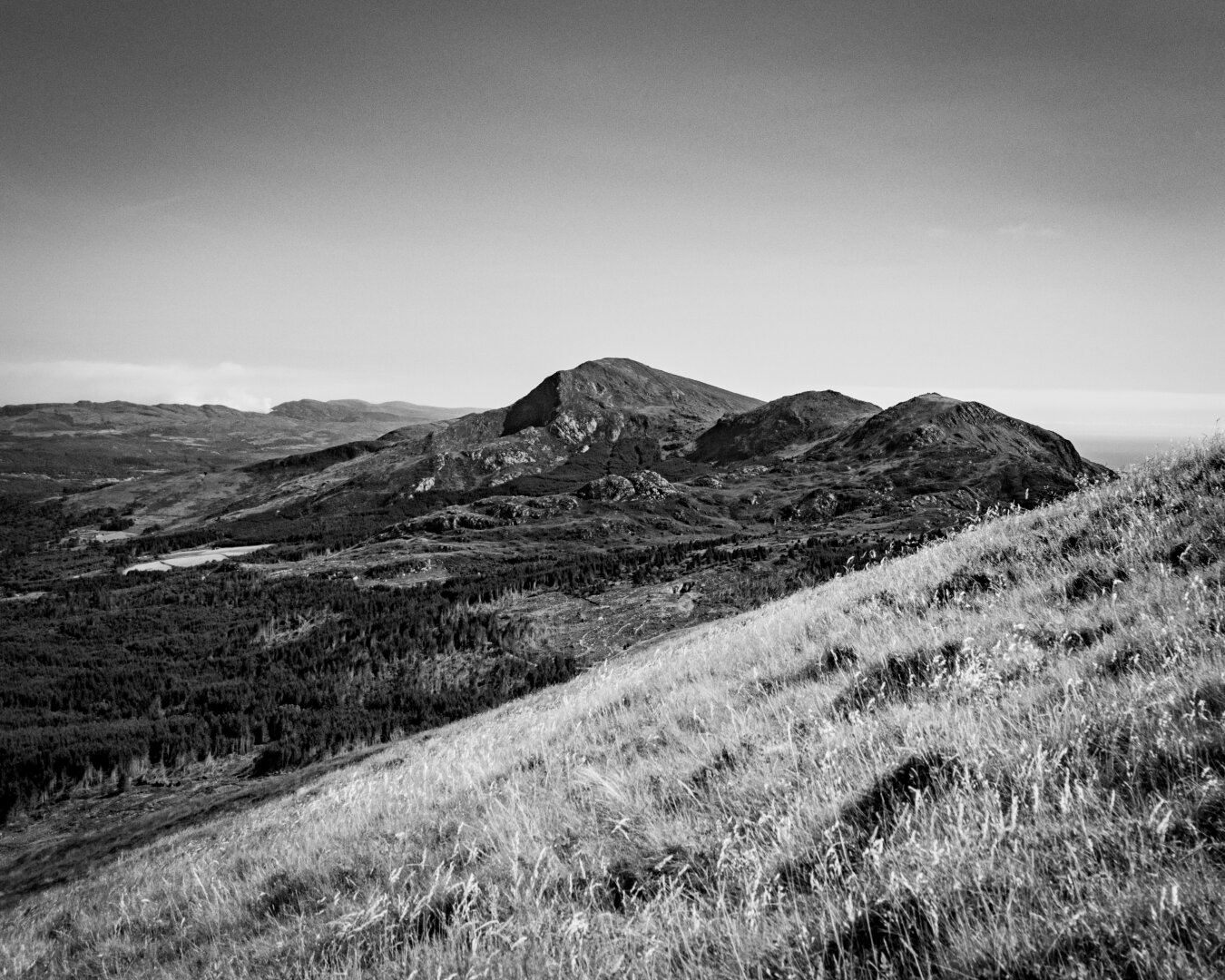
Alt...
A scenic monochrome landscape of the rugged peaks of Moel Siabod. A very steep, textured grassy slope fills the foreground in a triangular shape, leading down to a dense forest in the valley below.
![[?]](https://assets.ottawa.place/accounts/avatars/116/278/604/133/041/411/original/86526b0f49eed1d5.jpg)
Juvenile #RedWingBlackbird in one of our trees. #Photography #NaturePhotography #Nature #BirdPhotography #WildlifePhotography #Bird #Wildlife #PhotographersOfMastodon
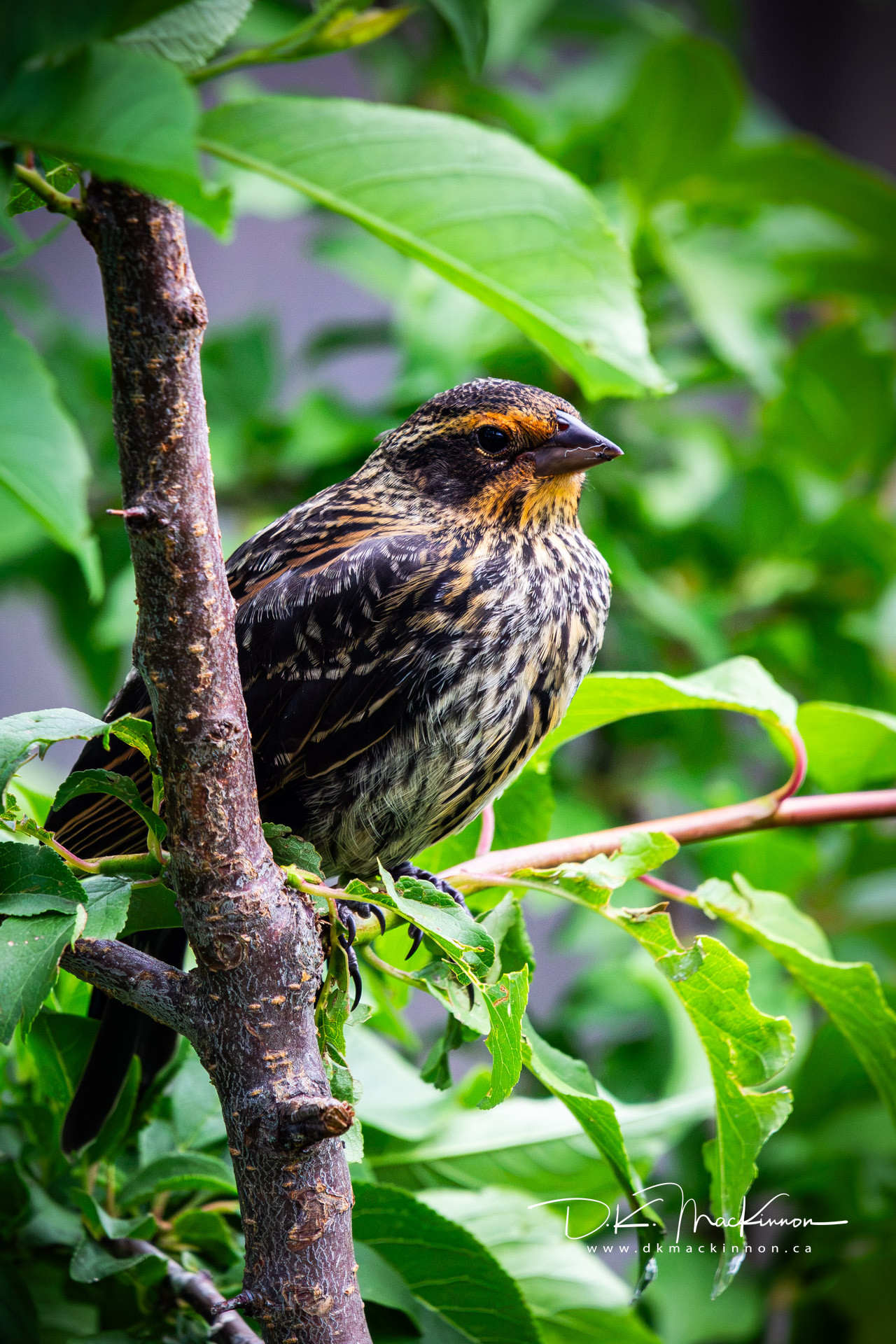
Alt...
A juvenile red-winged blackbird with streaky brown and black plumage and an orange-brown head perches on a branch surrounded by lush green leaves.
![[?]](https://assets.chaos.social/accounts/avatars/000/137/688/original/f66a4b79eee6b640.jpg)
#Stereo #3D #Nature #Bloomscrolling #Apiaceae

Alt...
stereo image: infructescence of an umbellifer plant (small slender green fruits), viewed from above, sunlit, above the rest of the plant and the soil. the infructescences jump out when viewed in stereo.
![[?]](https://files.mastodon.social/accounts/avatars/115/563/894/722/913/318/original/a1f6ec9eb6d3481d.jpg)
This morning, we had the privilege of educating young people on proper waste management and environmental responsibility. By empowering the next generation with sustainable habits, we are building cleaner communities and protecting our environment for the future. Every lesson shared today is a step toward lasting positive change.
#climate #environment #ecosystem #climatechange #nature #conservation #biodiversity #regeneration #ecology #afforestation #wastemanagement #sanitation #climatecrisis

We gathered this waste, but the bigger question is: where does it all end up if it isn’t properly managed? @MastodonMedia, what’s your take? Plastic waste pollutes our soil, clogs rivers, harms wildlife, and damages the environment we all depend on. Proper waste management is everyone’s responsibility. Let’s protect our future together.
#environment #climatechange #climatecrisis #climate #wastemanagement #soilhealth #PhysicalFeatures #wildlife #pollution #climatejustice #biodiversity #nature

 boosted
![[?]](https://files.mastodon.social/accounts/avatars/108/199/369/635/905/314/original/c1e859b9fa6a0178.jpg)
The very first image from the surface of Mars, transmitted to Earth from NASA's Viking 1 lander, 50 years ago today.
https://www.nasa.gov/image-article/our-first-view-of-the-surface-of-mars/ #science #nature #history #tech

Alt...
On the morning of July 20, 1976, roughly 40 minutes after mission controllers received word that the Viking 1 lander had successfully touched down on the surface of Mars, this photo gave us our first view from the surface of another planet. Credit: NASA/JPL
![[?]](https://cdn.masto.host/mastodonie/accounts/avatars/109/294/376/925/757/435/original/370bbad04a8ce5c8.png)
#theBeeAt3
Basic bee facts every day at 3pm.
6.
Male bumblebees can’t sting. (No stinger).
They’re primarily here to do the wild thing!
‘Let me tell you about the birds and the #bees
And the flowers and the trees
And the moon up above
And a thing called love’
- Herb Newman
#nature #bumblebees
#environment #thistle
#education #fifa #biodiversity
#worldbeesanctuary #summer
#science #pollinators #wildlife
![[?]](https://media.mstdn.social/accounts/avatars/109/331/575/764/762/390/original/d0daddddca6acefd.jpeg)
Getting excited about hiking up this mountain again later this week. Been waiting for a good weather window. Here is a view from my hike in May after a long scramble up a steep slab of rock in a ravine. The weather is predicted to clear later this week, allowing me to go up the other side of the ridge. Same mountain, different ravine, new fun. Can't wait! #MountainMonday #hiking #nature
#photography #landscape #NaturePhotography #LandscapePhotography #mountains
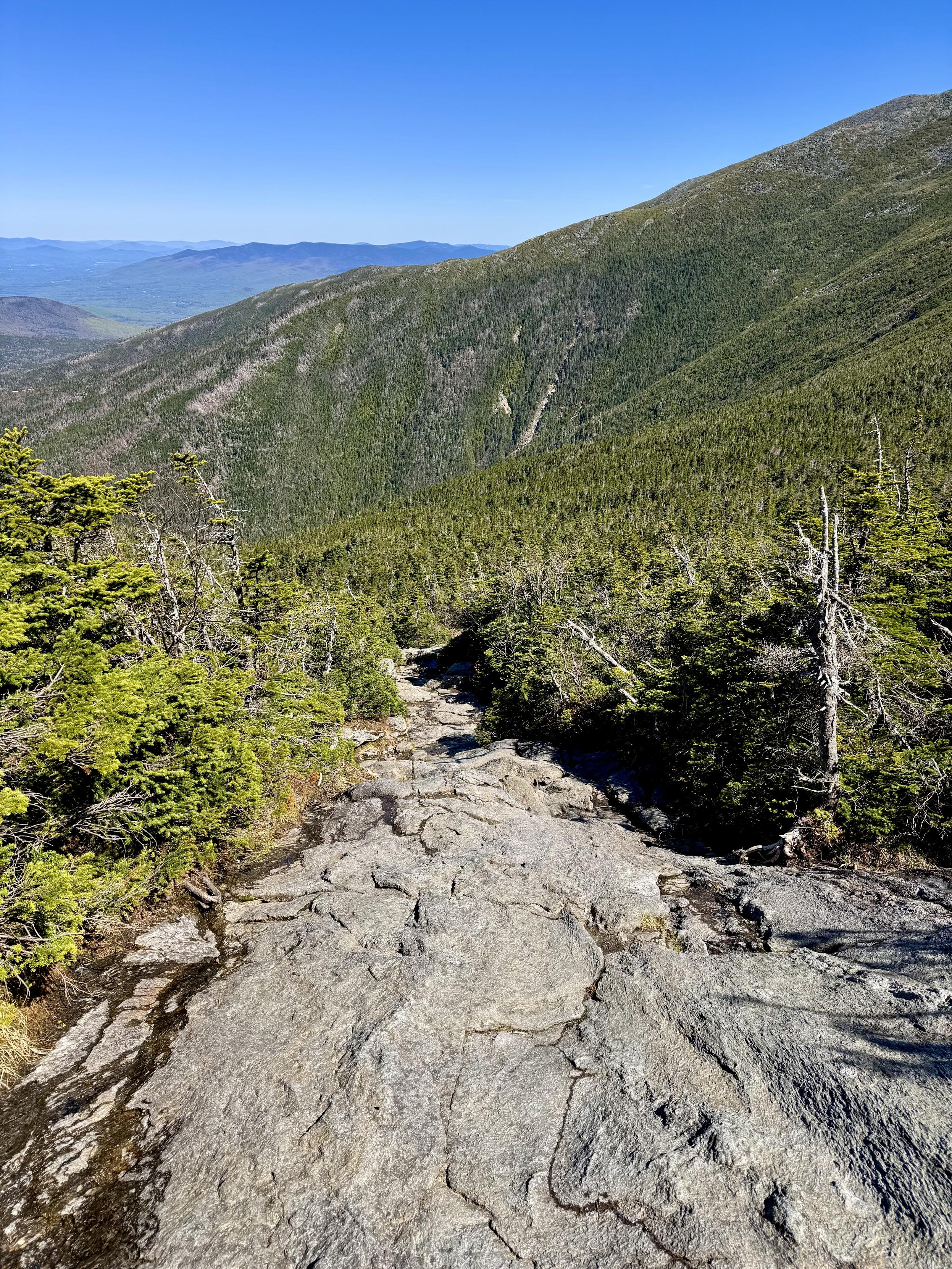
Alt...
Photo of steep rock slab as viewed from top looking down. The slab is the "trail" that leads up the mountain ravine. Mountain ridges and peaks seen off in the distance. Blue sky overhead.
This is Ammonoosuc Trail as I am about to get above the treeline. I took this photo on May 22, 2026 during my hike in the Presidential Range, White Mountains, NH.
![[?]](https://cdn.masto.host/socelnet/accounts/avatars/109/331/216/096/518/560/original/c61d0053547c5a81.jpg)
It's HURRICANE SEASON! And we finally got all of our new windows and doors installed. It's been an ordeal for sure. Loud, dirty and we had to do all of the finish work ourselves because they were awful. But I am getting back to creating!
These beauties are going to the Lakewood Ranch Library exhibition in the Spring. :)
#flowers #floral #flower #daisy #daisies #summer #summertime #garden #gardening #gardens #art #artwork #nature #artist #fediart #mastoart #painting #paintings #botanical
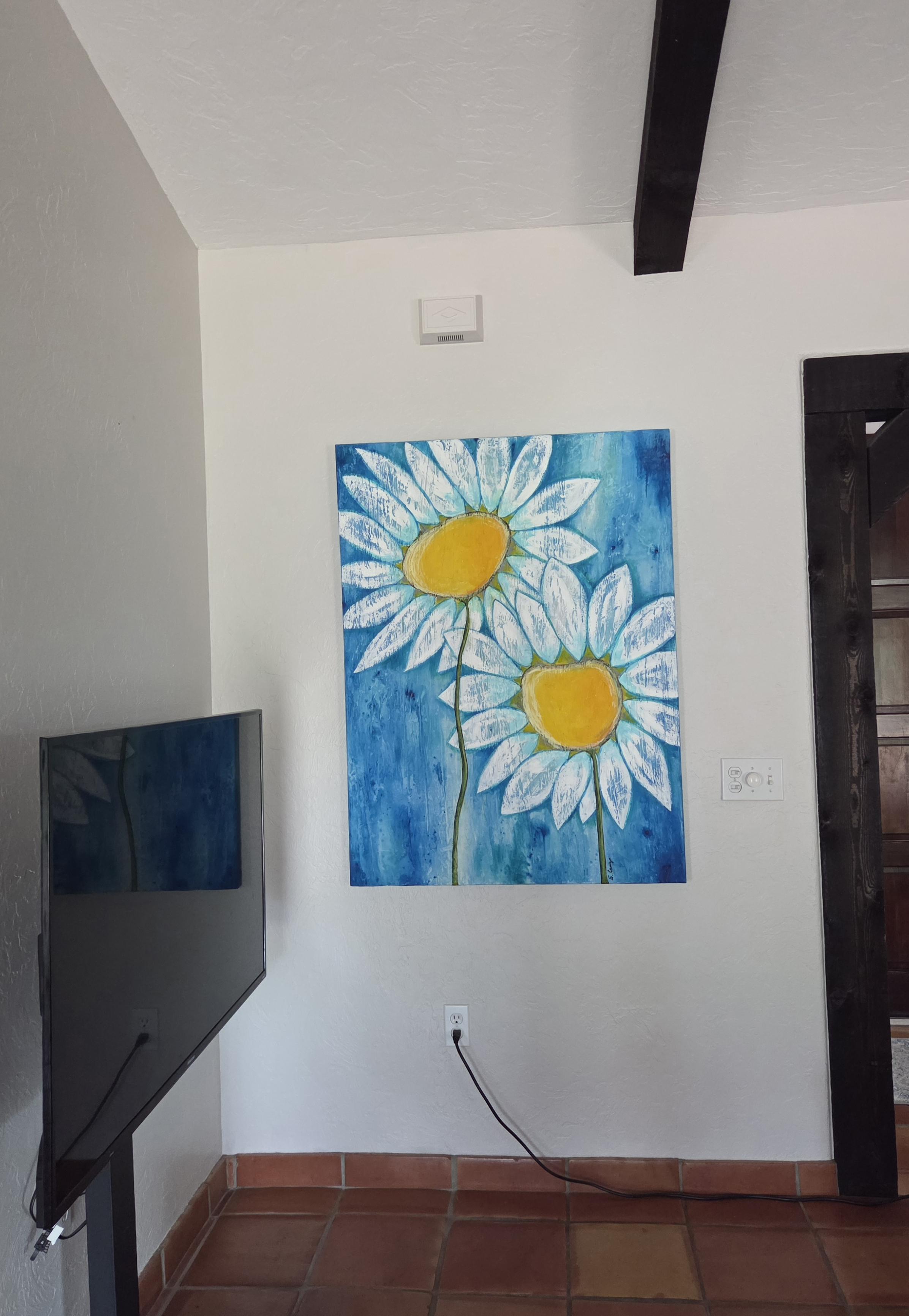
Alt...
Big white daisies on blue painting by artist Sharon Cummings.
Here’s a
#MondayMorningMinute
with #nature here on #WorldBeeSanctuary.
Take a moment.
Go do some #good.
Have the best week you can.
If you’re not having a good week - tell someone.
And if someone tells you -
Listen.
Really #listen.
#mentalhealth
#wellbeing
#bees #meadow
#fieldscabious
#summer #health
![[?]](https://cyberplace.social/system/accounts/avatars/109/389/759/121/285/238/original/06792c5839d42189.jpg)
Yellow
#BloomScrolling #Nature #Photography

Alt...
A single flower bud just beginning to bloom, set against a softly blurred, vibrant background.
The petals are a bright, golden yellow, curving upward and inward around the dark, textured center cone. Fresh green sepals cup the base of the bud.
Sunlight strikes the right side of the flower head and stem, casting subtle shadows on the left and accentuating the fine texture on the petals.
![[?]](https://files.mastodon.green/accounts/avatars/116/481/776/737/433/616/original/4d4d3699cdd6d281.jpg)
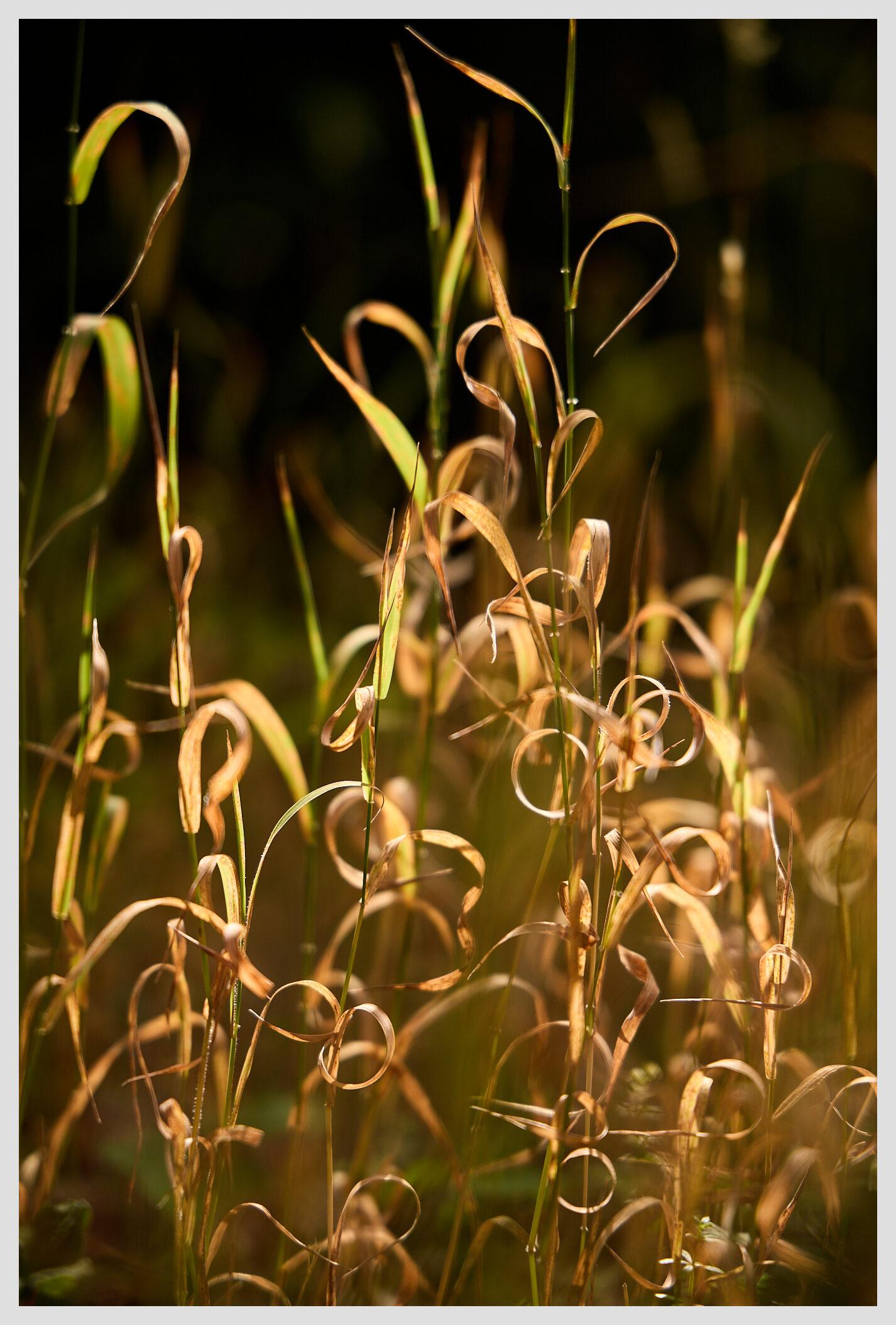
This scene drew my attention yesterday and immediately reminded me of a display in a jewelry shop window. So please excuse the broad interpretation of today's #FotoVorschlag 💍
#photography #nature #naturephotography #plant #leaf #leaves #golden #pattern #FotoMontag #PhotoMonday
Alt...
Vertical closeup of tall stems of grass. The plants are green at the top, but the lower parts have dried up with the leaves curling into rings. The scene is backlit by warm, golden sunlight.
![[?]](https://media.mstdn.social/accounts/avatars/109/955/318/662/475/171/original/9be4d4a7f6c4b942.jpg)
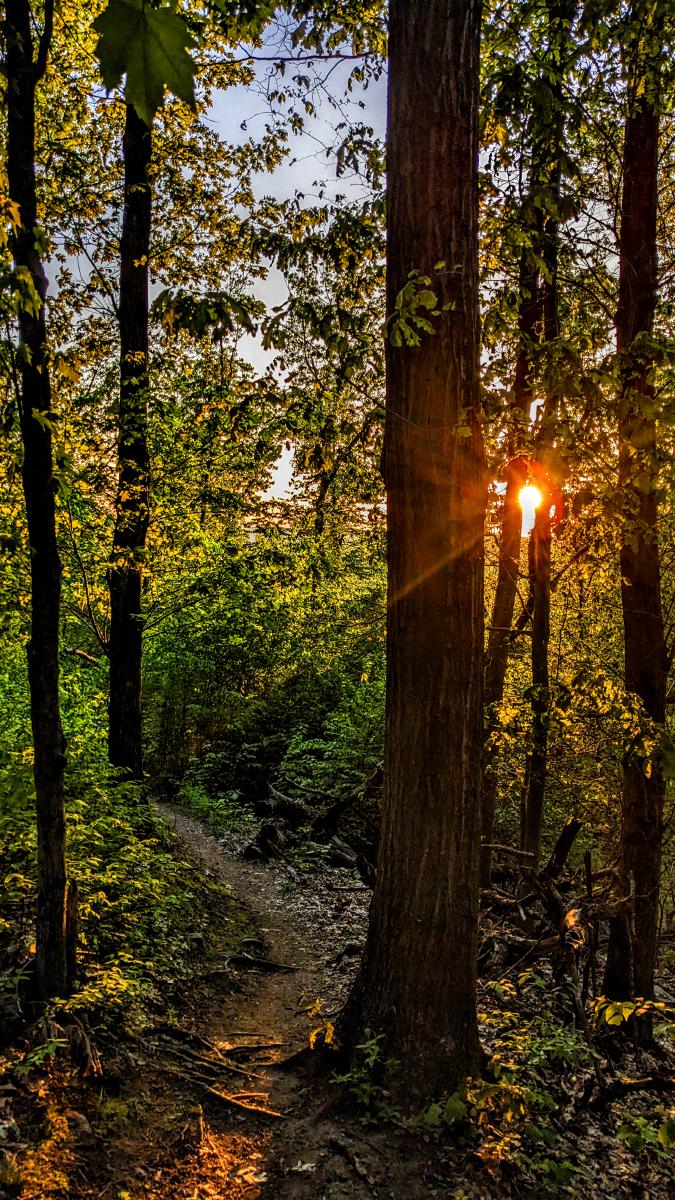
Sunset on the trail. Sleeping Giant State Park, Hamden, Connecticut. May 11, 2023, 7:36 PM.
#hiking #photography #outdoors #landscapephotography #nature #Connecticut #spring #forest #sunset #sunsetphotography #springtime
Alt...
We are hiking westward along a path high up a mountainside through a forest of trees sprouting the bright emerald green leaves of springtime. The sky is cloudless, a bright pale blue of evening. Through the trees ahead we see the bright orange sun low in the sky, minutes from setting behind a ridgeline a few miles away.
![[?]](https://cdn.masto.host/turtleislandsocial/accounts/avatars/114/213/463/518/095/352/original/fdf886a8fff1ba6d.jpg)
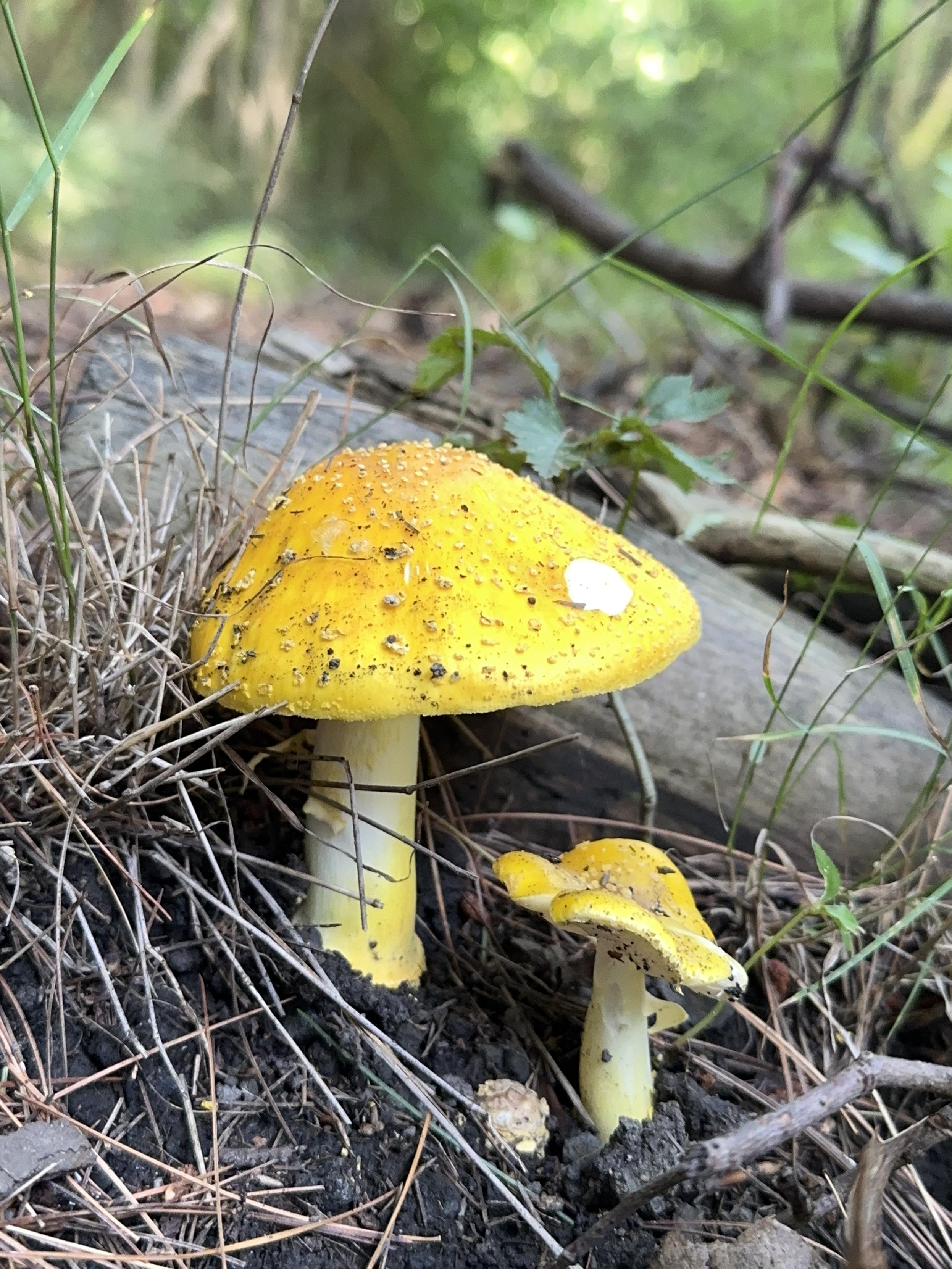
🧵1/3
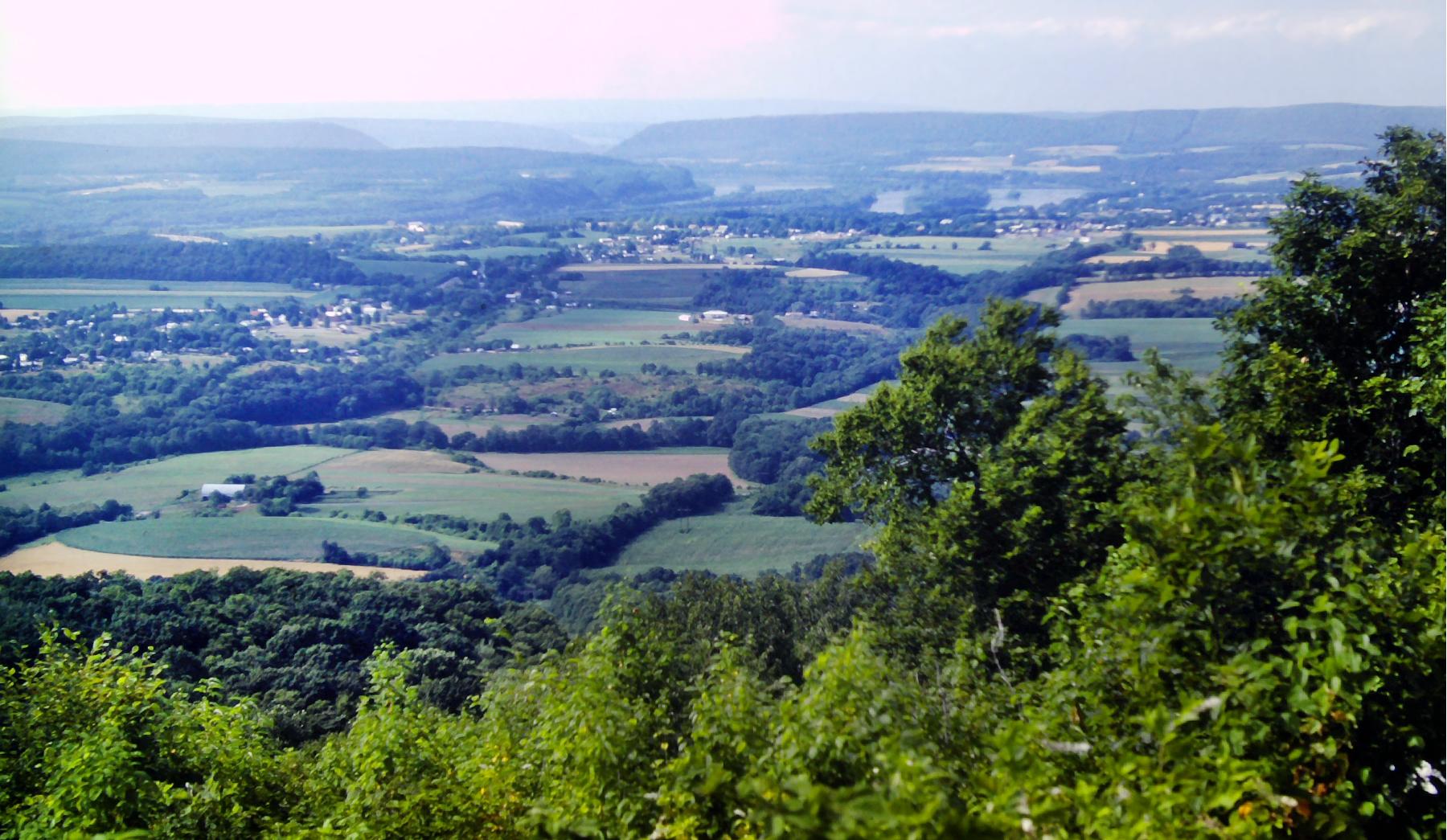
July 20, 1983, 43 years ago today: The remainder of the trail over Peters Mountain was much like the last few miles of hiking yesterday. The rocks continued to be tolerable. There were but a few exceptionally bad stretches. Thus far, only about twenty-five percent of the trail since the Cumberland Valley has been particularly rocky.
#backpacking #hiking #landscapephotography #outdoors #nature #pennsylvania #mountains #forest #AppalachianTrail
Alt...
We are looking out from atop a mountain over the treetops on the mountainside towards the valley hundreds of feet below. The valley is rather flat farm country, with several small villages visible. The rest is farm fields with a few patches of forest. Several long, low, flat-topped ridges rise along the far horizon. Glimpses of a major river winding down through those hills. It is a whitish summertime sky, mostly clear with a few small clouds. Distant views are hazy.
![[?]](https://media.mastodon.sunny.garden/accounts/avatars/111/590/003/701/931/949/original/a51584bb877b2482.jpg)
Drooly puff.
#Puffin #BloomScrolling #PhotoMonday #FotoMontag #Iceland #Nature #Wildlife #WildlifePhotography

Alt...
A drooling puffin standing on the edge of a sea cliff that has clumps of little white flowers with black rocks and crashing waves in the background, under the warm glow of summer evening light.